-
Revenue Minister’s move to suspend the proposed Devasthan Act welcomed by temple bodies
-
A major success for the struggle led by the Maharashtra Mandir Mahasangh, Ashtavinayak Temple, Vishwa Hindu Parishad, and temple trustees
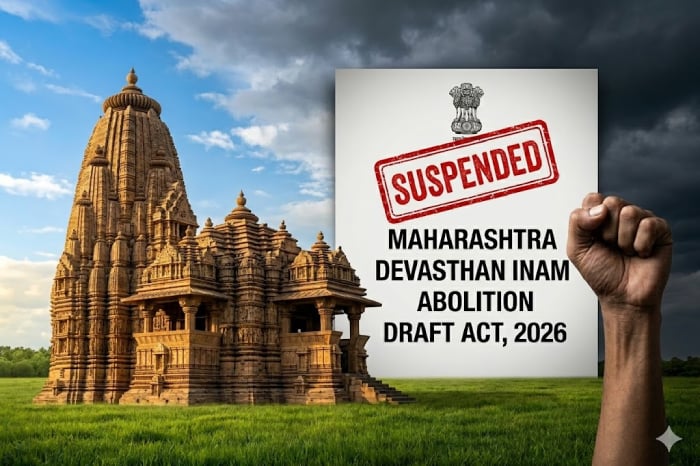
Nagpur, Maharashtra – The Maharashtra Revenue Minister, Chandrashekhar Bawankule, announced a major decision in Nagpur today regarding the suspension of the proposed ‘Maharashtra Devasthan Inam Abolition Draft Act 2026. This pro-temple move has been warmly welcomed by the Maharashtra Mandir Mahasangh, Ashtavinayak Temple Committee, Vishwa Hindu Parishad (VHP), and temple trustees across the state, who have hailed it as a significant victory of their organised and sustained campaign.
महसूलमंत्री मा. चंद्रशेखर बावनकुळे यांनी ‘महाराष्ट्र देवस्थान इनाम निर्मूलन प्रारूप २०२६’ कायदा स्थगित केल्याबद्दल आभार!👏🏻
महाराष्ट्र मंदिर महासंघ, अष्टविनायक 🛕, विश्व हिंदु परिषद व मंदिर विश्वस्त यांच्या लढ्याला मोठे यश!🚩✊🏼या मंदिरहितैषी निर्णयाचे आम्ही मनःपूर्वक स्वागत करतो pic.twitter.com/ehk7oTVxUz
— Mandir Mahasangh (@mandirmahasangh) June 6, 2026
Prior to this decision, the Mandir Mahasangh and other pro-Hindu organisations had mobilised nationwide opposition against the draft law through extensive trustee meetings, formal representations, public objections, press conferences, and ‘Devasthan Land Protection Conferences’, effectively steering the government towards a positive resolution.
🟧 06 – 06 – 2026 | 📍नागपूर | माध्यमांशी संवाद
देवस्थानांच्या अतिक्रमित जमीनी देवस्थानांना परत मिळाव्या याकरिता सरकारने महाराष्ट्र देवस्थान इनाम निर्मूलन कायदा आणण्याचा विचार केला होता. पाच मे रोजी कायदा नागरिकांच्या सूचना व हरकतींसाठी प्रसिद्ध करण्यात आला. एक महिन्याच्या… pic.twitter.com/Y8tvmOeEmo
— Chandrashekhar Bawankule (@cbawankule) June 6, 2026
Speaking on the developments, Shri. Sunil Ghanwat, Organiser of the Maharashtra Mandir Mahasangh, outlined the organisation’s stance on the key points raised by the Revenue Minister.
“The decisions to restore inam lands to temples, remove encroachments with state assistance similar to the Waqf Board’s powers, seek counsel from top-tier lawyers for ongoing legal battles, and mandate alternative plots of ‘equal value’ nearby for 100-to-200-year-old tenancies without causing financial loss to temples, are highly commendable and in the best interest of our religious institutions,” Shri. Ghanwat stated.
The Mahasangh also welcomed the government’s decision to include temple representatives in the newly formed 15-member committee, headed by the Additional Chief Secretary (Revenue), which is tasked with overseeing the hearing process until 15 August 2026.
Future roadmap for temple welfare and protection
While acknowledging the government’s pro-temple measures, the Mahasangh maintained that several crucial resolutions passed by temple trustees must be integrated into the new legal framework to ensure the comprehensive protection of Hindu temples. These include:
- Utilisation of funds: Donations offered by devotees must strictly be utilised for the promotion of Hindu Dharma, temple restoration, and the spiritual needs of the Hindu community. The Mahasangh strongly opposes allocating these funds to secular or government-run schemes.
- End to political interference: The practice of diverting temple funds due to political affiliations must be halted immediately.
- Support for smaller temples: Surplus funds from wealthier shrines should be systematically channelled towards the reconstruction and upkeep of smaller, neglected temples in rural areas.
- Stipends for caretakers: A monthly subsistence allowance of £100 to £150 (equivalent to ₹10,000 to ₹15,000) should be institutionalised for Guravs (priests) and other staff who selflessly serve in remote village temples.
The Mahasangh has firmly demanded that these recommendations be incorporated into any future legislative processes.
Maharashtra Mandir Mahasangh demands immediate revocation of Maharashtra Devasthan Inam Abolition Draft Act 2026
May 28, 2026
State Temple Trustees strongly oppose the ‘Devasthan Inam Abolition Draft Act’ in a meeting with the Revenue Minister
Revenue Minister assures extending deadline for registering objections and suggestions to 30 June 2026
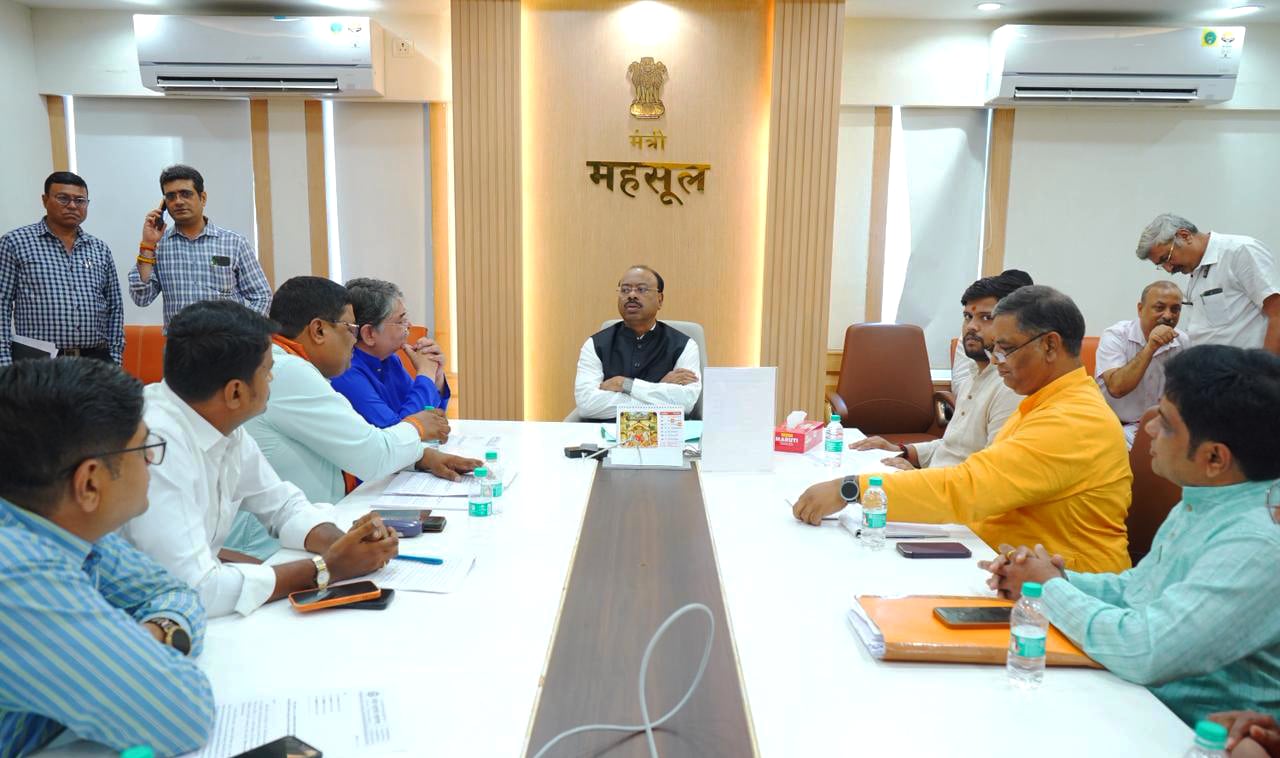
Mumbai – A highly important meeting took place at the Ministry on 26 May 2026, between Revenue Minister Chandrashekhar Bawankule, trustees of the Ashtavinayak temples, the Vidarbha Devasthan Samiti, various other prominent temples, and representatives of the Maharashtra Mandir Mahasangh.
The meeting was held to demand the immediate repeal of the proposed draft of the ‘Maharashtra Devasthan Inam Abolition Act 2026’. During this meeting, Minister Chandrashekhar Bawankule stated that the demands of the temple trustees will be considered with utmost seriousness. The Honourable Minister also assured that illegal encroachments on temple lands across the state would be removed, and the deadline for registering objections and suggestions regarding the draft of the proposed law would be extended to 30 June 2026.
🛕 महसूलमंत्र्यांच्या बैठकीत राज्यातील मंदिर विश्वस्तांनी नोंदवला ‘देवस्थान इनाम निर्मूलन प्रारुपाला’ तीव्र विरोध !
🗓 सूचना आणि हरकती यांसाठी ३० जूनपर्यंत मुदतवाढीचे महसूलमंत्र्यांचे आश्वासन !@RanjitSavarkar @ssvirendra @Ramesh_hjs
📞 7020383264
#Bill_Against_Temple_Land pic.twitter.com/QDLgSKvHuK
— Mandir Mahasangh (@mandirmahasangh) May 27, 2026
The meeting was attended by several dignitaries, including Shri. Ranjit Savarkar (Executive President of Swatantrayaveer Savarkar National Memorial), Advocate Virendra Ichalkaranjikar (National President of Hindu Vidhidnya Parishad), H.B.P. Bapu Rawkar (Executive President of Rashtriya Warkari Parishad), Shri. Keshav Vidwans (Trustee of ‘Chinchwad Devasthanam Trust’, which manages Shri Mayureshwar (Morgaon), Shri Chintamani (Theur), Shri Siddhivinayak (Siddhatek), and Shri Morya Gosavi Sanjeevan Samadhi Temple), Shri. Jitendra Gadre (President) and Shri. Vaibhav Apte (Vice President) of Shri Ballaleshwar Devasthanam in Pali, Shri. Ramesh Shinde (National Spokesperson of Hindu Janajagruti Samiti), Shri. Anup Jaiswal (Founder President of Vidarbha Devasthanam Samiti), and Shri. Vinod Pakhode of Shri Pinglai Mata Devasthanam in Amravati. The prominent officials presented detailed problems regarding encroachments on temple land, as well as issues faced by pujaris and trustees, to the Revenue Minister, drawing his attention to the severe flaws in the proposed law.
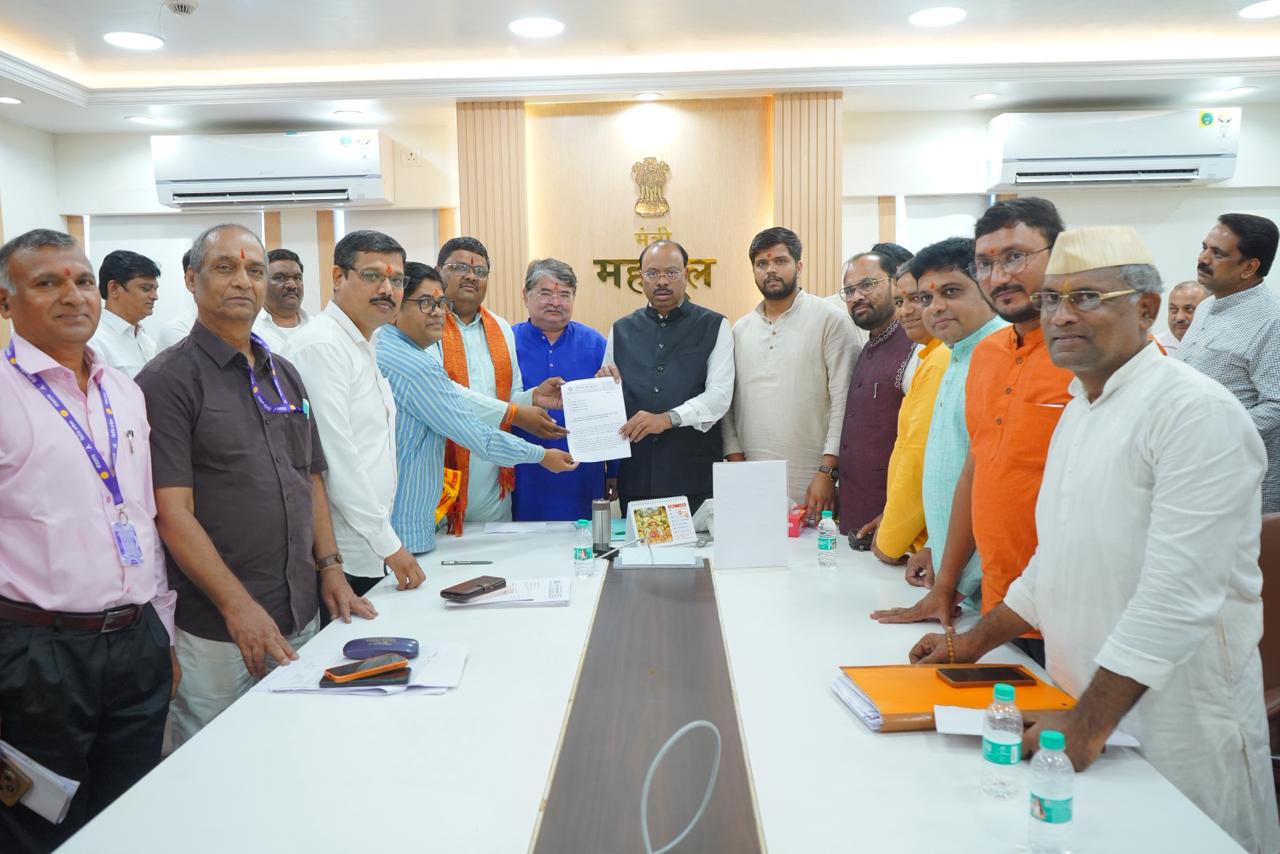
The temple trustees strongly demanded that instead of selling or transferring the Inam land of temples, the Maharashtra Government should take concrete action to remove illegal encroachments from those lands. Assuring positive steps on this matter, Revenue Minister Chandrashekhar Bawankule said, “To ensure that the maximum number of trustees can register their suggestions and objections regarding this Act, instructions will be issued to Divisional Commissioners, as well as Tehsildar and District Collector offices, to accept them.”
Intense protests will continue until the proposed law is repealed – Mandir Mahasangh
All temple trustees and the Maharashtra Mandir Mahasangh firmly oppose the Maharashtra Devasthanam Inam Abolition Act. The current government being pro-Hindu, it should make laws that benefit temples. Our protest will continue until this proposed draft law to sell temple Inam land is completely repealed. Speaking to the media on this occasion, Shri. Sunil Ghanwat called upon all temple trustees, pujaris, devotees, and ordinary citizens across the state to register their written objections and suggestions against this ordinance as soon as possible.
May 24, 2026
Over 300 memorandums submitted to officials, from Chief Minister to Tehsildars
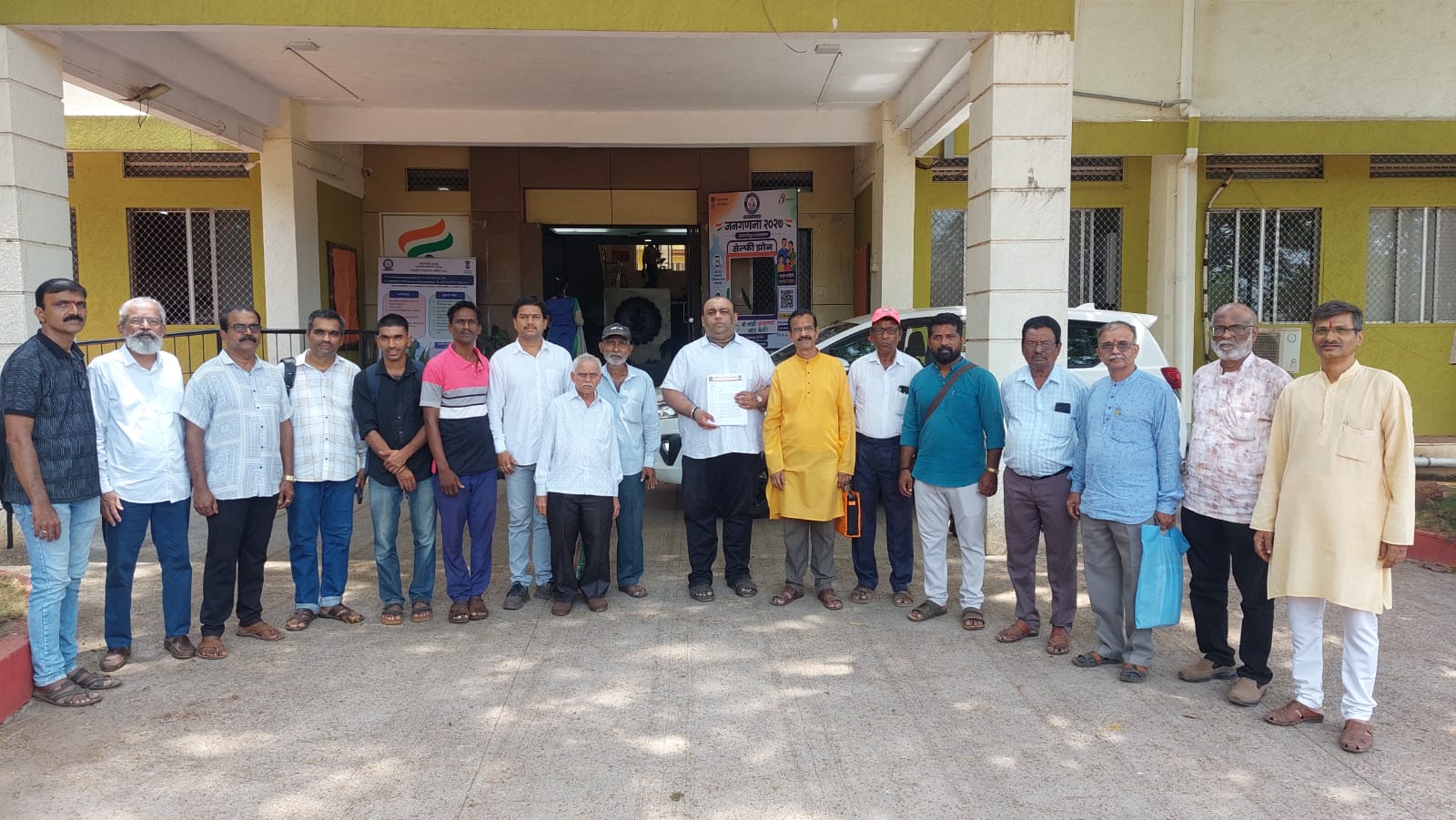
The ‘Maharashtra Devsthan Inam Abolition Draft Act 2026’, proposed by the Maharashtra Government’s Revenue and Forest Department, threatens to snatch away lands belonging to thousands of Hindu temples and put their very existence at risk. The government is preparing to pass this law in the upcoming monsoon session. In response, the Maharashtra Mandir Mahasangh, along with the Ashtavinayak temples and over 1,000 trustees and representatives from all major temples, and Hindu organisations across the state, have united against this unjust legislation.
As part of the protest, temple trustees across the state simultaneously submitted more than 300 memorandums to the Honourable Chief Minister, Deputy Chief Minister, several Ministers, Ministers of State, MLAs, as well as all departmental Commissioners, District Collectors, Divisional Officers, and Tehsildars. Through these memorandums, they have unanimously demanded that the government immediately withdraw this oppressive law, which threatens the existence of Hindu religious institutions, without any conditions.
Taking note of this widespread public outrage and respecting public sentiments, several MLAs have assured temple representatives that they will strongly oppose this bill in the upcoming monsoon session.
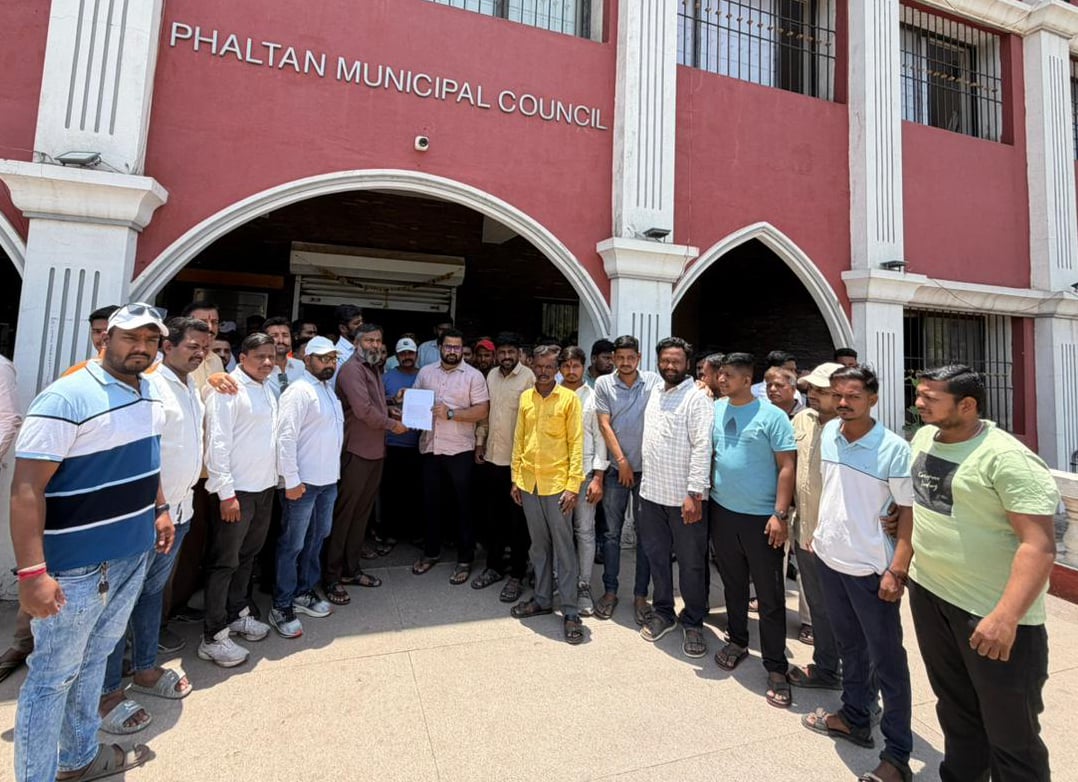
The memorandum states that Chhatrapati Shivaji Maharaj and various historical dynasties had granted hundreds of acres of land as ‘Inam’ (grants) to temples to sustain daily rituals, annakshetra (community kitchens), and annual festivals. Sections 3 and 4 of the proposed act seek to cancel all these Inams at once and hand over lands donated to the deities to private entities. Section 1(2) of the Act is highly discriminatory as it completely exempts Waqf Board lands from the purview of this law, giving them special protection. While Hindu temple lands are being confiscated, protection is being extended to the Waqf Board, which has illegally usurped thousands of acres of Hindu land. It is extremely unfortunate that a government elected by Hindu votes is practising such religious discrimination.
Furthermore, Section 18 of the draft stipulates that devotees or trustees will have no right to approach civil courts against any arbitrary decision taken by revenue officers. This effectively closes the doors of the judiciary to Hindus in a democracy. Instead of removing illegal encroachments from Devasthan lands, granting direct ownership rights to those who encroached prior to January 1st, 2011, amounts to the legal plunder of sacred temple properties.
Taking cognisance of this statewide agitation, Ratnagiri Guardian Minister Uday Samant has assured that he will write to the Chief Minister requesting that this law not be implemented. Additionally, Mandir Mahasangh National Coordinator Shri. Sunil Ghanwat personally met Honourable Chief Minister Devendra Fadnavis and Honourable Deputy Chief Minister Eknath Shinde and registered his strong protest against the proposed law. Both the Chief Minister and Deputy Chief Minister have assured that they will soon hold a special meeting with the Revenue Minister on this issue.
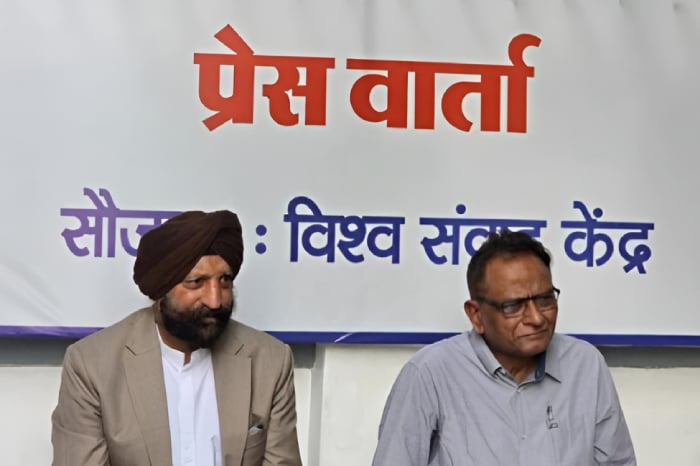
Press conferences held across Maharashtra
Sawantwadi
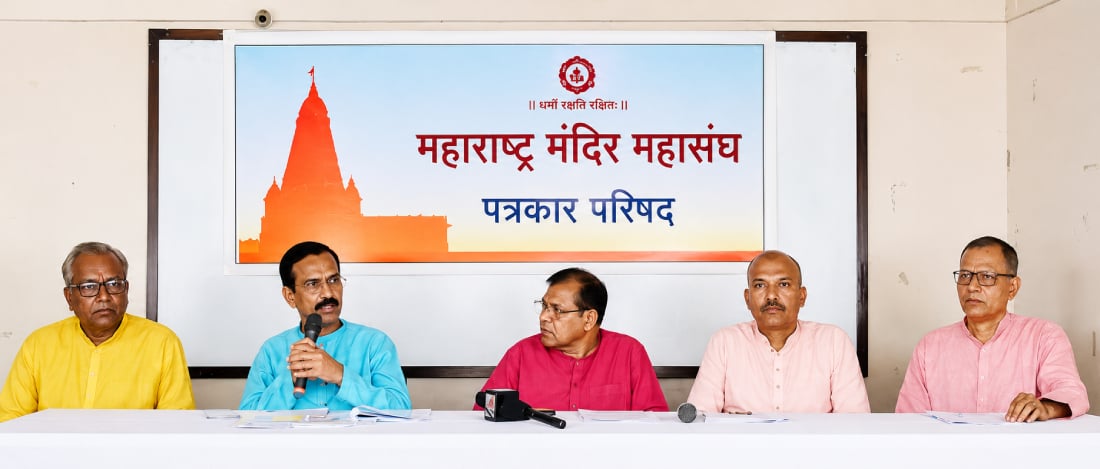
At the press conference held in Sawantwadi (from left): Shivram Desai, Sanjay Joshi, Sadguru Satyawan Kadam, Rajendra Patil, and Viresh Mainkar.
Jalgaon
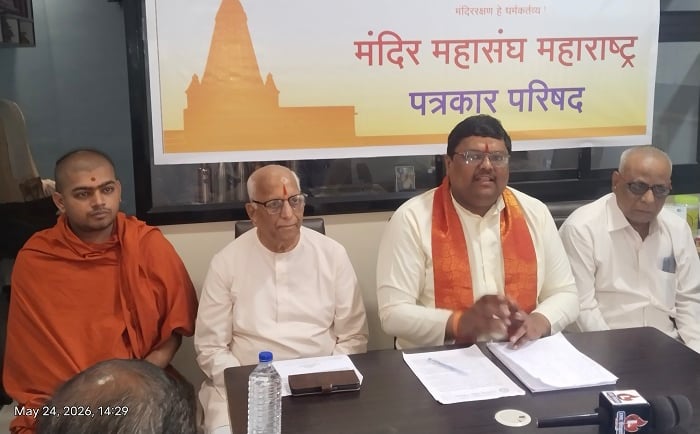
Solapur
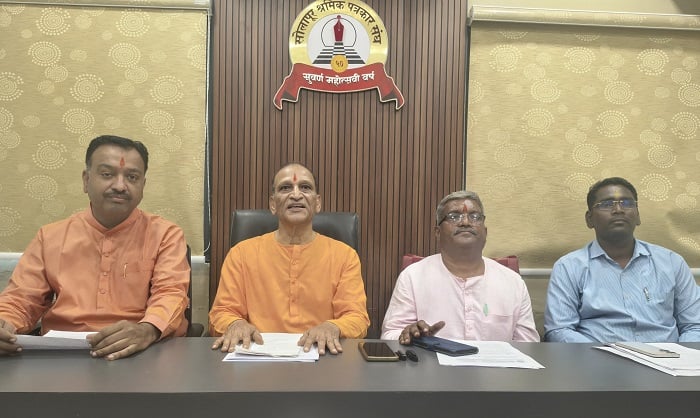
Kolhapur
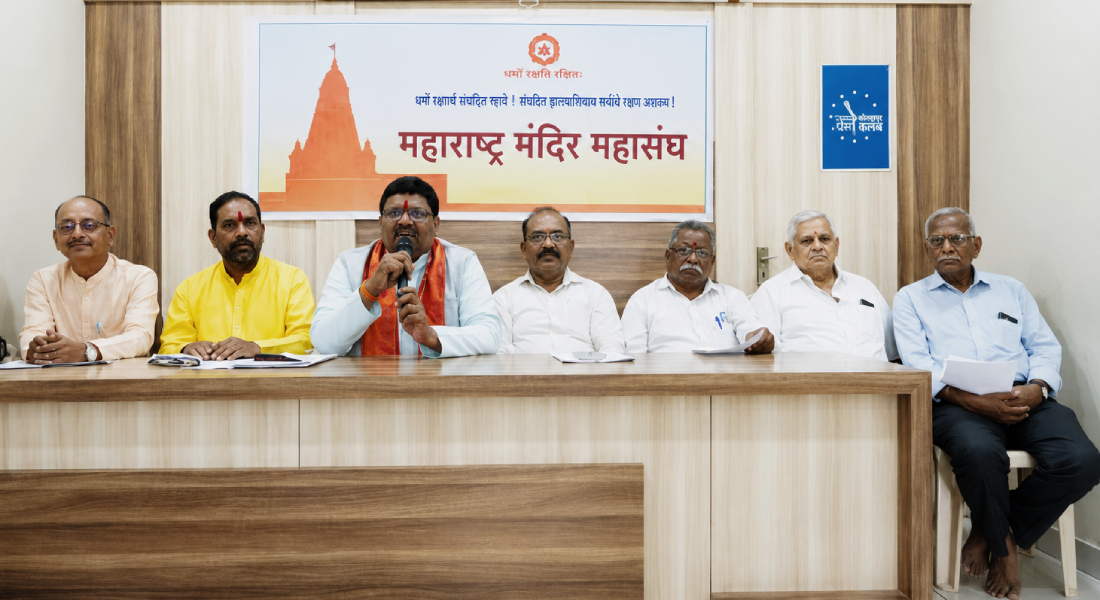
Ashtavinayak temple trustees unite against proposed Devasthan Inam Abolition Act 2026
May 21, 2026
Mandir Mahasangh and Ashtavinayak Temple Committee Demand Withdrawal
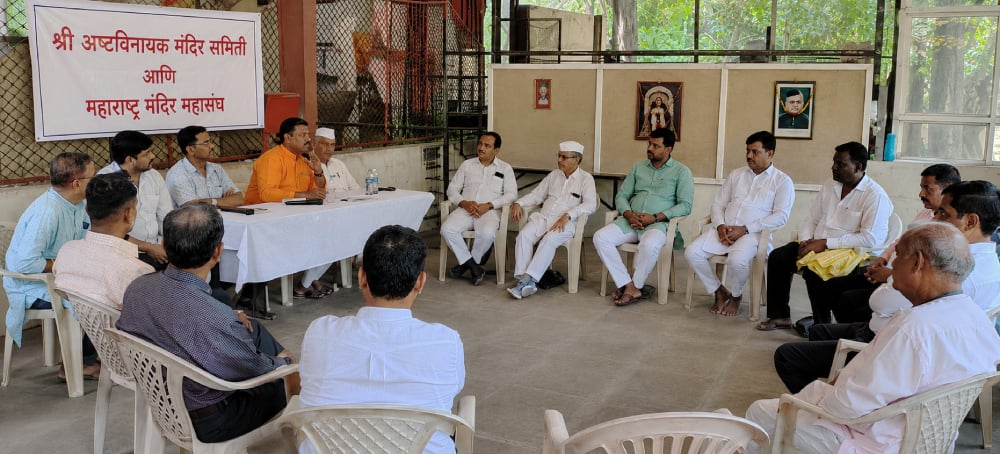
A meeting was held on 18 May at Sarasbaug in Pune by the Shri Ashtavinayak Temple Committee and Maharashtra Mandir Mahasangh, demanding that the state government immediately and unconditionally withdraw the ‘Maharashtra Devasthan Inam Abolition Draft Act, 2026’, which could put hundreds of acres of land belonging to the Ashtavinayak Devasthans, centres of Maharashtra’s cultural identity and the faith of millions of Hindus—at risk.
The meeting included detailed discussions on opposing the proposed law related to temple lands in Maharashtra.
Present at the meeting were trustees and office-bearers from various Devasthans, including Shri Keshav Vidwans from the Chinchwad Devasthan Trust (which manages Shri Mayureshwar, Morgaon; Shri Chintamani, Theur; Shri Siddhivinayak, Siddhatek; and Shri Morya Gosavi Sanjivan Samadhi Mandir), Shri Jitendra Gadre, President of Shri Ballaleshwar Devasthan (Pali) Trust, Dr. Pinakin Kunte, Shri Ganesh Tembhekar from Shri Vighnahar Ganapati Devasthan Trust, Ozar, and Shri Sunil Ghanwat, National Coordinator of Maharashtra Mandir Mahasangh.
“This law is a conspiracy to destroy Hindu temples” – Dr. Pinakin Kunte
Dr. Pinakin Kunte stated that the law is a major political conspiracy aimed at undermining the core spirit of Hindu temples and culture. He remarked that while the government does not act against institutions such as the Waqf Board, it is attempting to take over temple lands and transfer them to builders and corrupt politicians.
He emphasised that Hindus must unite to oppose this law for the protection of Devabhoomi.
“A systematic attempt to weaken Hindu Devasthans” – Keshav Vidwans
Shri. Keshav Vidwans stated that the structure of the law indicates a systematic attempt to weaken and eventually eliminate Hindu Devasthans. He pointed out that many temples already have limited income.
He further highlighted that despite government offices and public facilities being built on Devasthan lands, no financial return is provided to the Devasthans. In several cases, even the Devasthan’s name has been removed from land records.
“Protecting temple lands will boost religious tourism” – Jitendra Gadre
Shri. Jitendra Gadre emphasised that religious tourism accounts for a significant portion of the country’s tourism sector. Providing facilities such as free parking, accommodation, and themed infrastructure on Devasthan lands could increase devotee participation and contribute to the growth of temples, Dharma, and the nation.
He also stressed the need to identify neglected or ‘hidden’ Devasthans and build a wider movement.
“Encroachments on Devasthan lands must be removed immediately” – Ganesh Tembhekar
Shri. Ganesh Tembhekar stated that instead of strengthening temple lands and making Devasthans financially self-reliant, the government appears to be acting in the opposite direction.
He urged the government to take immediate steps to remove all encroachments on Devasthan lands.
“To prevent injustice, Waqf land should be returned to original holders” – Sunil Ghanwat
Shri. Sunil Ghanwat stated that the proposed law affects only Hindus, while lands under the Waqf Board are excluded.
He called for returning Waqf land to its original holders and urged Hindus to organise democratic and legal efforts. He also suggested submitting objections before 5 June, forming a committee of advocates, and implementing a strict ‘Anti-Land Grabbing Act’ in Maharashtra, similar to laws in Gujarat and Karnataka.
May 18, 2026
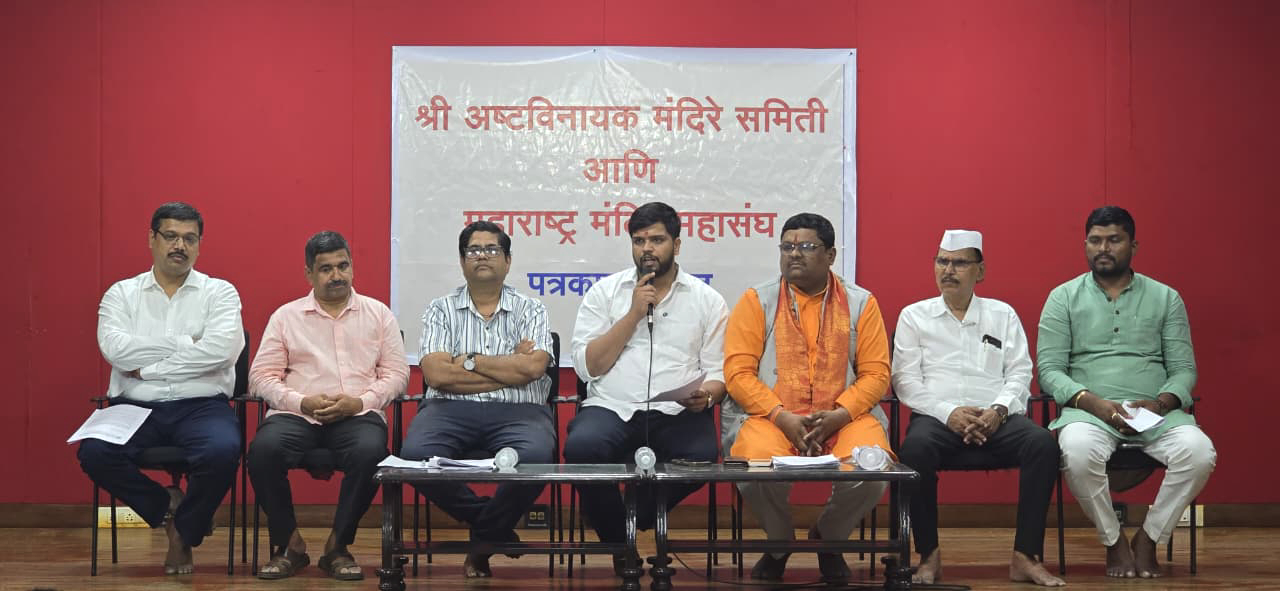
Pune, Maharashtra – In a major development, the trustees of the historic Ashtavinayak temples have formed a united front to fiercely oppose the state government’s proposed ‘Maharashtra Devsthan Inam Abolition Draft Act, 2026’. In a joint press conference held in Pune today, the Ashtavinayak Temples Committee demanded an immediate and unconditional withdrawal of the draft law, labelling it a “systematic conspiracy” by the Revenue and Forest Department to dismantle the autonomy and historical financial sustenance of Hindu temples.
🚩 Ashtavinayak Temples Unite Against the Maharashtra Devasthan Inam Abolition Draft Act 2026
Trustees of the Ashtavinayak temples — Morgaon, Theur, Siddhatek, Pali, Mahad, Ozar and others — jointly declared in a press conference:
“Immediately withdraw this proposed law that… pic.twitter.com/nS2KD94Pro
— Sunil Ghanwat 🛕🛕 (@SG_HJS) May 19, 2026
The high-profile press conference saw a joint convergence of key spiritual leaders and trustees representing the cultural and religious backbone of Maharashtra. Prominent attendees included Shri. Keshav Vidwans, Trustee of the Chinchwad Devsthan Trust (which manages the temples of Shri Mayureshwar at Morgaon, Shri Chintamani at Theur, Shri Siddhivinayak at Siddhatek, and the Shri Morya Gosavi Sanjeevan Samadhi Temple); Shri. Jitendra Gadre (Trustee) and Shri. Vaibhav Apte (Vice President) of the Shri Ballaleshwar Devsthan Trust, Pali; Shri. Balkrishna Kawade, President of the Shri Vighnahar Ganapati Devsthan Trust, Ozar; Shri. Kiran Kashikar, Trustee of Shri Ganapati Devsthan, Mahad; and Shri. Sunil Ghanwat, National Organiser of the Maharashtra Mandir Mahasangh.
Threat to historical legacies and autonomy
Addressing the media, Shri. Keshav Vidwans highlighted the historical significance of the lands in question. He stated that centuries ago, Chhatrapati Shivaji Maharaj, the Peshwas, and various royal dynasties granted hundreds of acres of land as ‘Inam’ (endowments) to the Ashtavinayak temples across Morgaon, Siddhatek, Pali, Mahad, Theur, Lenyadri, Ozar, and Ranjangaon. These endowments were explicitly designated to ensure that essential spiritual and social activities, such as trikal puja-archa, mahaprasad, continuous community kitchens (akhand annachhatra), naivedya, and annual festivals, could continue perpetually.
“According to established legal frameworks, the Deity or idol of a temple is recognized as a ‘juristic person’ and remains the rightful, sole owner of these lands,” Vidwans explained. “However, under Sections 3 and 4 of this proposed law, these historical endowments will be abolished in a single stroke. The Deity’s sacred lands will be reclassified as private property under the names of occupants, hereditary tenants (mirasdars), or priests.”
Shri. Vidwans expressed grave concerns that stripping the Deities of land ownership would lead to widespread commercialisation, opening the doors for the land mafia to construct commercial malls or hotels on these sacred lands. He warned that once their primary independent sources of income are destroyed, these historically self-reliant Devsthans will be left at the mercy of government subsidies.
Constitutional bias and legal overreach
The committee also raised sharp objections regarding the legal framework of the draft, accusing the government of clear discrimination. Shri. Jitendra Gadre pointed out that Section 1 (Subsection 2) of the draft explicitly exempts and protects lands under the jurisdiction of the Waqf board from the purview of this Act.
“Targeting Hindu temple lands for ‘abolition’ while granting a legal shield to institutions of other faiths is a direct violation of the ‘Right to Equality’ guaranteed under Article 14 of the Constitution,” stated Shri. Gadre. He questioned how a state operating under secular policies could subject the majority Hindu community and its sacred institutions to such secondary treatment.
Furthermore, the committee flagged Section 18 of the Act as highly anti-democratic. The provision bars devotees and temple trustees from approaching a Civil Court to challenge arbitrary decisions made by revenue officials like Tehsildars or District Collectors. Shri. Gadre criticised this closure of judicial doors as administrative tyranny. He also condemned a controversial clause in the draft that seeks to regularise and grant direct ownership rights to illegal encroachers who occupied Devasthan properties prior to 1 January 2011, calling it the “legal looting” of sacred assets.
Mandir Mahasangh outlines key demands
Articulating the collective demands of the temples, Shri. Sunil Ghanwat, National Organiser of the Maharashtra Mandir Mahasangh, stated that nothing short of a permanent scrap of the draft law would be acceptable.
To ensure the gravity of the situation is understood at the grassroots level, Shri. Ghanwat demanded the following immediate actions from the state government:
- Extension of deadline: The deadline for submitting public objections must be extended by at least two months so that remote villages, local devotees, and smaller temples can voice their opposition.
- Anti-land grabbing law: Maharashtra must implement a strict ‘anti-land grabbing Act’ on the lines of Gujarat to provide robust legal safeguards for temple properties.
- 7/12 record amendments: To permanently halt illegal sales or transfers, a legally binding entry stating ‘non-transferable’ and ‘Devasthan land: Restricted tenure type’ must be made mandatory on all temple-related 7/12 land records.
Warning of statewide agitation
Concluding the briefing, Shri. Ghanwat emphasised that temple land is a sacred heritage tied directly to Hindu faith and culture rather than a mere real estate commodity. He issued a stern warning to the administration, stating that if the government attempts to forcefully pass the legislation against public sentiment, it will trigger a massive, unified public agitation across Maharashtra. This movement, he noted, will bring together various religious institutions, spiritual sects, temple trustees, the Maharashtra Mandir Mahasangh, and crores of Ganesha devotees.
Mandir Mahasangh strongly opposes Maharashtra Devasthan Inam Abolition Draft Act 2026
May 17, 2026
-
Memorandum submitted to Chief Minister and Deputy Chief Minister
-
Chief Minister directs administration to hold meeting with temple trustees in presence of Revenue Minister
The proposed Maharashtra Devasthan Inam Abolition Draft Act 2026, introduced by the state government’s Revenue and Forest Department, has raised concerns about the future of Devasthan lands. Revenue Minister Chandrashekhar Bawankule has indicated that the law may be introduced in the upcoming session.
Reacting to the proposal, the Mandir Mahasangh stated that the law could adversely affect the existence of Hindu Devasthans and benefit land-related interests.
To oppose the proposed law and demand its withdrawal, the Mandir Mahasangh has been submitting memorandums at multiple locations across Maharashtra, including the CM and Deputy CM.
The proposed ‘Maharashtra Devasthan Inam Abolition Draft Act 2026’ poses a major difficulty for temple lands and their management. Millions of temple trustees across the state are strongly opposing this law.
In this regard, a memorandum was submitted to the Hon. Chief Minister… pic.twitter.com/eQl42s2t0m
— Sunil Ghanwat 🛕🛕 (@SG_HJS) May 15, 2026
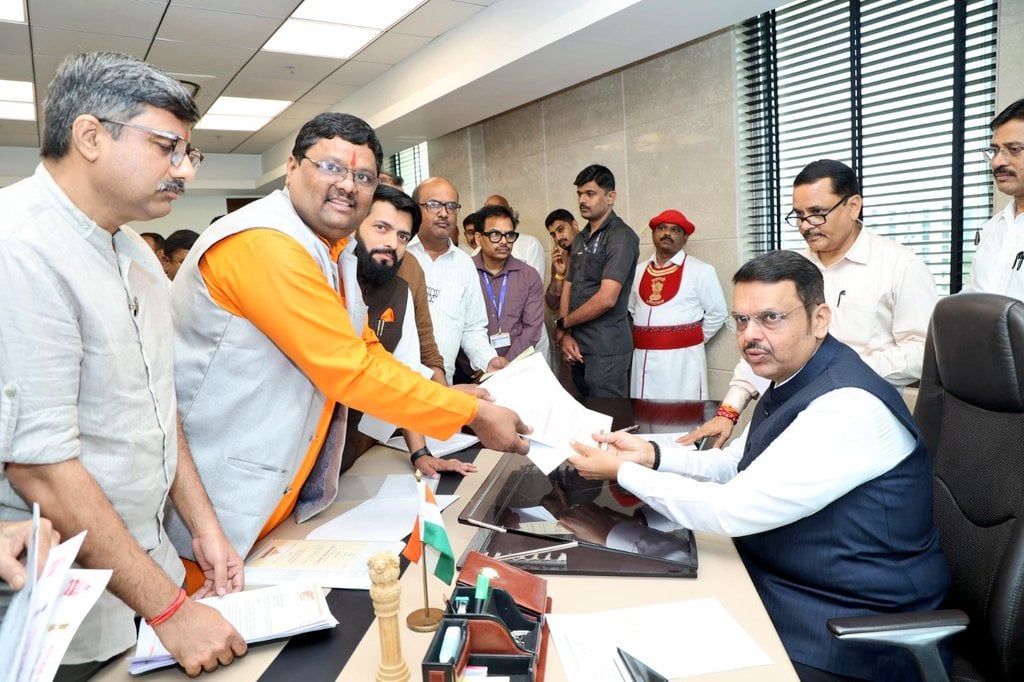
The Mandir Mahasangh has taken the stand that Devasthan Inam lands should not be sold. In this regard, National Coordinator of Mandir Mahasangh, Shri. Sunil Ghanwat met Chief Minister Devendra Fadnavis at Mantralaya on 14 May and presented the concerns of temple trustees.
Following this, the Chief Minister directed the administration to organise a meeting of temple trustees in the presence of the Revenue Minister.
Demand raised with Deputy Chief Minister to scrap proposed Act
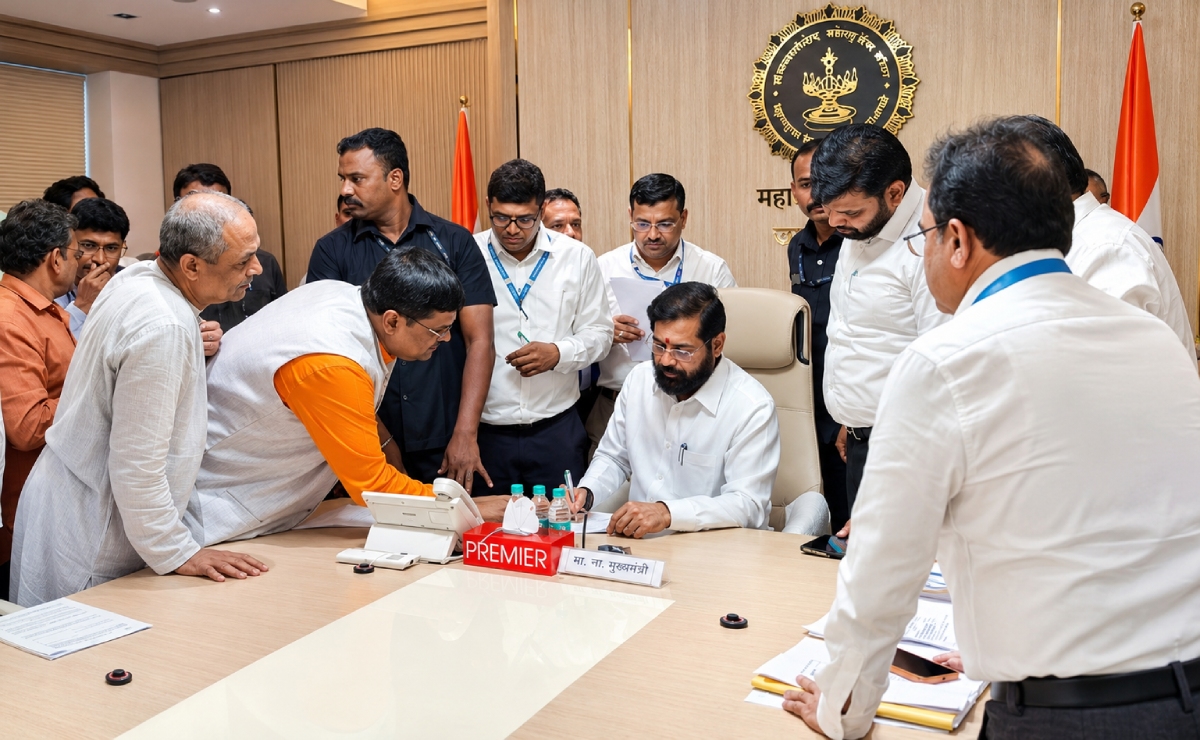
Shri. Sunil Ghanwat also met Deputy Chief Minister Eknath Shinde on 14 May and submitted a memorandum demanding that the proposed Devasthan Inam Abolition Act be scrapped.
The Deputy Chief Minister also directed that a meeting be held with the Revenue Minister on this matter.
Revenue Minister assures to understand trustees’ stand
The draft Act has invited suggestions and objections until 5 June. Since the proposal may allow the sale of temple lands, there is growing concern among temple trustees across the state.
The Mandir Mahasangh, through its National Coordinator Shri. Sunil Ghanwat, urged Revenue Minister Chandrashekhar Bawankule to consider the concerns of trustees. The Minister assured that a meeting with temple trustees would be held on 21 May. Shri. Ghanwat met him at Mantralaya on 14 May to present these concerns.
Memorandum submitted across Maharashtra against the proposed Maharashtra Devasthan Inam Abolition Draft Act
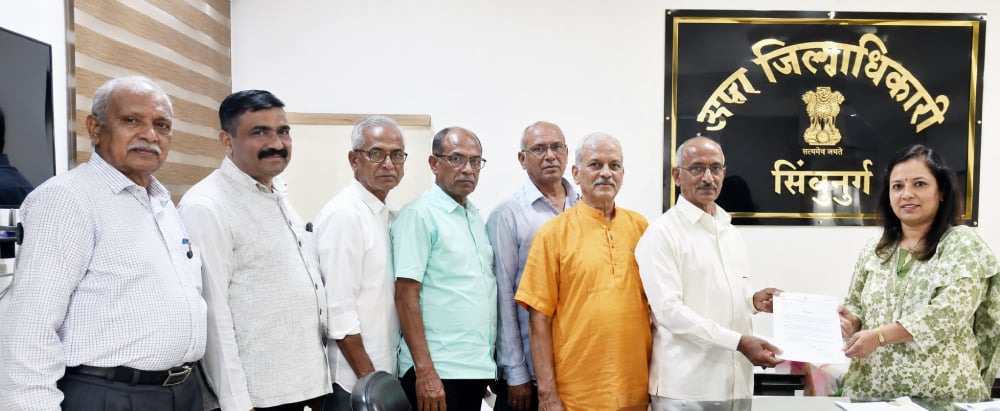
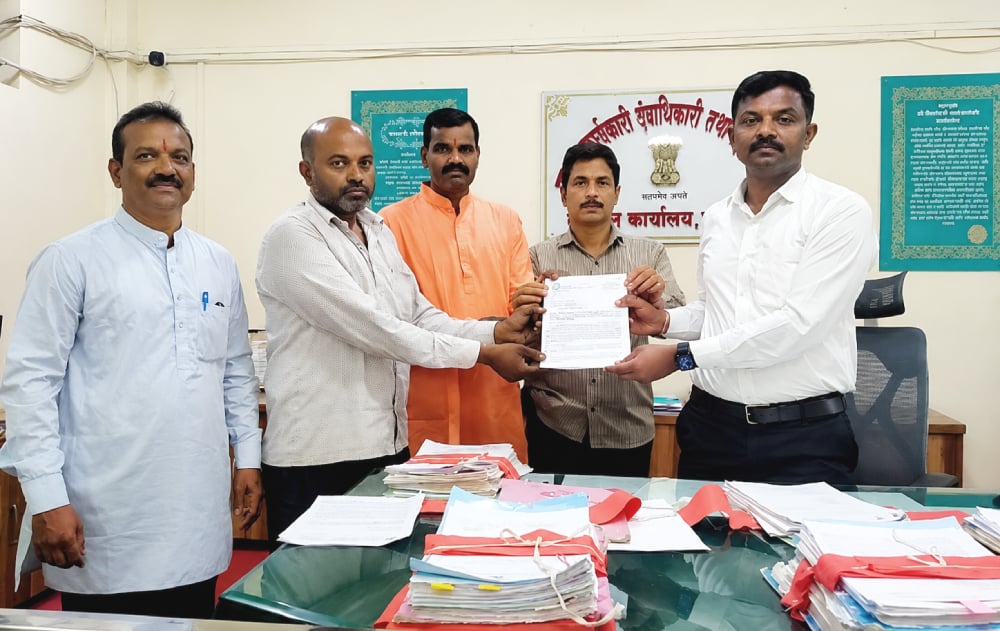
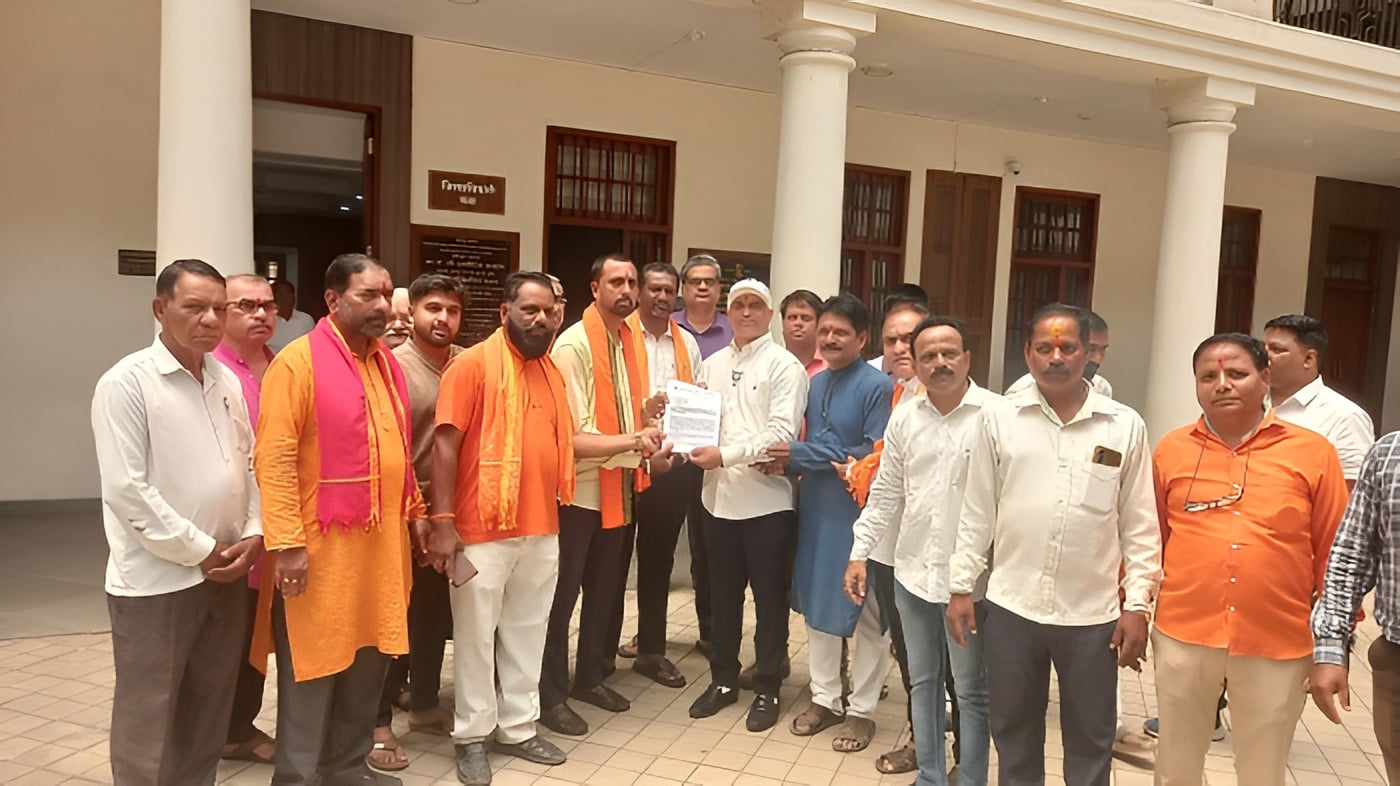
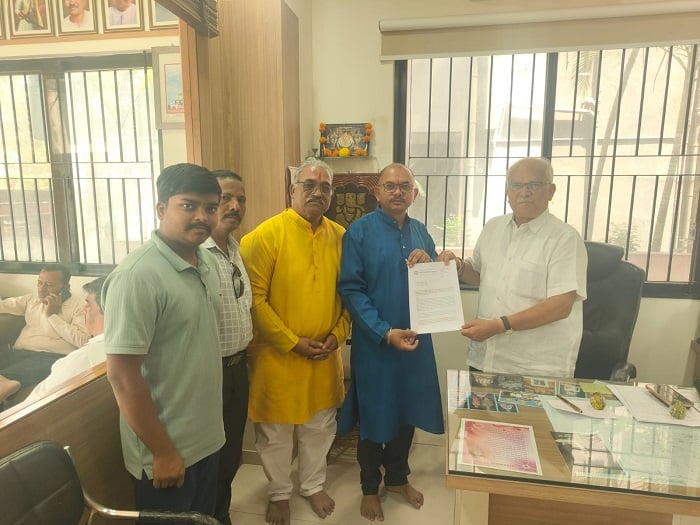
To oppose the proposed law and demand its immediate withdrawal, the Mandir Mahasangh submitted memorandums to administrators at various locations across Maharashtra.
Raigad
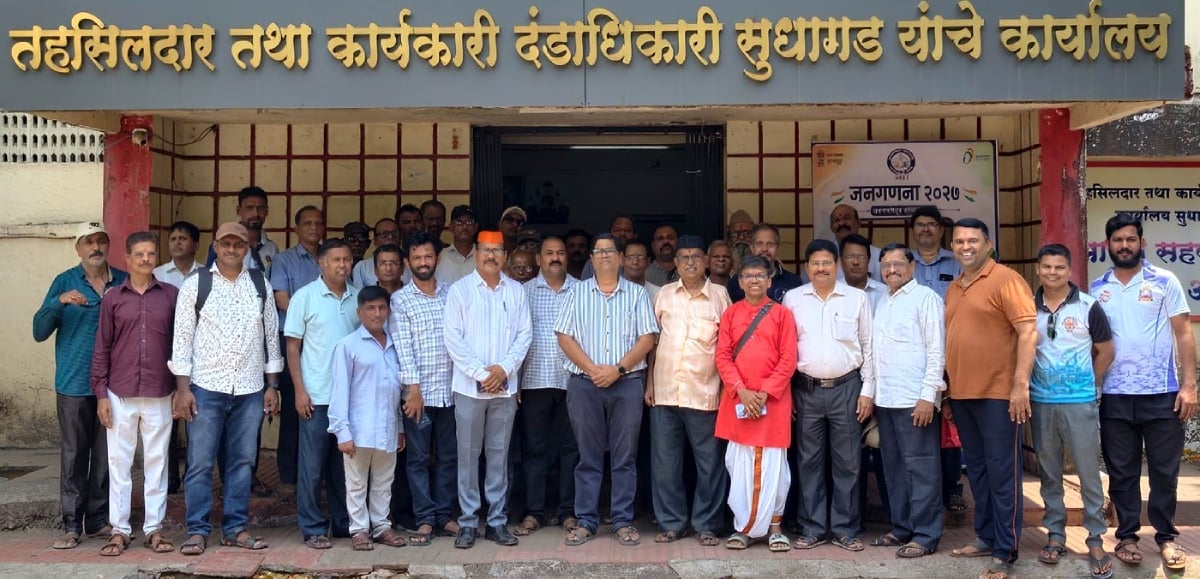
Temple trustees from various temples in Raigad district have strongly opposed the anti-democratic draft and demanded that the government immediately withdraw the proposed Act. In this regard, temple trustees from Raigad submitted a memorandum to Tehsildar Uttam Kumbhar at the Sudhagad Tehsil Office on 20th and 21st May.
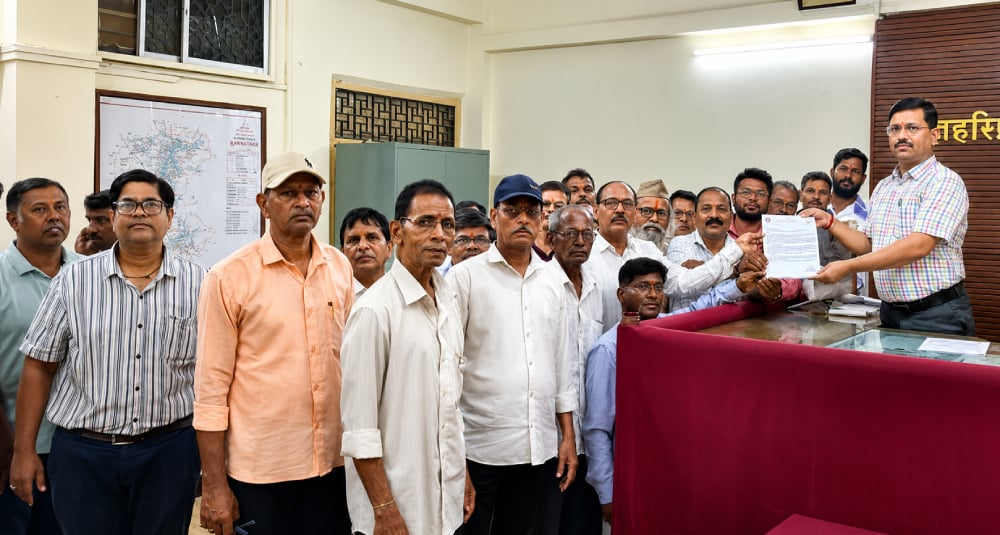
Present during the submission of the memorandum were temple trustees, devotees, and religious enthusiasts from Raigad.
The memorandum was submitted under the leadership of Jitendra Gadre, President of ‘Shri Ballaleshwar Devsthan’ at Pali (one of the Ashtavinayak temples), along with Pradeep Tukaram Langi, President of ‘Shri Uddhar Rameshwar Devsthan’, Vaibhav Apte, Vice President of Ballaleshwar Devsthan, Raju Patere of ‘Ramwadi Devsthan’, Yogesh Upadhye of ‘Vishnu Devsthan’, Pramod Pawgi of ‘Pali Devsthan’, Abhijit Chandorkar, President of ‘Maruti Devsthan’, Sanjay Ghosalkar, President of ‘Mari Mata Temple’, Mahadev Pimple, Trustee of ‘Mahakali Devsthan’, and Maharashtra Mandir Mahasangh representative Rajendra Pawaskar, along with more than 60 devotees and religious enthusiasts.
Chhatrapati Sambhajinagar
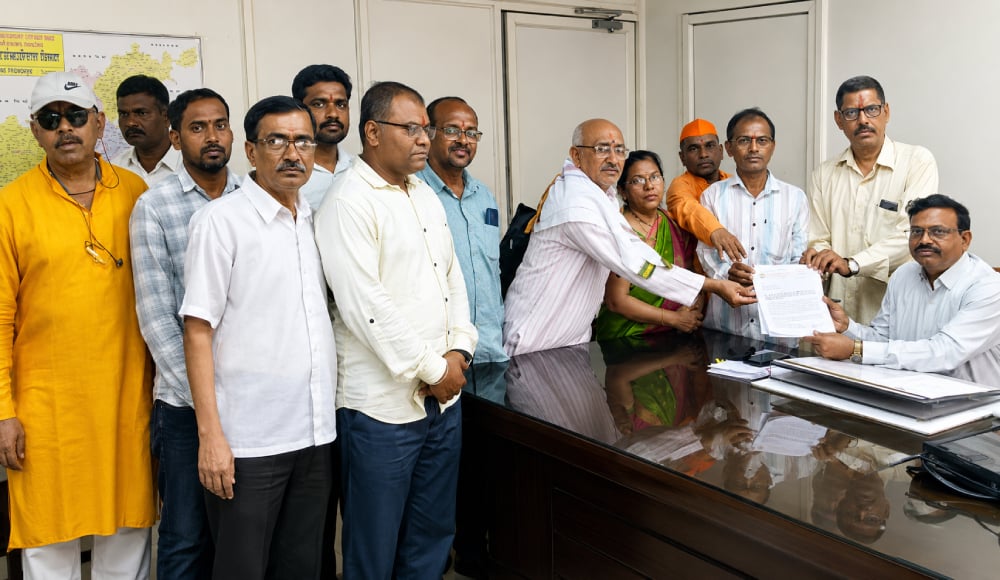
A memorandum was submitted by the Maharashtra Mandir Mahasangh to the District Collector’s Office in Chhatrapati Sambhajinagar in protest against the Maharashtra Government’s proposed ‘Maharashtra Devsthan Inam Abolition Model Act 2026’. The memorandum was handed over to Additional District Collector Sambhaji Adkune.
On this occasion, along with the Mandir Mahasangh, H.B.P. Arun Maharaj Pimple, and office bearers from Chhatrapati Shivray Pratishthan, Shri Grishneshwar Temple Devsthan Trust, Shri Bhadra Maruti Sansthan, Shri Dashmesh Nagar Vikas Sanstha Dashmeshnagar, and Shri Sant Kashi Vishwanath Baba Sansthan Beed Bypass were present.
Jalna
A memorandum was also submitted to the District Collector, Smt. Ashima Mittal, in Jalna. On this occasion, office bearers from the Mandir Mahasangh, Shri Balaji Temple Devsthan, Shri Nar Narayan Temple, Shri Amruteshwar Mahadev Temple, and Shri Ram Temple were present.
Kolhapur
A memorandum addressed to the Chief Minister, demanding the repeal of the ‘Maharashtra Devsthan Inam Nirmulan Prarup Adhiniyam, 2026’, was submitted by the Maharashtra Mandir Mahasangh to the Collector of Kolhapur, Dr Vijay Rathod.
On this occasion, Chandgad BJP MLA Shivajirao Patil was also present. He assured that the demand of the Mandir Mahasangh is justified and that he would present their concerns before the government.
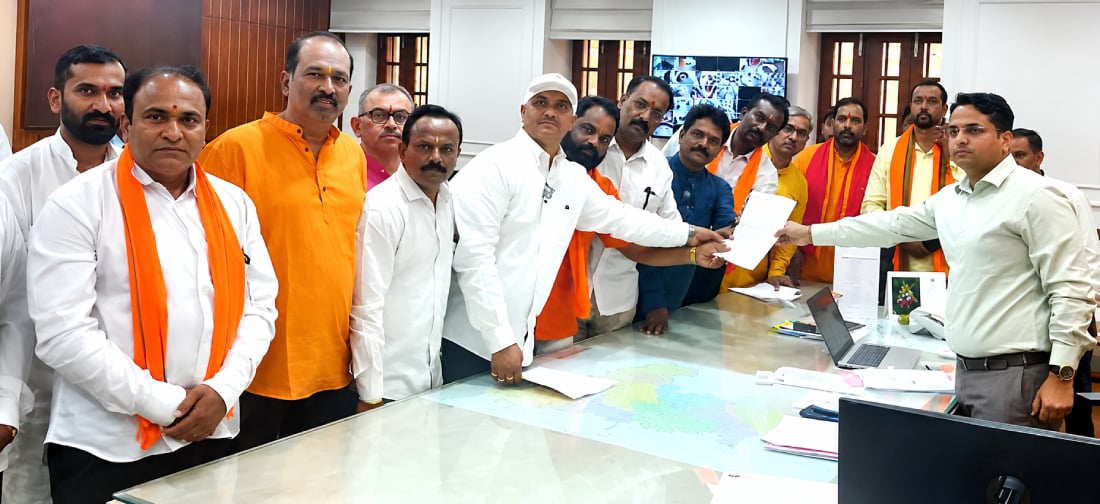
Those present while submitting the memorandum in Kolhapur included Maharashtra Mandir Mahasangh co-convenor Ashok Gurav, ‘Jotiba Devsthan’ priest Ranjit Chaugule and Omkar Bankar, Mangaon Maruti Temple priest Krishnat Gurav, Hari Pujari, Shiv Sena (UBT) Deputy District President Sambhajirao Bhokare, ‘Maharaja Pratishthan’ founder Niranjan Shinde, Shiv Sena Deputy District President Kishor Ghatge, ‘Namo Namo’ District President Vikramsingh Jarge, and Shashi Bidkar, Tanaji Angre, Bhimrao Patil, Dattatray Gawde, Hindu Mahasabha’s Prashant Patil, and Hindu Janajagriti Samiti’s Shivanand Swami.
1. Shahuwadi
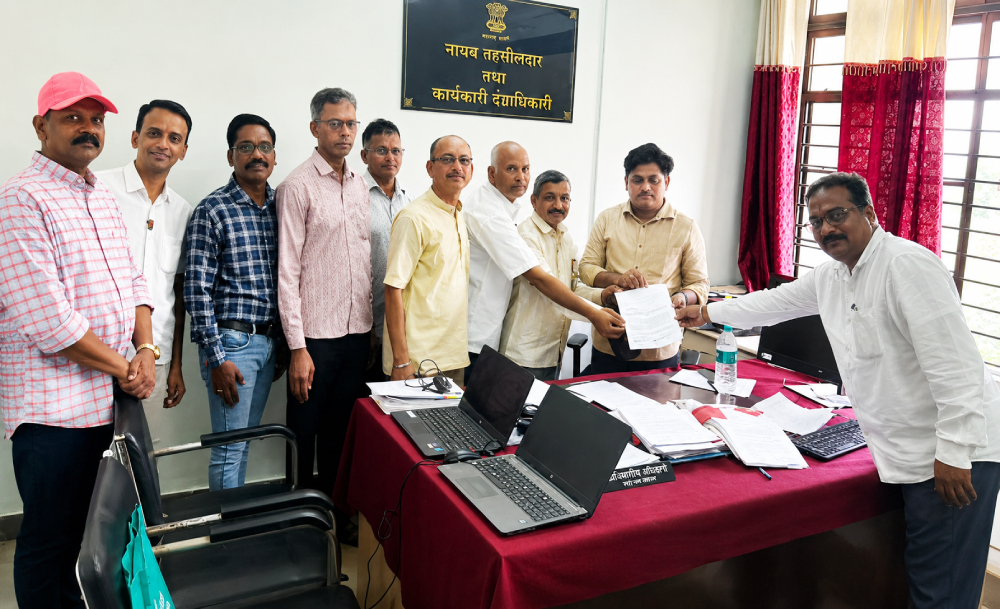
Shahuwadi Naib Tahsildar Pradeep Jadhav accepted the memorandum. Those present included Mandir Mahasangh coordinator Prasad Kulkarni, Councillor Mahesh Kothavale, former Councillor Udaysingh Kokare-Desai, and Dilip Gurav, Vijay Gurav, Prashant Nilkanth, Ramesh Padwal, Jitendra Pandit, Anant Done, Vijay Morabale, etc.
2. Hatkanangle
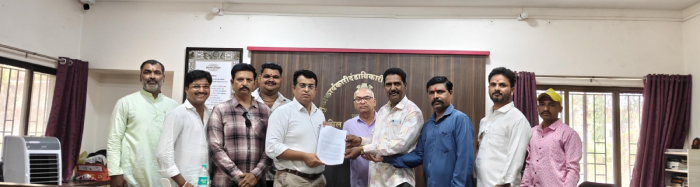
The memorandum was submitted to Tahsildar Sushil Belhekar. Those present included priests Prashant Khot, Ramchandra Jadhav, Ajit Koli, Rahul Karande, BJP’s Abhijit Arwade, Raosaheb Chaugule, Pankaj Buddhe, Shiv Pratishthan Hindusthan’s Deepak Koli, Sachin Dongre, Nitin Shinge, Rishikesh Bankar, and Hindu Janajagriti Samiti’s Santosh Sanagar.
3. Gandinglaj
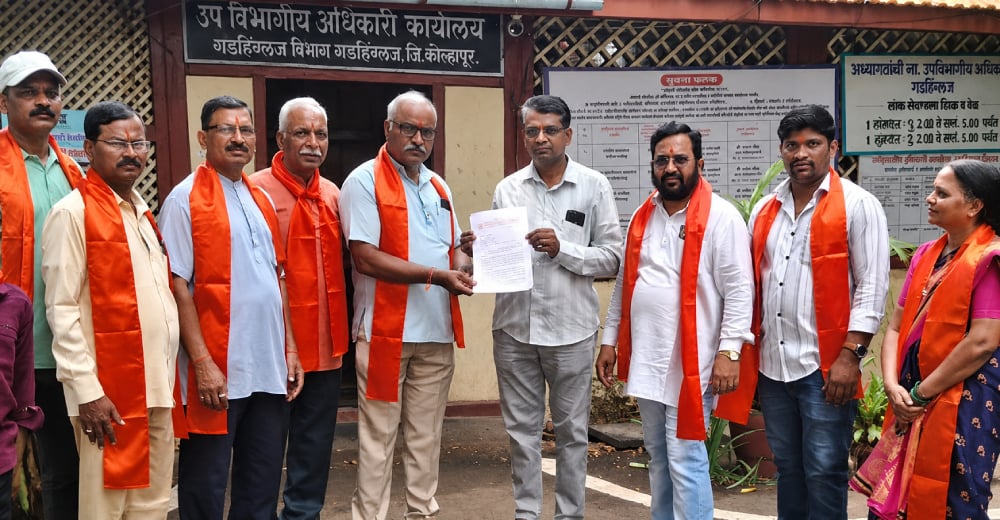
A memorandum was submitted at the office of the Sub-Divisional Officer in Gadhinglaj.
Subhash Chothe (Gadhinglaj Taluka Co-convenor of the Mandir Mahasangh), Vaman Bilavar of the Hindu Janajagruti Samiti, Sanjay Sankpal of the Shiv Sena, and devout Hindu Rahul Khot were present.
4. Shirol
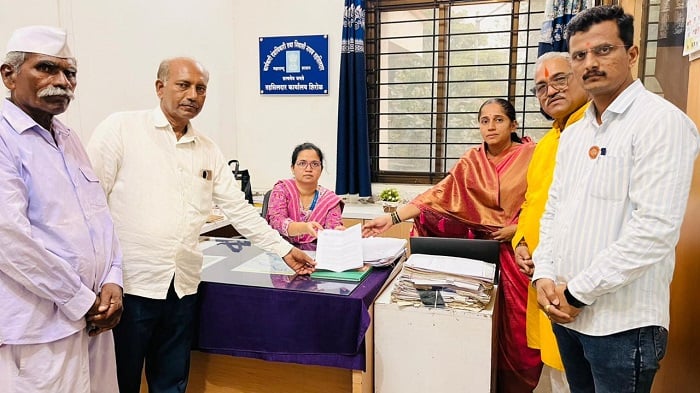
In Shirol, the Resident Naib Tehsildar, Smt. Kranti Patil, accepted the memorandum.
Sanjay Ghatge (Sangli District Coordinator of the Maharashtra Mandir Mahasangh), Bhagwant Jambhale (Chief Trustee of the Datta Temple), Advocate Manisha Mane of Sanatan Sanstha, Ravindra Mahatme of the ‘Swami Samarth Sampradaya’, Vilas Mahatme of the Warkari Sampradaya, and devout Hindu Vinayak Sawant, were present.
Sangli
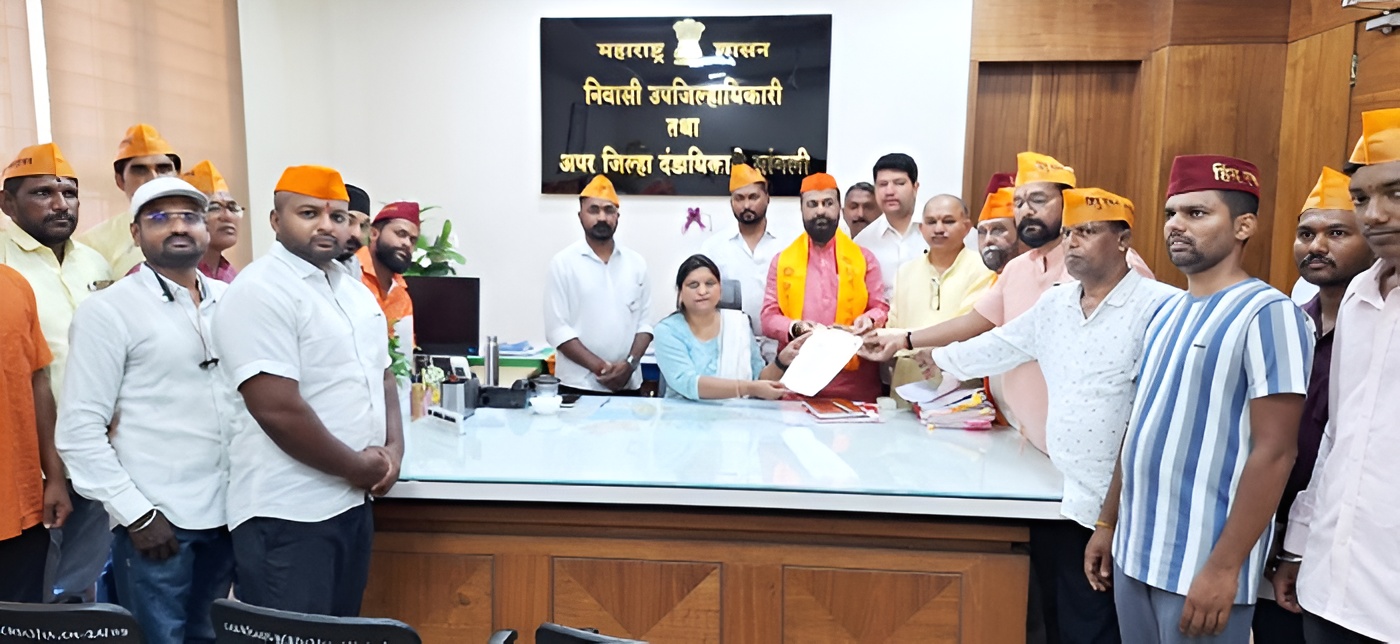
In Sangli, the Resident Deputy Collector Dr Snehal Kaniche accepted the memorandum at the District Collector’s office. Those present included Hindu Ekta Andolan State President and former MLA Nitinraje Shinde, Miraj City President Mr Somnath Gotkhinde, District Vice-President Raju Jadhav, Dattatray Bhokare, Avadhoot Jadhav, Sachin Bhosale, Vijaysingh Rajput, ‘Shri Jnanagiri Math’ Shivprasad Satpute, Veerbhadra Temple trustee Ashok Kabade, ‘Gokulnandan Gaushala’ Nitesh Jadhav, ‘Gawli Samaj Shri Krishna Mandir’ Manoj Gawli, Raju Gawli, Hindu Janajagriti Samiti’s Santosh Desai, Mandir Mahasangh’s Sanjay Ghatge, Gondhali Samaj’s Nitin Borawat, and Advocate Sumedh Thanedar.
Memorandums were also submitted to Sangli MLA Sudhir Gadgil and Chandgad MLA Shivajirao Patil.
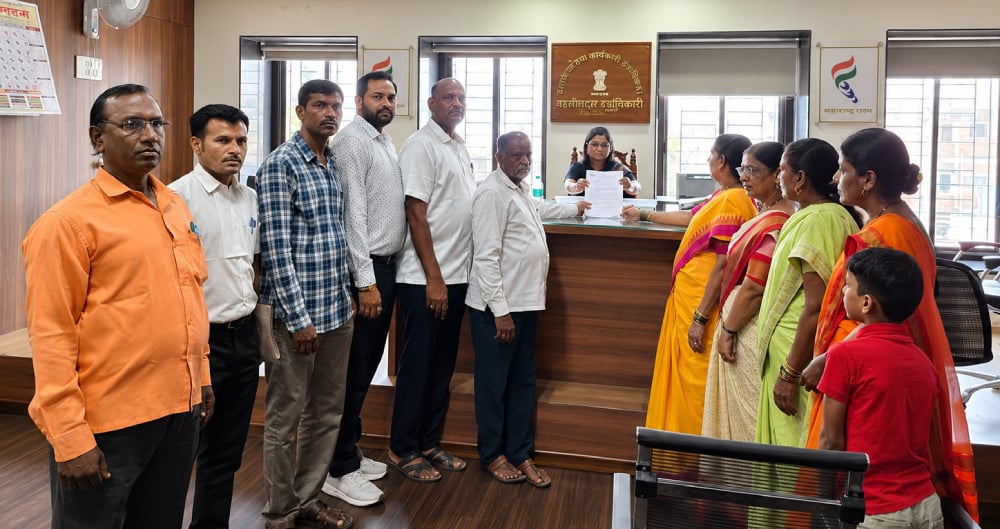
Ahilyanagar
A memorandum demanding the immediate withdrawal of the draft was submitted to P.P. Swami Govinddev Giri Maharaj and NCP MLA Sangram Jagtap.
The memorandum stated that if implemented, the proposed law would end the ownership of temples over Devasthan Inam lands and transfer such lands to current occupants, thereby affecting the foundation of temple administration.


Present on the occasion were District Coordinator Shri. Bharat Shinde, Co-coordinator Shri. Ganesh Palange, Temple Trustee Shri. Om Pandey, District Organisers Shri. Bapu Thange, Rameshwar Bhukan, Mukul Gandhe from Hindu Janajagruti Samiti, along with Amol Humbe, Sanjay Joshi, Chaitanya Shekde, and others.
Oros (Kudal)
A memorandum demanding the immediate withdrawal of the draft was submitted to Additional Collector Shubhangi Sathe.
Present on the occasion were Prakash Ghogale, Rajan Parab, Yashwant Parab, Parshuram Parab, Govind Parab, Gajanan Munj, and Sabaji Parab.