Hindus object to offensive title deliberately targeting Brahmins; Netflix withdraws promotions
This controversy highlights a growing concern over deliberate attempts to divide Hindu society by denigrating a particular caste through digital content. It underscores the urgent need for a Censor Board for OTT platforms to ensure accountability and prevent the misuse of ‘creative expression’ to target the Hindu faith. – Editor, HJS
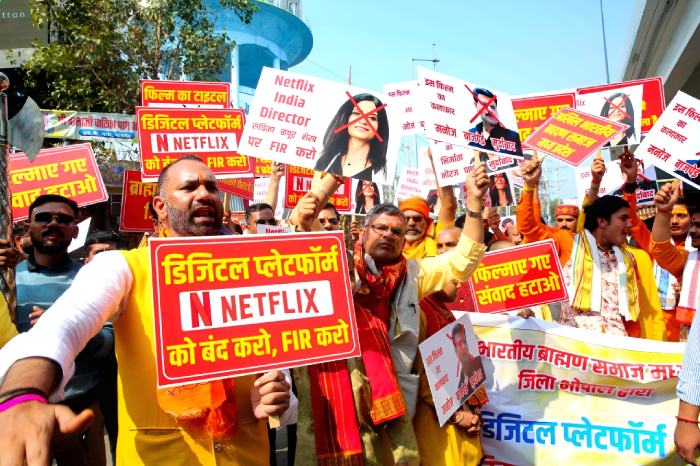
Protests have erupted across the nation against the Netflix series ‘Ghooskhor Pandat’ over its offensive title targeting the Brahmin identity and the portrayal of a Brahmin police officer as corrupt. Protesters say it reflects a systematic pattern of denigrating specific Hindu communities and trying to create a caste-based divide in society under the guise of creative expression.
Ban ‘Ghooskhor Pandat’ for insulting Brahmins
Film on Netflix features Manoj Bajpayee as a corrupt cop named Ajay Dixit
• Outrage grows across the Hindu community; even BSP chief Mayawati has demanded action
👉 This isn’t about a few voices; the entire Hindu community must… pic.twitter.com/r7N5itj9Dj
— Sanatan Prabhat (@SanatanPrabhat) February 6, 2026
Deliberate denigration of Hindu identity
Demonstrations, representations, and formal complaints were reported from multiple states, with protesting Hindus stating that the use of a derogatory title, combined with the negative depiction of a Brahmin character in a position of authority, is unacceptable and has the potential to disturb social harmony. Protesters have stated that the title reflects a systematic pattern of denigrating Hindu communities. Representations submitted to various authorities argue that the series attempts to create caste-based divides under the guise of “creative expression.” Demonstrations, including the burning of effigies of the makers, were reported from several states including Uttar Pradesh, Rajasthan, and Madhya Pradesh.
Netflix withdraws promotional content
Following the sustained outcry, Netflix has reportedly removed the controversial promotional material, including the teaser, from its platform and social media handles. While Hindu groups noted the withdrawal, they stressed that the move is insufficient. They have demanded a total ban or a complete overhaul of the content, asserting that OTT platforms must be held accountable for approving titles that hurt religious and social sentiments.
FIR lodged in Uttar Pradesh by Yogi Government
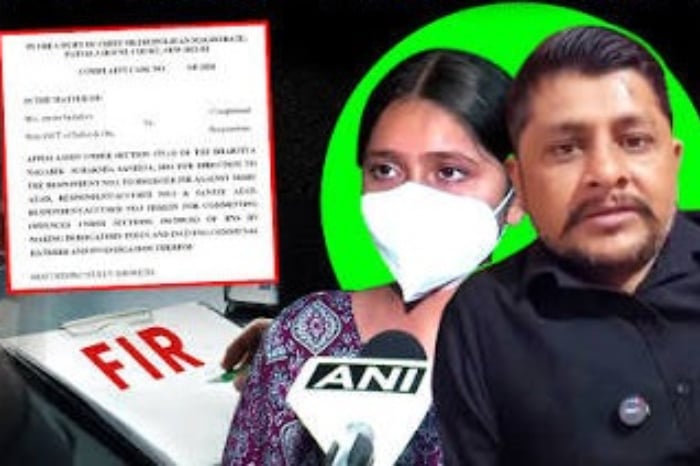
Taking cognisance of the public resentment, the Uttar Pradesh Police, acting under the directives of the Yogi Adityanath-led government, registered an FIR at the Hazratganj police station in Lucknow. The FIR names the makers of the series for attempting to spread social discord and hurting religious and caste sentiments. Police officials stated that the matter is being investigated with a “zero-tolerance” policy toward content that disturbs public order.
Filmmakers issue clarification
Neeraj Pandey issued a clarification claiming the title was a “colloquial nickname” for a fictional character. He said he understands that the film’s title has hurt the sentiments of some viewers and added that in view of these concerns, the makers have decided to withdraw all promotional material for now.
Actor Manoj Bajpayee broke his silence on social media, stating he respects public emotions and that the intent was not to target any community.
I respect the emotions and concerns people have shared, and I take them seriously. When something you are part of causes hurt to some people, it makes you pause and listen.
As an actor, I come to a film through the character and the story I am playing. For me, this was about… https://t.co/IGlQtLQeNs
— manoj bajpayee (@BajpayeeManoj) February 6, 2026
Film body issues notice for unauthorised title
In a significant development, the Film Makers Combine (FMC) issued a formal notice to the creators and Netflix. The body revealed that the makers had not obtained the mandatory authorisation to use the title ‘Ghooskhor Pandat’, adding a layer of legal and professional scrutiny to the controversy.
BSP President Mayawati demands immediate ban
Joining the call for action, Bahujan Samaj Party (BSP) President Mayawati demanded that the Central Government impose an immediate ban on the film. In a statement on X, she condemned the portrayal of the Brahmin community as synonymous with corruption, calling it a “matter of deep sorrow and concern” that insults the community nationwide.
यह बड़े दुख व चिन्ता की बात है कि पिछले कुछ समय से अकेले यू.पी. में ही नहीं बल्कि अब तो फिल्मों में भी ’पंडत’ को घूसखोर आदि बताकर पूरे देश में जो इनका अपमान व अनादर किया जा रहा है तथा जिससे समूचे ब्राह्मण समाज में इस समय ज़बरदस्त रोष व्याप्त है, इसकी हमारी पार्टी भी कड़े शब्दों…
— Mayawati (@Mayawati) February 6, 2026
Saints in Prayagraj demand immediate ban on film
Saints in Prayagraj have raised strong objections to the film.
Swami Hari Narayan Samdarshi Maharaj, president of Siddheshwar Purusharth Balak Ashram, said that films are repeatedly portraying Brahmin saints and Sanatan Dharma in a negative light. If a film can be titled ‘Ghooskhor Pandat’, then why are similar films not made using the names of other religions or communities. Such films, he said, create hostility in society. He demanded that the government impose a ban on the film.
Shringverpur Peethadhishwar Jagadguru Ramanujacharya Swami Narayanacharya Shandilya Ji Maharaj said Bollywood follows a double standard. A particular community is repeatedly targeted through such films, which works to divide society. He demanded a boycott of the film along with action against its makers.
Swami Brahmashram Maharaj, president of the Akhil Bharatiya Dandi Sanyasi Parishad, said films like ‘Ghooskhor Pandat’ harm Sanatan traditions and social harmony. If such films are not stopped, social division will only deepen. He demanded an immediate ban on the film.
Demands for stricter regulation
Hindu organisations have reiterated the need for a stringent regulatory framework for OTT platforms. They asserted that “freedom of expression” cannot be used as a shield to vilify Hindu society or its religious identities and called for a permanent mechanism to prevent such “anti-Hindu” narratives in digital media.