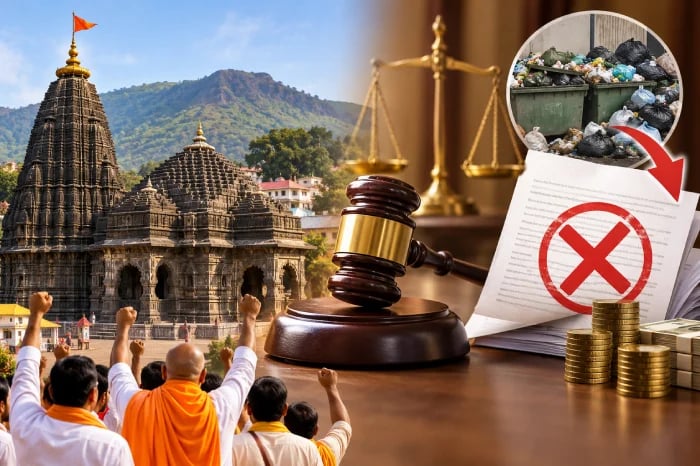
Saints allege identity concealment; write to CM demanding cancellation of the contract and a high-level probe
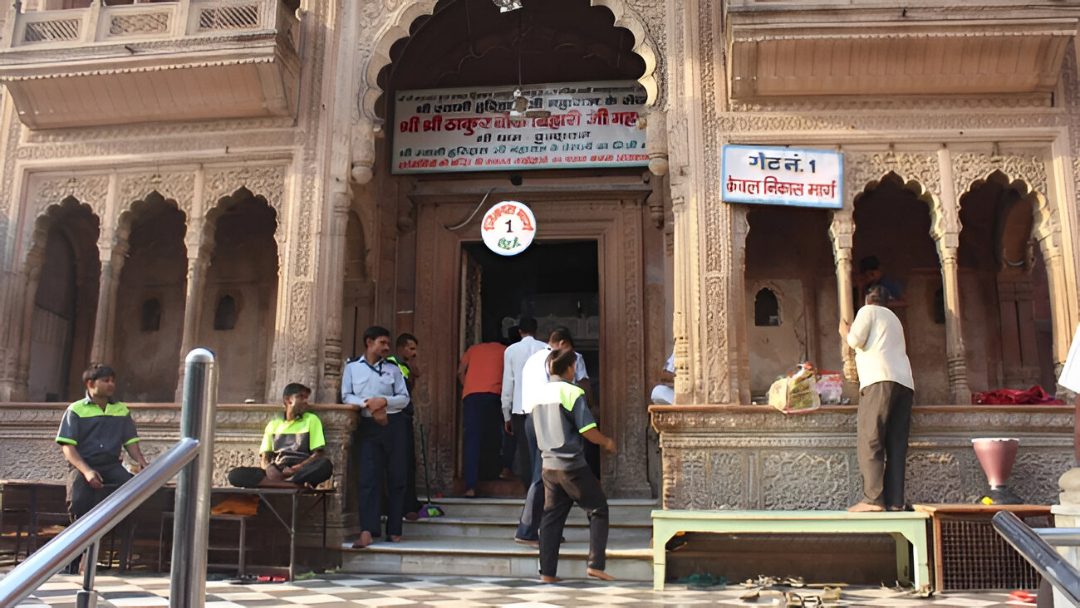
Vrindavan, Uttar Pradesh – The allotment of a contract for installing steel railings inside the temple premises at the famous Banke Bihari Mandir in Vrindavan has led to strong protests by Sadhus, Saints, and Hindu organisations, after it was revealed that the work was awarded to a Muslim contractor.
Terming the decision “an attack on religious faith”, the protesting Saints have written to Chief Minister Yogi Adityanath, demanding immediate cancellation of the contract and a high-level inquiry. They have alleged that the contractor concealed his original identity to obtain the work.
The contract has been awarded to Kanika Construction, a firm based in Meerut. It is stated that the firm’s main partner is Salim Ahmed. Some sources have claimed that the partner’s name is Salim Khan and that he is a Congress leader.
The Saints have stated that handing over construction work in a temple where Bhagwan Shri Krishna is worshipped daily in a highly sacred atmosphere to a non-Hindu goes against established traditions.
Dinesh Phalahari Maharaj, President of the Shri Krishna Janmabhoomi Sangharsh Nyas, wrote in his letter to the Chief Minister that individuals who consume beef and do not follow Sanatan Dharma will never be acceptable in the courtyard of Banke Bihari to the people of Braj. He further stated that such people who refer to Hindus as ‘kafirs’ should not be allowed even within one kilometre of the temple premises. He further questioned why, despite there being no shortage of skilled Hindu contractors in Bharat, the contract was given to those who are descendants of the Mughals, and who had earlier demolished temples and offered namaz at those sites.
Management committee’s stand
Presenting the stand of the High-power Management Committee of the Banke Bihari Mandir, committee member Shailendra Goswami stated that he did not have official information that the owner of the contracting firm was a Muslim. He further argued that Mughal emperor Akbar had also visited the temple to have darshan of Swami Haridas and to listen to his music.
The protesting Saints rejected this argument outright, stating that there is a clear and fundamental difference between visiting a temple for darshan and carrying out construction work near the sanctum by a non-Hindu.