Unity among temple representatives is vital to prevent attacks on holy shrines – Ramesh Shinde, HJS
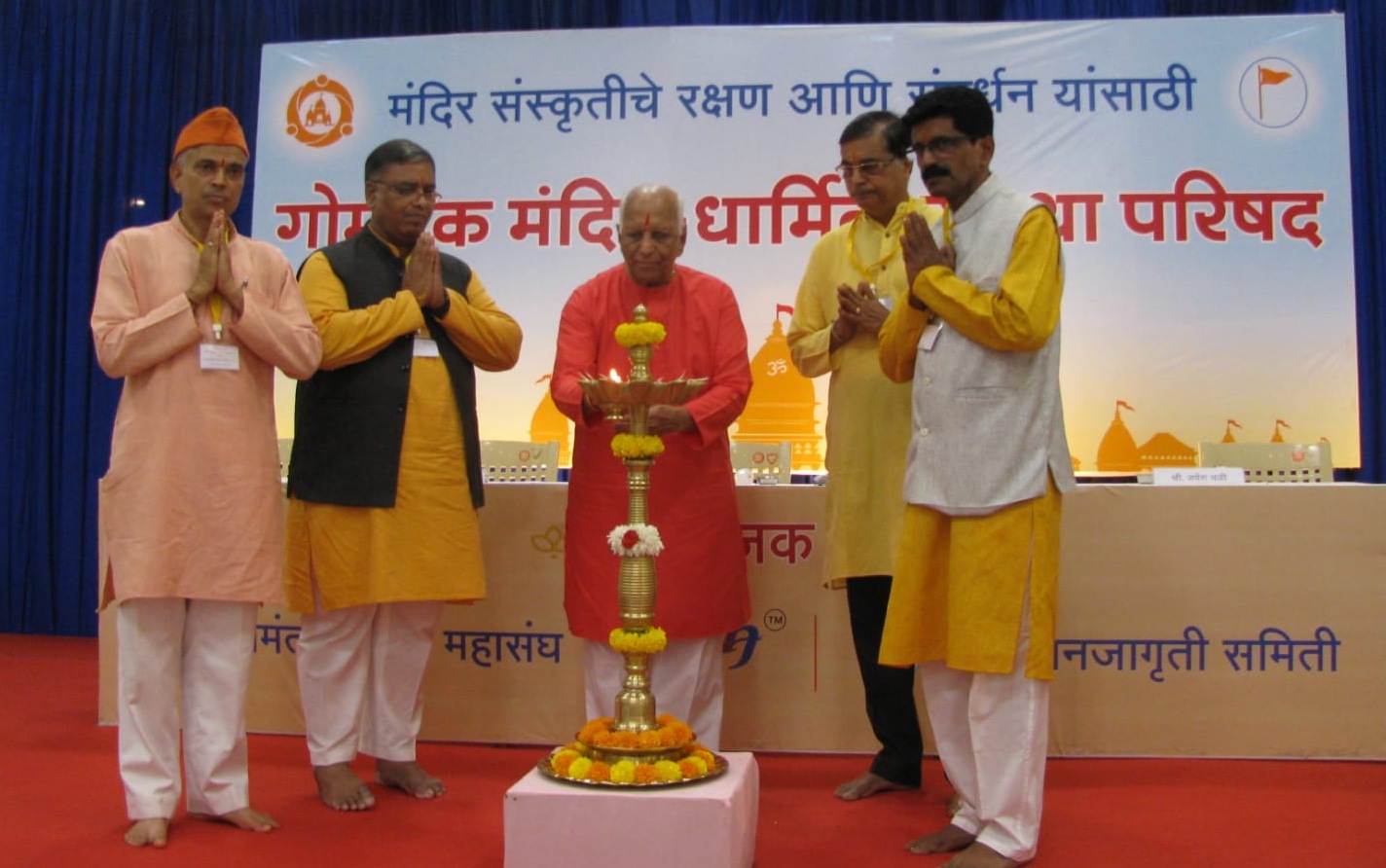
Mardol, Goa – The critical issues facing Hindu shrines took center stage at the Second State-Level Temple Conference, held on May 31 at the Shri Mahalsa Narayani Mandir. The day-long event, which ran from 10:00 a.m. to 6:30 p.m., brought together temple representatives and devotees to discuss the protection and management of religious institutions.
म्हार्दाेळ,गोवा येथे राज्यस्तरीय मंदिर परिषद
मंदिरांवरील आघात रोखण्यासाठी मंदिरांचे संघटन होणे आवश्यक ! – @Ramesh_hjs, राष्ट्रीय प्रवक्ते, हिंदु जनजागृती समिती#मंदिर_महासंघ #Goa #SaveTemple @HinduJagrutiOrg @SG_HJS pic.twitter.com/Ip6da5p7li— Satyavijay Naik (@naik_satya77414) June 1, 2026
Speaking at the conference, Shri. Ramesh Shinde, National Spokesperson of Hindu Janajagruti Samiti, said that it is the need of the hour for temple representatives and Hindus to unite. He stated that Goa’s ancestors sacrificed their lives to protect temples and Deities. He warned that similar challenges could arise again in the future, making it vital for temple trustees and devotees to remain vigilant and organised.
Citing examples, he said that the issue of Hindu entry into Shri Harihar Mandir in Sambhal, Uttar Pradesh, is still pending before the courts, while a Durga temple in West Bengal was reopened only recently after remaining closed for 15 years. If temples can face such severe restrictions in other parts of the country, he warned, similar circumstances could easily arise in states like Goa if the community does not remain proactive.
It is important to understand the power of temples
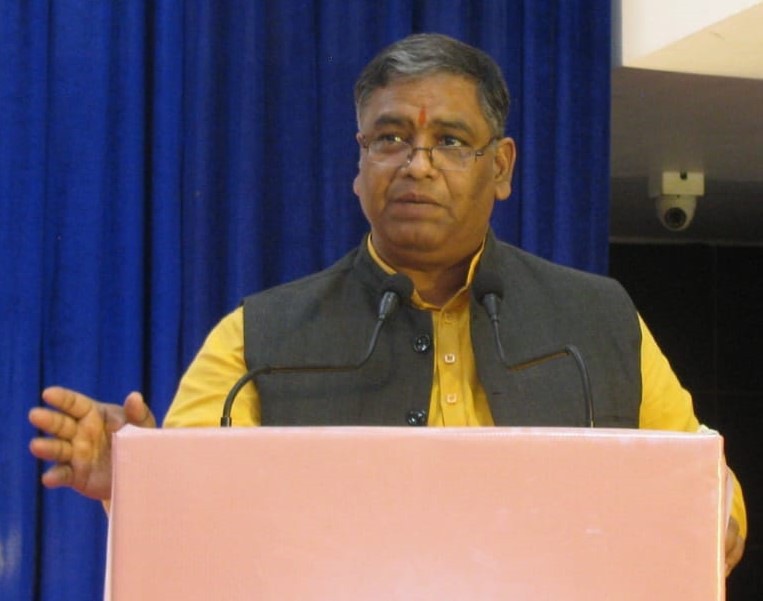
Shri. Ramesh Shinde further emphasised the immense social and economic power that temples hold in modern society, urging temple trustees and Mahajans (traditional temple management members) to adopt a higher vision for their roles. He stated that administrators must carry the mindset that they are managing the “Kingdom of God,” treating their duties with the utmost sanctity and responsibility.
To illustrate this potential, he pointed to the standard set by the Ram Mandir in Ayodhya. Since its construction, millions of devotees have visited for Darshan and the temple has generated substantial revenue. This demonstrates the social, cultural and economic strength of temples.
Referring to the proposed Maharashtra Devasthan Inam Abolition Act, 2026, he said that temple lands could be could be severely impacted by such laws. If similar laws are ever introduced in Goa in the future, temple representatives must be fully prepared to organise devotees and oppose any attempt to infringe upon temple property.
Highlights of the inaugural session
The convention commenced with the lighting of the lamp and the sounding of the Shankhnaad (conch shell). Present on this occasion were Sadguru Nandkumar Jadhav, H.B.P. Suhas Buva Vaze, Shri. Jayesh Thali (Secretary of Gomantak Mandir Mahasangh), Ramesh Shinde (National Spokesperson of Hindu Janajagruti Samiti), and Premanand Kamat (President of Shri Mahalasa Narayani Devasthan).
Major resolutions passed at the conference
- Strict enforcement of the ban on the sale of meat and alcohol within 100 metres of temples.
- Enactment of a law prohibiting bars and liquor establishments from being named after Hindu Deities.
- Government initiative for the reconstruction of temples destroyed by the Portuguese.
- Granting Ganeshotsav the status of a State Festival.
- Enactment of a strict anti-conversion law to prevent religious conversions.
- Prohibition of stalls belonging to other religions at temple jatra (fair) festivals.
- Representation for women on temple committees.
- Implementation of a dress code to maintain the sanctity of temples.
- Ensuring that anti-Dharma or inappropriate programmes are not held during religious festivals.
Honouring ‘Hindu Yuva Shakti’
Members of the Hindu Yuva Shakti organisation from Mapusa were honoured during the conference. Their efforts towards the protection of Dev, Desh and Dharma were appreciated.
Evening session
During the evening session, High Court advocates Santosh Rivankar and Sunil Sirsat guided temple trustees on legal and administrative challenges they may face.
Detailed discussions were also held on temple management, Dharma education and organisational issues.
Key outcomes of the conference
As a result of the conference:
- 39 temples decided to implement a dress code.
- 29 temples resolved to hold meetings at the taluka level.
- 30 temples decided to install Dharma education display boards.
- 26 temples will organise Dharma-awareness lectures.
- 28 temples will start Dharma education classes.
- 21 temples decided to begin collective Aarti programmes.
All representatives present resolved to work towards stopping the sale of meat and alcohol within a 100-metre radius of temples.