Devasthan Bhoomi Sanrakshan Parishad held in Mumbai; demands immediate withdrawal of proposed Act targeting Hindu temple lands

Mumbai – In a powerful demonstration of unity, temple trustees, priests, legal experts, and Hindu organisations from across Maharashtra have strongly opposed the Maharashtra Government’s draft ‘Maharashtra Devasthan Inam Abolition Act 2026’. They have described the proposed law as discriminatory and a direct attack on Hindu religious institutions, as it seeks to acquire nearly 4.5 lakh hectares of Inam lands belonging to Hindu temples while completely exempting Waqf properties.
A high-level ‘Devasthan Bhoomi Sanrakshan Parishad’ (Temple Land Protection Con) was organised by the Maharashtra Mandir Mahasangh on 25th May 2026 at the Swatantryaveer Savarkar National Memorial in Mumbai. The conference witnessed enthusiastic participation from temple trustees representing thousands of temples, senior advocates, and prominent Hindu leaders.
🏛️ देवस्थान भूमी संरक्षण राज्यस्तरीय परिषद मुंबई येथे संपन्न झाली.
Live कार्यक्रम लिंक : https://t.co/NAbfXfJ153
🛕 देवस्थान इनाम जमिनींचे (इनाम वर्ग-३) भूमाफियांपासून आणि बेकायदेशीर हस्तांतरणापासून संरक्षण करण्यासाठी ‘देवस्थान भूमी संरक्षण परिषदे’चे आयोजन करण्यात आले होते.… pic.twitter.com/s6jw4yC9Iq
— Sunil Ghanwat 🛕🛕 (@SG_HJS) May 26, 2026
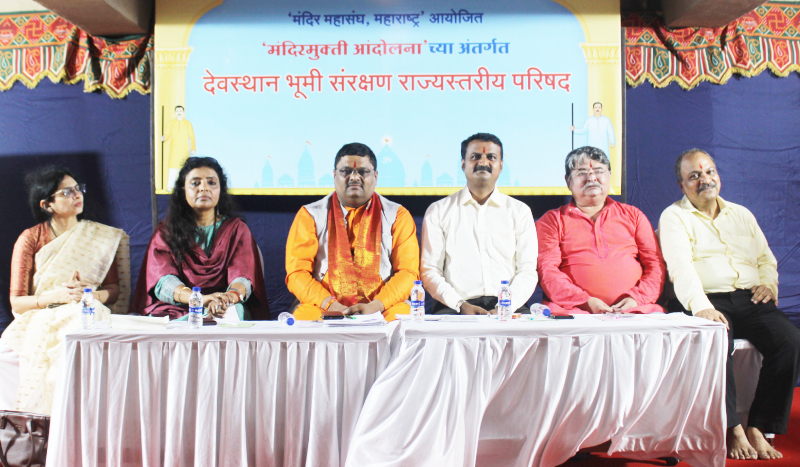
Present on the dais were Shri. Ranjit Savarkar, Executive President of the ‘Swatantryaveer Savarkar National Memorial’; Advocate Siddha Vidya; Advocate Mohini Vaidya, President of the Shri Varadvinayak Temple (Mahad), one of the Ashtavinayakas; Advocate Virendra Ichalkaranjikar, National President of the Hindu Vidhidnya Parishad; Advocate Sanjeev Punalekar, National Secretary of the Hindu Vidhidnya Parishad and senior legal expert; and Shri. Sunil Ghanwat, National Organiser of the Maharashtra Mandir Mahasangh. At the commencement of the programme, Shri. Sunil Ghanwat explained the stance behind opposing the draft of the ‘Maharashtra Devasthan Inam Abolition Act’.
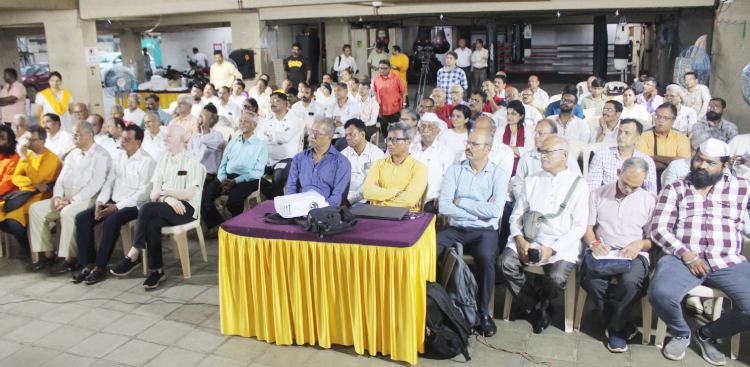
Attendance of trustees from various Maharashtra temples
The conference saw participation from: Shri Varadvinayak Temple (Mahad), Shri Gramdevata Temple Trust (Nerul, Navi Mumbai), Shri Siddhi Ganesh Temple (Seawoods, Navi Mumbai), Shri Vithoba Dev Temple and Shri Dhavir Temple (Roha, Raigad), Varadvinayak Temple (Seawoods), Shri Vitthal Rukmini Temple (Karave Village), Shri Jarimarimata Temple (Badlapur, Thane), Shri Kalkaimata Pratishthan (Vasai), Shri Tuljabhavani Temple (Belapur), Swayambhu Paleshwar Mahadev Temple (Andheri, Mumbai), Shri Rameshwar Uddhar Temple (Pali), Shri Shiv Mandir Pratishthan (Turbhe), Shri Jyotirling Devsthan (Sangli), and Shri Vithoba Devsthan (Mangaon, Raigad).
Strong resolution passed
The participants unanimously passed a resolution demanding that the Maharashtra Government immediately and unconditionally withdraw the proposed Act. The resolution emphasised that temple lands are the exclusive property of the Deity and that any income or offerings received at temples must be utilised solely for the protection, propagation, and preservation of Hindu Dharma.
The conference also urged the government to stop targeting temple lands and instead focus on resolving the long-standing and critical issues faced by temples across the state. Thousands of rural and historic temples in Maharashtra are currently in a neglected and dilapidated condition. Many temple priests (Pujaris and Guravs) are performing daily rituals either on extremely meagre incomes or purely out of devotion, with little or no financial support.
Key demands placed before the government
- Immediate provision of respectable salaries or honourariums to temple priests.
- Allocation of special funds for the renovation and restoration of ancient and crumbling temples.
- Substantial financial assistance for the daily administration and maintenance of economically weak temples.
- Appointment of dedicated ‘Estate Officers’ for the protection of Hindu temple properties, on the lines of the Waqf Board.
Sharp criticism of discriminatory policy
Speakers at the conference raised several pointed and hard-hitting questions:
- Why is the government acquiring only Hindu temple lands while granting complete exemption to Waqf properties?
- Why is there no equivalent “Sanatan Board” for the protection and management of Hindu temples, when a powerful Waqf Board exists for Muslim properties?
- Why are government resources promptly used to remove encroachments on Waqf lands, while Hindu temples struggling with similar encroachments are denied justice?
- Why are temple funds often misused by politicians, while the wealth of mosques and churches is freely used for their respective religious purposes?
“Why is there no Sanatan Board for Hindu temples when a Waqf Board exists?” – Sunil Ghanwat
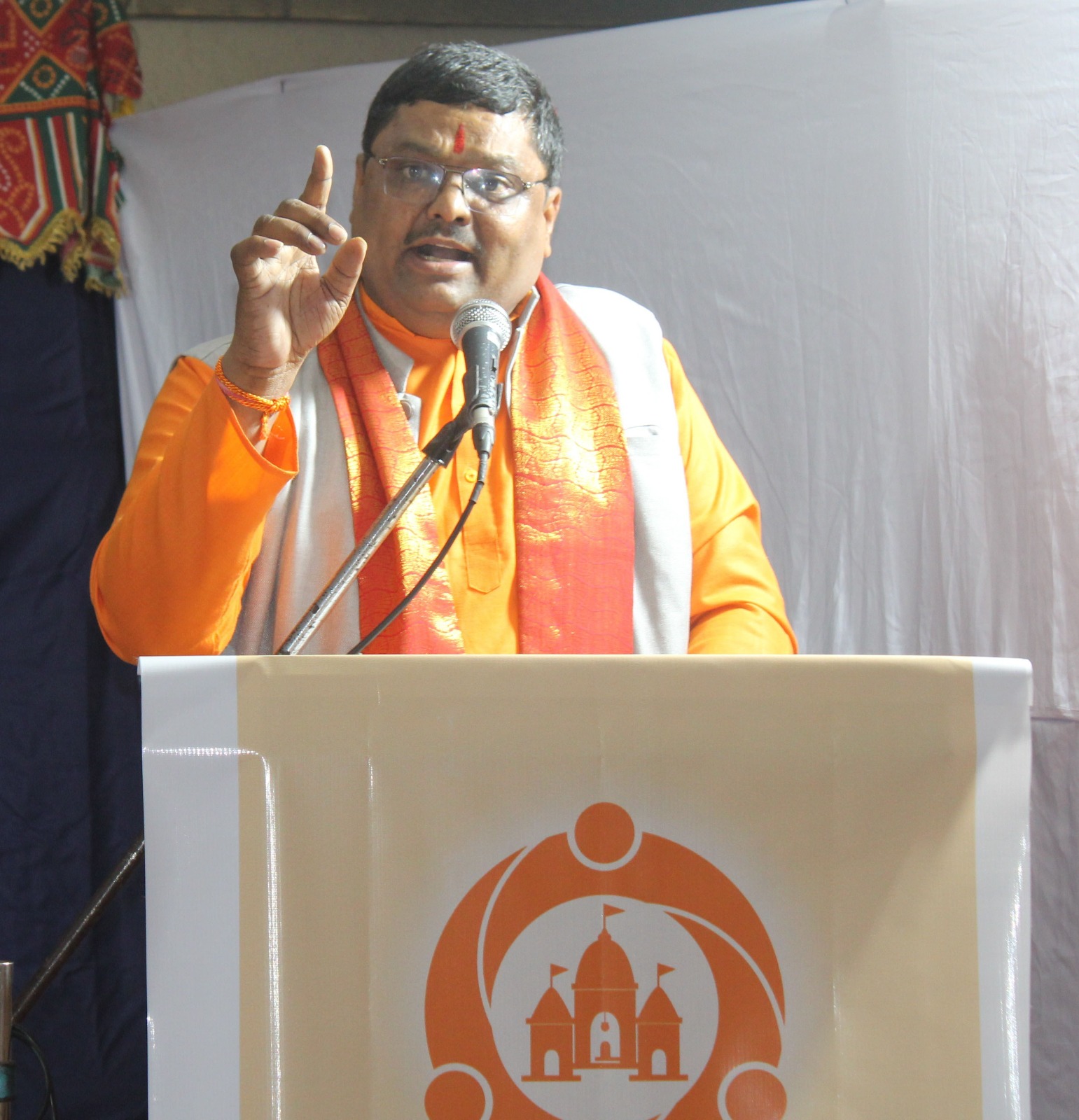
Shri. Sunil Ghanwat, National Organiser of Maharashtra Mandir Mahasangh, led the strong criticism by questioning the selective and one-sided nature of the proposed Act. He asked why only Hindu temple lands are being targeted while Waqf properties enjoy complete exemption. He specifically questioned why a “Sanatan Board” is not established for the protection of Hindu temples when the Waqf Board functions for the protection of Waqf properties. He urged the government to immediately withdraw the draft law and focus on genuine temple welfare issues instead of seizing temple lands.
Rise above personal interests to protect Dharma – Ranjit Savarkar

Ranjit Savarkar, Executive President of Swatantryaveer Savarkar National Memorial, graced the occasion and emphasised the need for all Hindus to rise above personal interests and work unitedly for the protection of Sanatan Dharma and its temples. He said “Today marks 1,000 years since the destruction of the temple at Sorati Somnath. Hindu society visits temples to pray for its own welfare. Until Hindu devotion evolves from self-interest towards Dharma, temples will not be protected. The work of the Hindu community and Hindu Dharma must take place through temples. The systems within temples are essential for building the community.”
Elected representatives have betrayed Hindus – Advocate Sanjeev Punalekar

Why acquire only Hindu temple lands while exempting Waqf properties? – Advocate Virendra Ichalkaranjikar
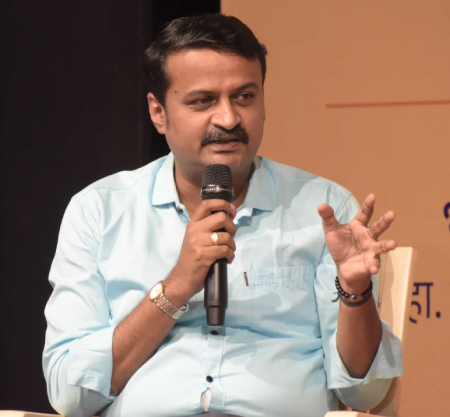
Advocate Virendra Ichalkaranjikar, National President of Hindu Vidhidnya Parishad, strongly criticised the discriminatory approach of the proposed law. According to 2023–24 statistics, the Waqf Board holds over 1 lakh acres of land; yet, on the other hand, laws are being made to sell temple Inam lands. He said, “We are devout Hindus. We vote for a Hindu government; however, the government must respect the sentiments of the Hindus who voted for them.” He further pointed out that if there is an encroachment on Waqf Board land, there is a law to remove it using government funds. “If there are encroachments on temple lands, a law should be made to remove them at government expense as well,” he demanded. He highlighted how the wealth of mosques and churches is freely used for their religious purposes, whereas politicians often misuse funds and properties belonging to Hindu temples. He called for equal treatment and full autonomy for Hindu religious institutions.
Temple lands belong solely to the Deity – Advocate Siddha Vidya

Temple land is the property of the Deity. The authority over it belongs to God. The government should not take decisions regarding temple lands. If District Collectors are being appointed as temple trustees, then they should actually come to the temples and work.