-
Fourth Maharashtra Mandir Nyas Parishad held in Satara on 22 March
-
Minister Bharatsheth Gogawale assures meeting with Chief Minister to address temple issues; promises ‘bulldozer action’ on temple encroachments
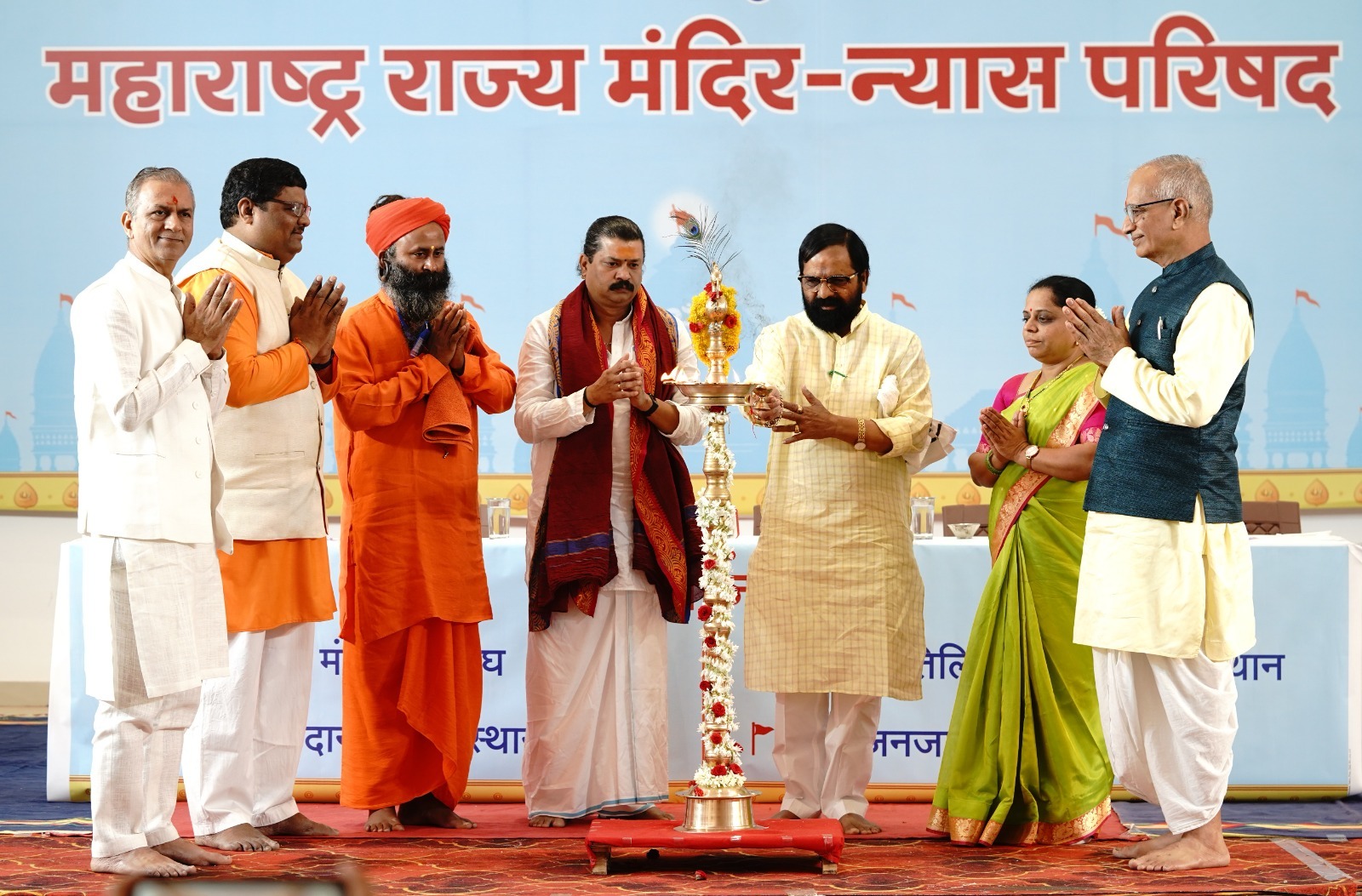
Satara, Maharashtra – Over 1,100 temple representatives from across Maharashtra gathered in Satara on Sunday, 22 March for the Fourth Maharashtra Mandir Nyas Parishad (Temple trust conference), where the state government pledged strong support for protecting temples and resolving longstanding issues related to land encroachments and administration.
Over 1,100 representatives attend the statewide Parishad
The Parishad, held at Swaraj Mangal Karyalaya on Koregaon Road, was jointly organised by the Maharashtra Mandir Mahasangh, Shri Jivdani Devi Sanstha (Mumbai), Shri Jyotirlinga Bhimashankar Devasthan, and Hindu Janajagruti Samiti. It brought together more than 1,000 invited trustees, priests, advocates working on temple protection, scholars, and activists.
The proceedings were moderated by Smt. Bhakti Dafale of Hindu Janajagruti Samiti. HJS’ Satara District Coordinator, Shri. Shivajirao Tupe welcomed attendees, reminding them that they represented temples symbolising Sanatan Dharma and urging the practical implementation of the conference discussions in daily temple activities.
A message from Sanatan Sanstha’s founder Sachchidanand Parabrahman Dr Jayant Athavale was read out by Sadguru Satyavan Kadam.
Government pledges strong support for temples
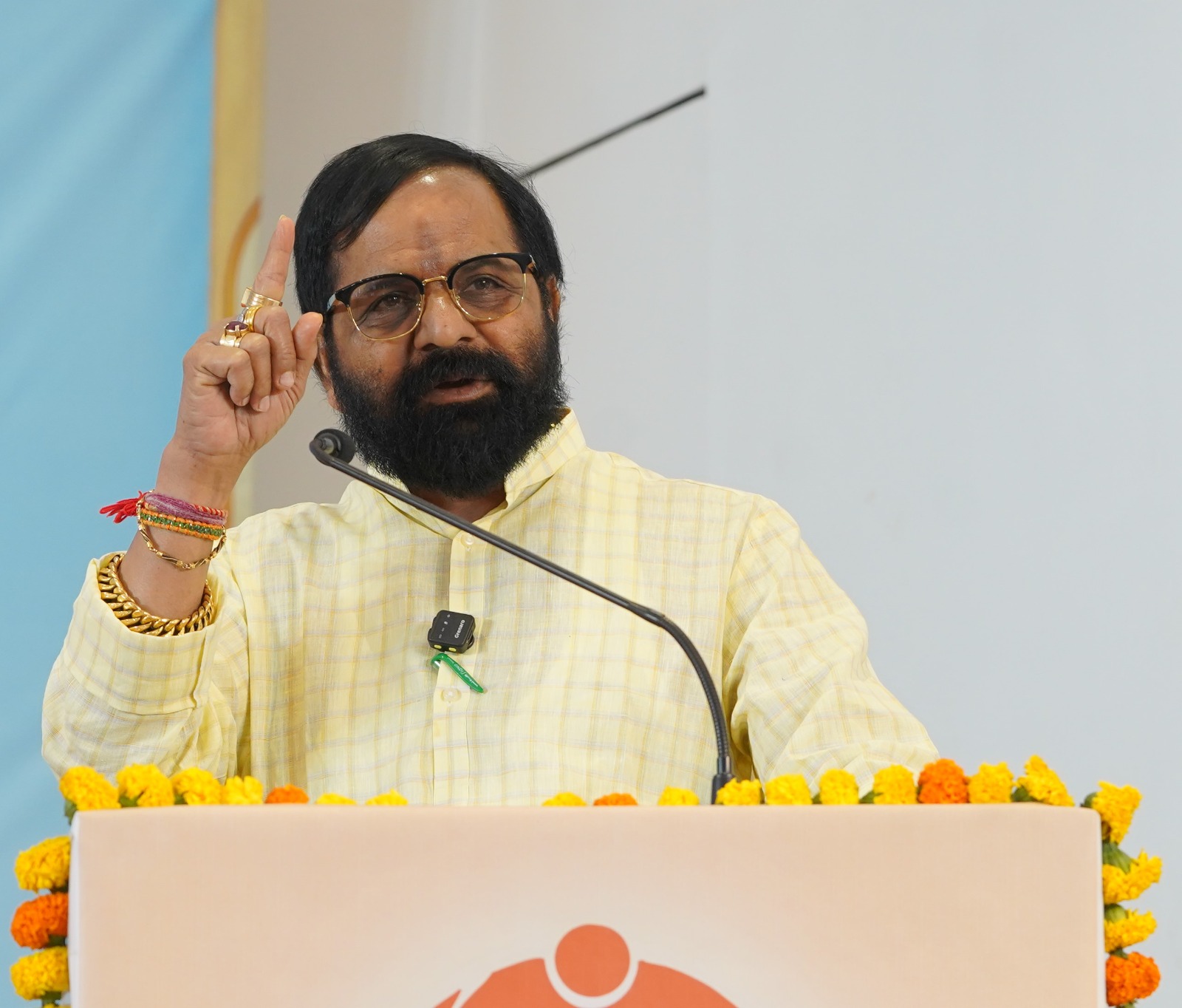
Horticulture and Employment Guarantee Minister Bharatsheth Gogawale inaugurated the Mandir Mahasangh Parishad and assured participants of full backing from the state government for the Mandir Mahasangh’s efforts to unite and safeguard temples. He declared that strict action would be taken against anyone attempting to destroy Hindu customs and traditions. Encroachments on temples and historic forts would face “bulldozer action” for removal. He promised to convene a special meeting with the Chief Minister in the near future to deliver concrete solutions to all temple-related issues based on the parishad resolutions. The minister described the demand for stamp duty concessions on land purchases or transfers for temples as justified, promising discussions with the Finance Department for appropriate policy decisions. He added that stricter legislation, similar to an Anti-Land Grabbing Act, was under consideration to prevent illegal occupation of temple lands.
No temple land should remain under Waqf control: Shri. Sunil Ghanwat
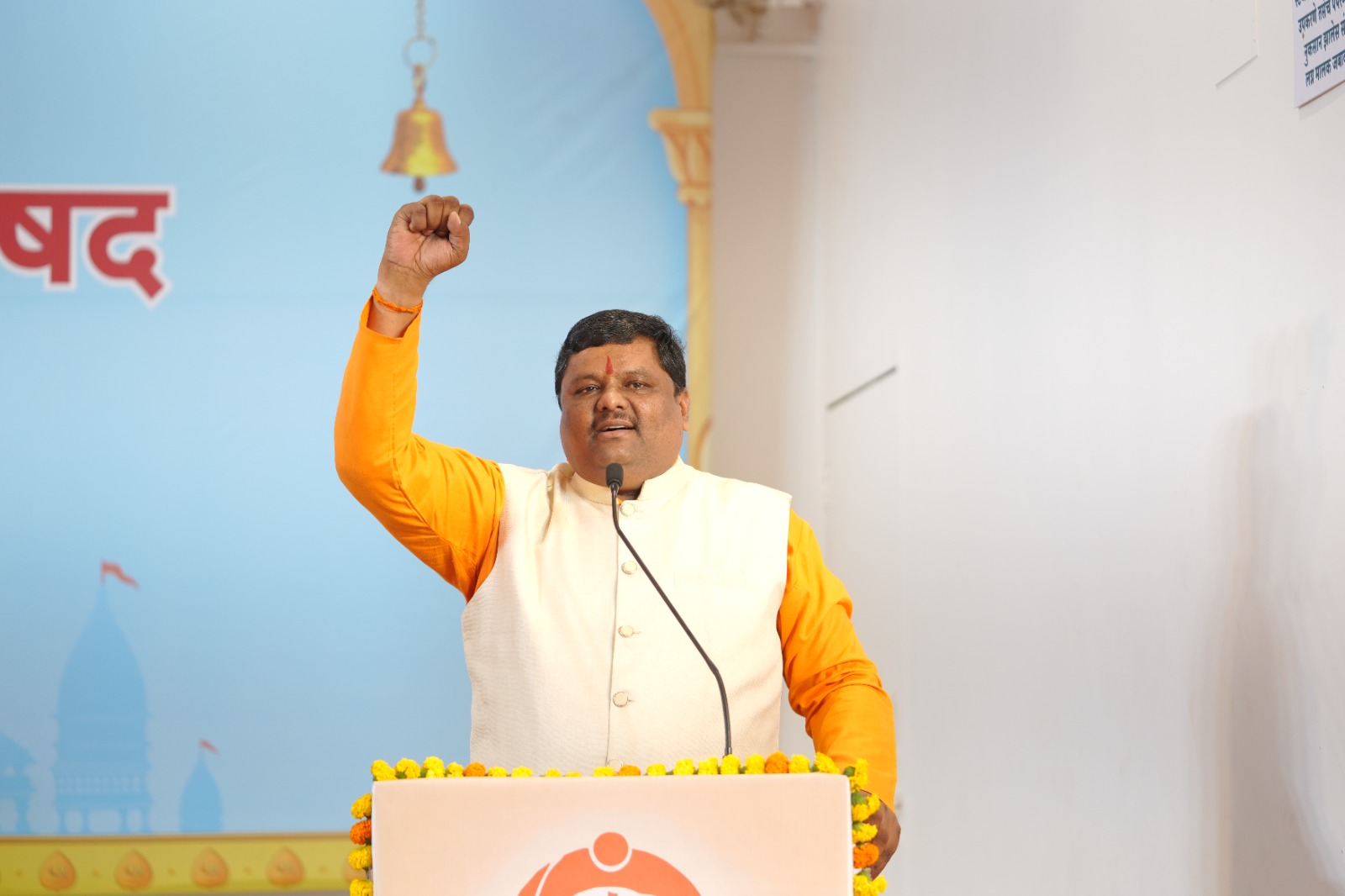
Shri. Sunil Ghanwat, National Organiser of the Maharashtra Mandir Mahasangh, reported that the Mandir Mahasangh has united more than 17,000 temples and serves as a vital bridge between temples and the government. He highlighted ongoing efforts to expose and reclaim illegally appropriated temple lands, citing the case of Someshwar temple land valued at ₹50 crore that was allegedly sold for only ₹960. He stressed that such incidents would no longer be tolerated. He called for a ban on liquor and meat shops within at least 100 metres of temples, with a proposal to extend this limit to 500 metres in order to preserve the sanctity of pilgrimage sites. He also expressed concern over large tracts of temple land remaining under the control of the Waqf Board despite amendments to the Waqf Act, and appealed for a collective resolve that no temple land should remain under such control in future. Temple funds, he emphasised, must be used solely for Hindu welfare.
Security of temples essential for the Nation and Dharma: Yogi Niranjannath Maharaj
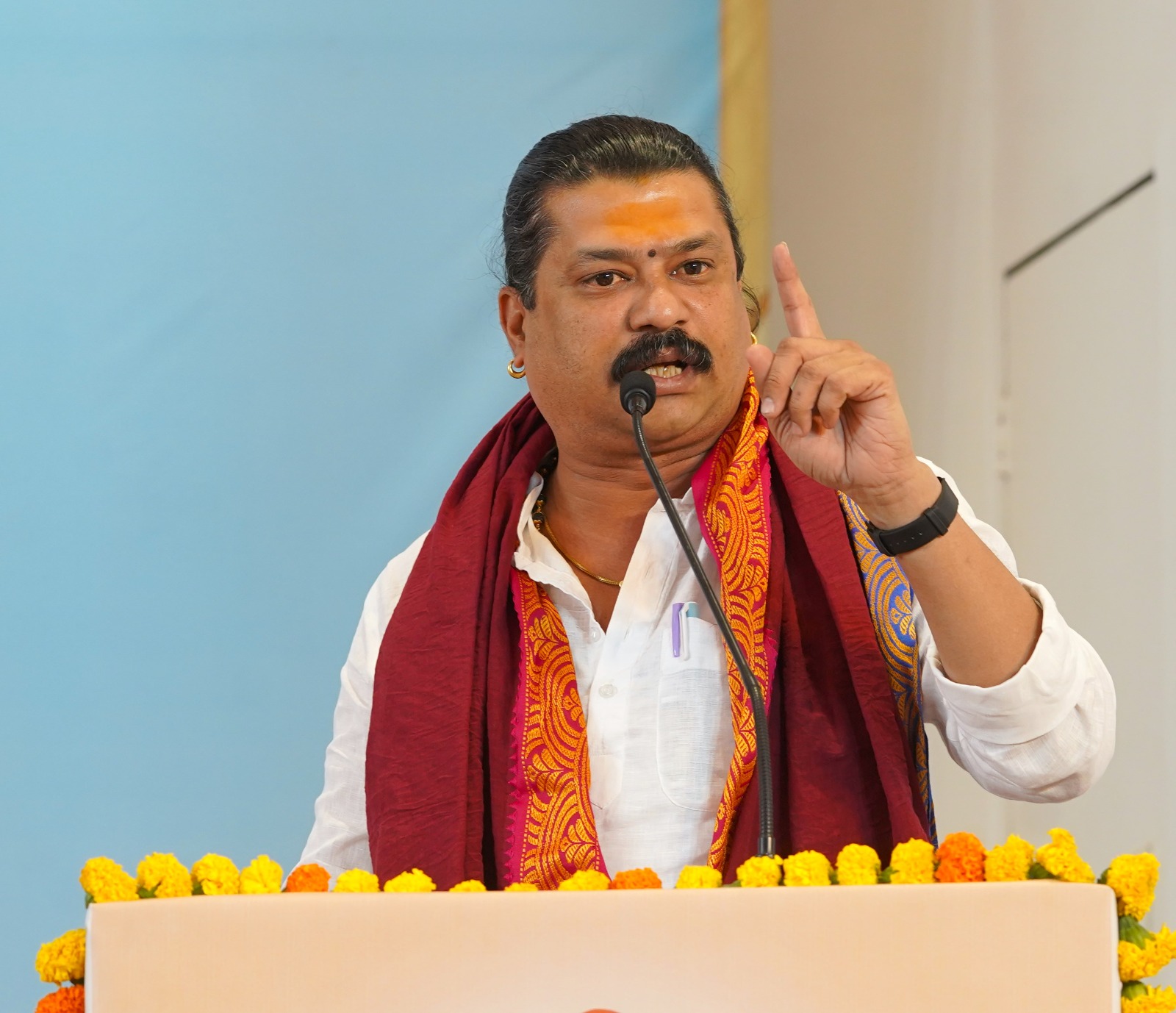
Yogi Niranjannath Maharaj remarked that the gathering of trustees and devotees represented the divine itself, embodying the true spirit of the Parishad. He stressed that the security of temples is vital for safeguarding the Nation, and Dharma.
He cautioned that the growing government control over temples requires trustees to stay vigilant at all times. He underscored the importance of maintaining complete financial transparency in temple administration.
Yogi Niranjannath Maharaj also pointed to the Ashadhi Wari pilgrimage as a shining national example of organisation, devotion, and efficient management. He further highlighted the significant role temples have played in social service, particularly through large-scale food donations (annadan) during the COVID-19 pandemic.
Importance of temple economy in society
Speaking on the theme “Importance of temple economy in society,” scholar Sandeep Singh observed that many cities around the world, built around industrial activity, declined sharply once factories closed. In contrast, ancient temple-centred cities such as Ayodhya, Kashi, Ujjain, and Tirupati have flourished continuously for thousands of years thanks to their temple-based economies.
Temples in Bharat are major centres of development: Girish Shah, Temple scholar
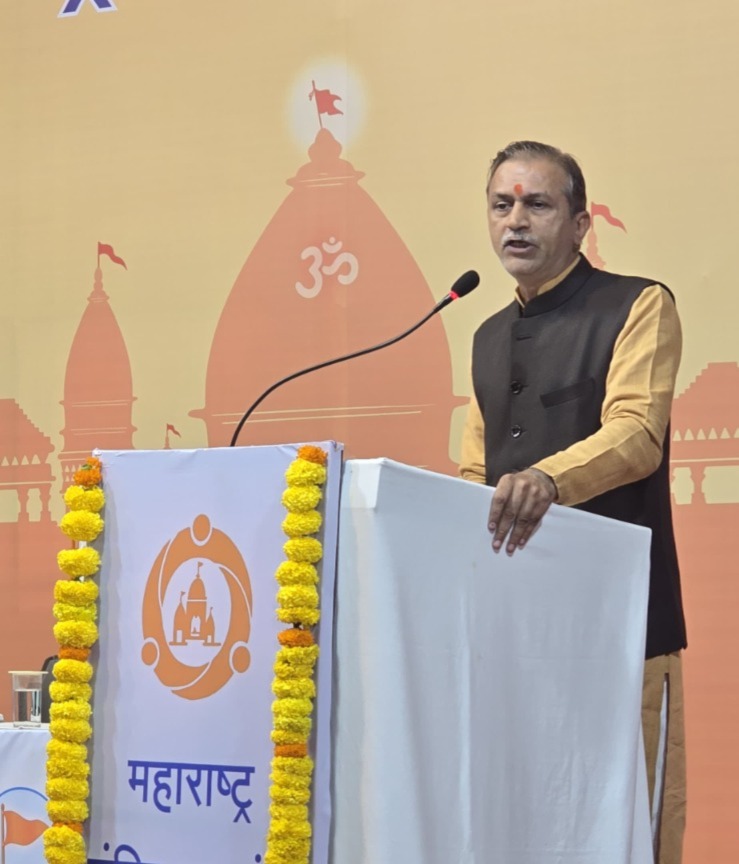
Temple scholar Girish Shah described temples, frequently working in close partnership with gaushalas (cow shelters), as key drivers of development across Bharat. He noted that more than 300 products derived from cow dung and urine are already contributing to society. He advocated connecting youth with temples and suggested that larger temples should provide financial support to smaller ones, helping with service, healthcare, environmental conservation, and nation-building.
Temples must prioritise educating devotees to manifest the vision of Ram Rajya: Sadguru Swati Khadye
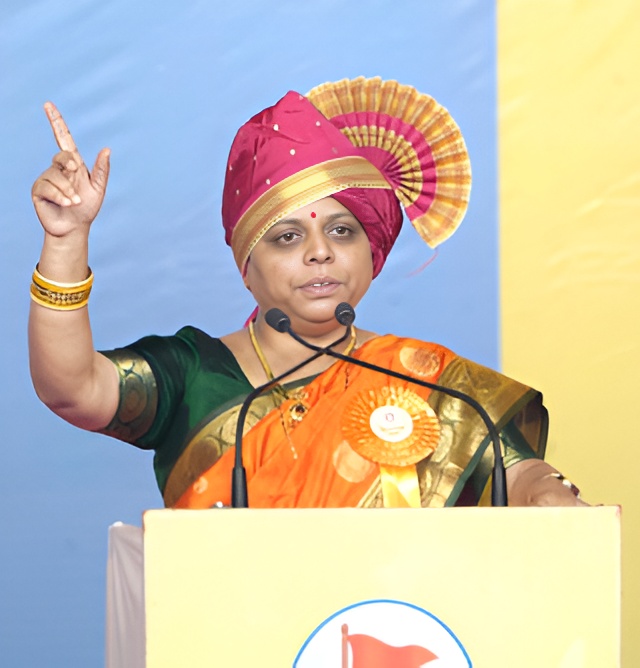
Sadguru Swati Khadye of Sanatan Sanstha recalled that temples have historically served as centres of religious education, art, culture, social unity, and economic activity. Temples continue to play a vital role in keeping society united. She observed that many pilgrimage sites are increasingly treated as mere tourist destinations and stressed the need to educate devotees on proper spiritual practices and conduct. If temples take on this responsibility, she said, the vision of Ram Rajya would not be far away.
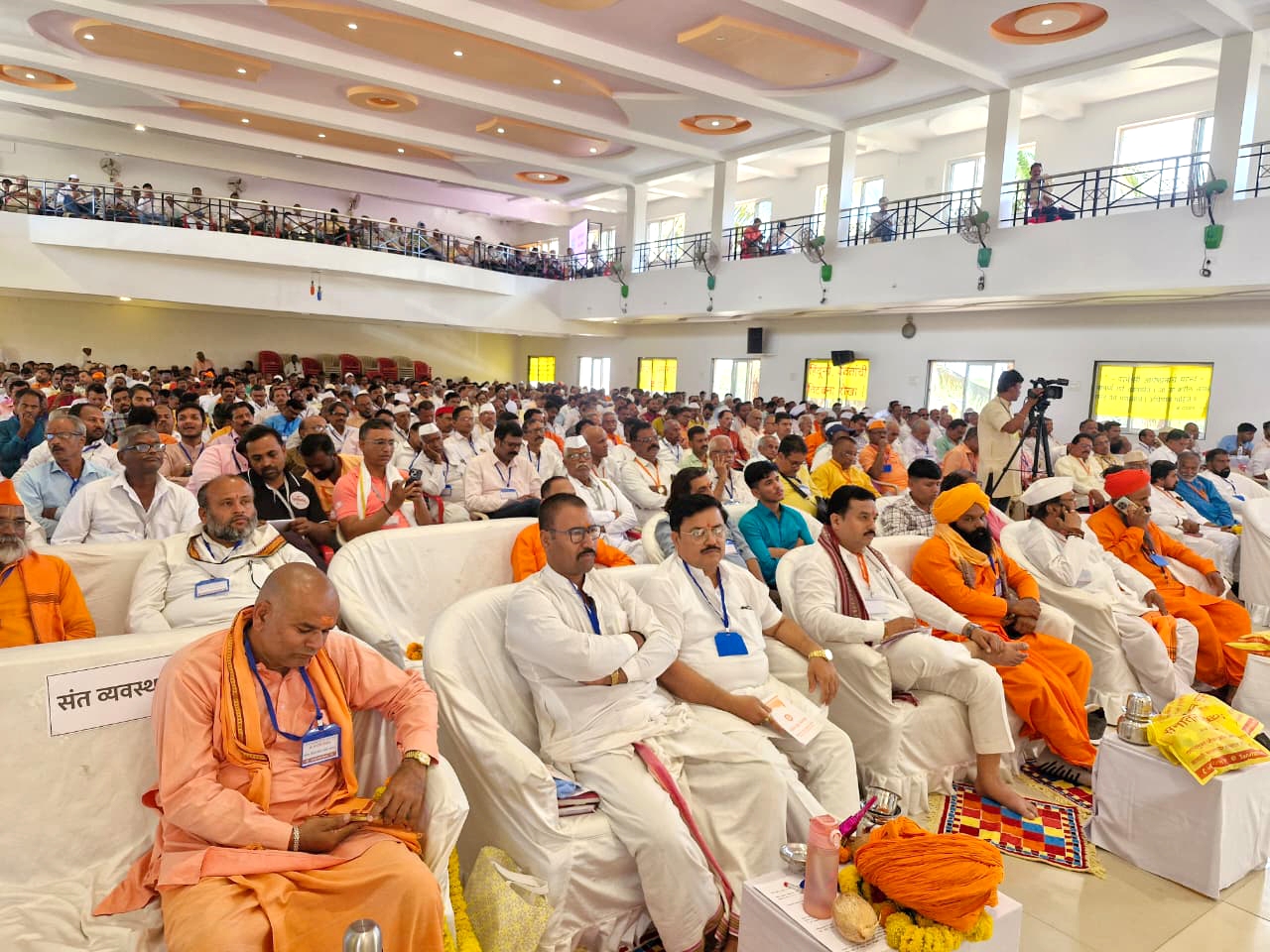
Special Felicitations and Dignitaries Present Special honours were conferred upon Sanjay Markad, Chairman of Shri Kanifnath Devasthan Trust and Sarpanch of Madhi village in Ahilyanagar district, and Rishikesh Shete of Shani Shingnapur, for their efforts in exposing alleged corruption at the Shani Shingnapur Devasthan and advocating for Hindu-only entry to the temple. Dignitaries present included Shri Suresh Kaudre, Chairman of Shri Jyotirlinga Bhimashankar Devasthan, H.B.P. Babanrao Sapte, H.B.P. Vitthal Swami Vadgaonkar, Pujya Uday Shekde of Swami Samarth Ramdas Swami Sanstha, and representatives from various temples and organisations across the state.
The Fourth Maharashtra Mandir Nyas Parishad was presented as a significant step towards protecting Hindu temples, resolving administrative and land-related issues, and securing greater government collaboration.