Centred on the theme ‘Shatrubodh’, the summit focused on identifying internal threats and safeguarding India’s cultural and economic integrity.
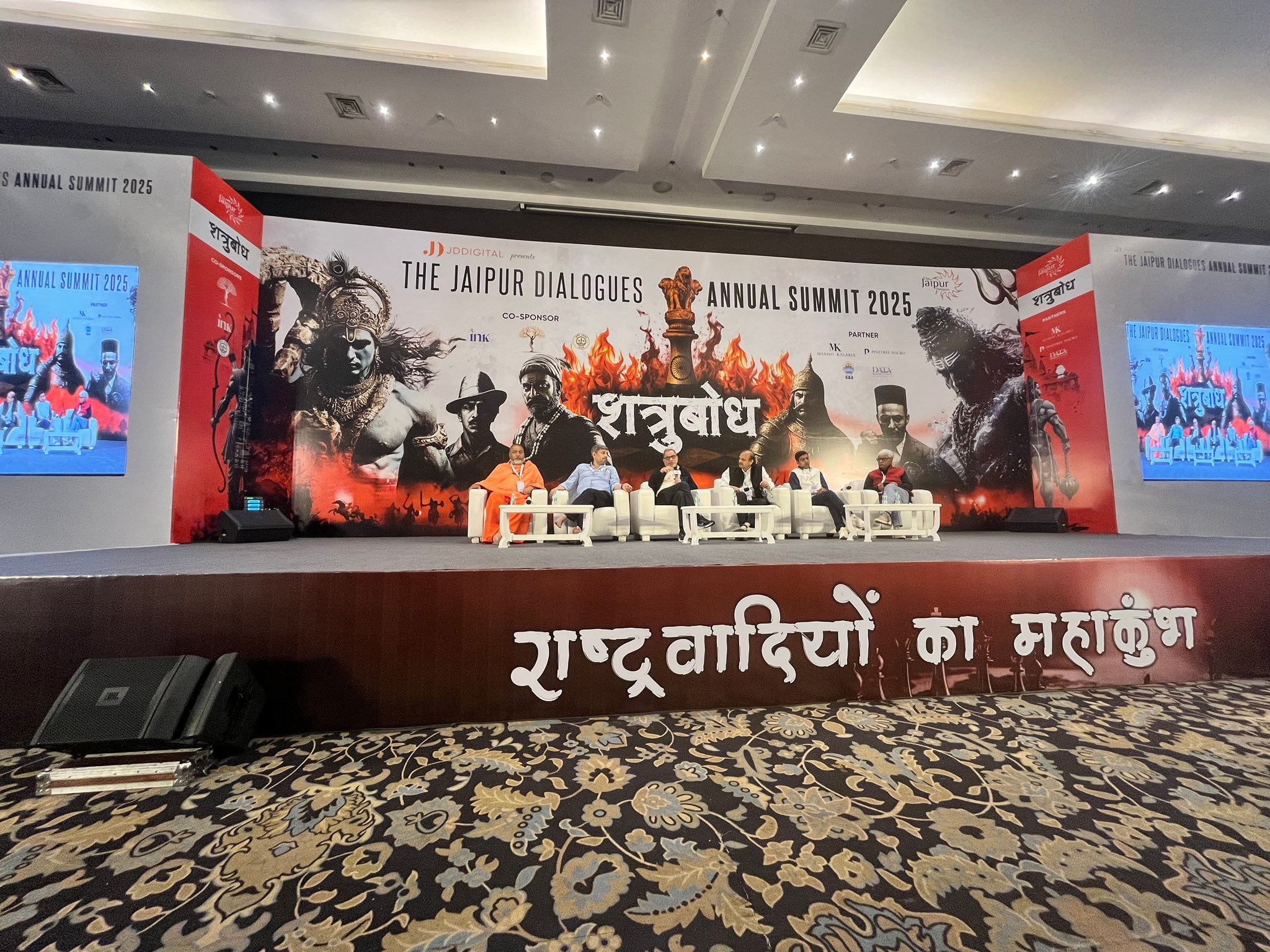
Jaipur, Rajasthan : The Hindu Janajagruti Samiti participated in the three-day annual summit ‘Jaipur Dialogues 2025’ held from 7th to 9th November in Jaipur, Rajasthan. The summit, themed ‘Shatrubodh’, featured 42 sessions of deliberations by political leaders, thinkers, defence experts, and nationalist intellectuals, on issues concerning India’s cultural integrity, education, and national awareness. Ramesh Shinde, National spokesperson of HJS addressed the session on Halal economy, exposing its growing socio-economic and cultural threats, urging Hindus to become aware of its far-reaching implications.
#TJD The Jaipur Dialogues!
Participated at @JaipurDialogues annual summit – Shatrubodh.@satyanveshan @TeamNimittekam @MajiDevDutta @HinduJagrutiOrg pic.twitter.com/ecdGc7pSHg
— 🚩 Ramesh Shinde 🇮🇳 (@Ramesh_hjs) November 8, 2025
Day 1: Understanding ‘Shatrubodh’ — The inner enemy
The conference began on 7th November 2025 with an inauguration by Rajya Sabha MP and prominent historian Dr. Meenakshi Jain, who emphasized that “our enemies are not outside but hidden within our own thought sphere.” She highlighted that post-independence, our history has been distorted through Marxist interpretations, sidelining India’s true traditions and cultural heritage.
The first day featured 14 sessions, covering topics including rising anti-India activities in education, culture, and nation-building. Sessions addressed the following topics:
- Identifying enemies of culture: Exposing false narratives as a patriotic duty.
Infiltration of anti-India ideas through education: Dr. Meenakshi Jain, Esther Dhanraj, and other speakers emphasized the need to recognize the influence of foreign ideologies in the education system. - Awareness of internal threats: Discussions on movements like ‘Breaking India’ and the ‘Tukde-Tukde Gang’.
- Moral education: Addressing corruption, red-tape, and civic deficiencies.
Vedic calculations and Indian chronology: Highlighting scientific foundations of Indian traditions. - Sanatan Dharma and social media influence: Critiquing misleading narratives under the guise of Hindutva.
The final session on Day 1 stressed concerns over foreign cultural influence on youth and called for the development of indigenous social media platforms.
Day 2: HJS leads discussion on Halal Economy
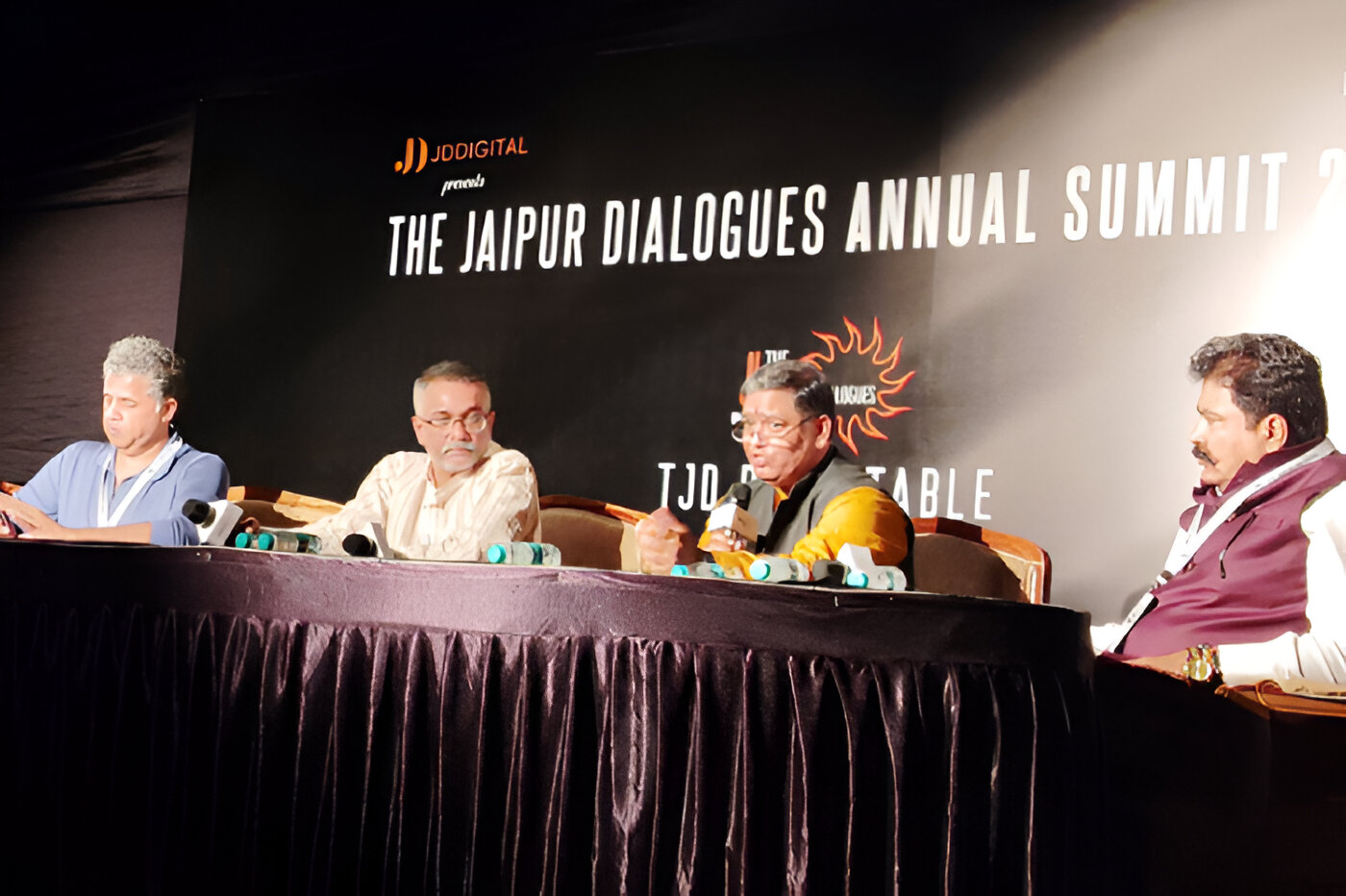
The ‘Shatrubodh’ sessions conducted on day two focused on anti-India narratives and conspiracies, including the false portrayal of India as being poor in global indices like the Hunger Index and Happiness Index. Speakers highlighted the need to recognize such misrepresentations and counter foreign ideological influence.
Exposing the Growing Influence of the Halal Economy
Following this, a detailed discussion was held on the Halal economy in India, by Ramesh Shinde, the National Spokesperson of Hindu Janajagruti Samiti, along with Jai Ahuja, Dr. Omendra Ratnu, and Devdatt Majhi.
During his address, Ramesh Shinde explained that while Muslims consistently demand Halal-certified meat, Hindus never express the preference for non-Halal meat, reflecting a complete lack of awareness on this issue. He pointed out that this imbalance has allowed the Halal economy to expand unchecked, impacting both the nation’s economy and cultural identity. Citing figures, he noted that the total trade in chicken and goat meat is estimated at around ₹10,000 crore, with the majority of it produced through Halal methods. He urged Hindu traders, especially those from the Khatik (butcher) community, to revive traditional practices and take an active role in the meat trade through the ‘Jhatka’ method, which is both scientifically safer and aligned with dharmic principles. He stressed the importance of promoting self-reliance, economic awareness, and religious-cultural guidance within the Hindu community.
Speaking on this issue, Dr. Omendra Ratnu noted that Halal meat may pose health risks, whereas Jhatka meat is safe.
The session aligned with the summit’s central theme of ‘Shatrubodh’, calling upon citizens to identify the hidden ideological and economic threats that weaken our cultural identity.
The conference also included the release of the Hindi edition of Sanjay Dixit’s book ‘All Religions Are Not Same’, titled ‘Sabhi Dharm Samaan Nahi’.
Day 3: Shatrubodh to Shatrunash
🇮🇳 #TJD2025 | Day 3 – “Shatrubodh” 🔥
The Jaipur Dialogues Annual Summit 2025 (#TJD2025) concluded on 9th November 2025 after three days of intense deliberations across 42 sessions, focused on the themes #Shatrubodh (awareness of adversaries)Highlights of Day 3
🇮🇳 India’s… pic.twitter.com/armLPNjVK5— Sanatan Prabhat (@SanatanPrabhat) November 10, 2025
Sessions on India’s political future analyzed the nation’s evolving leadership and governance landscape after Prime Minister Modi’s third term.
In Civilizational Shatrubodh, Dr. Omendra Ratnu, Shefali Vaidya, Esther Dhanraj, Sandeep Balakrishna, and Kartik Gaur emphasized exposing historical distortions and safeguarding India’s civilizational heritage and Hindu identity.
Panels on political divisions highlighted caste-based and ideological fragmentation, criticizing divisive narratives encouraged by earlier governments. The ‘Shatrubodh to Shatrunash’ session focused on identifying and countering internal threats through strategic, legal, and coordinated action. It also featured the introduction of an app by World Fast AI for youth education on Sanatan Dharma.
Experts on defence underscored technological modernization, self-reliance, and the importance of the Make in India initiative in strengthening India’s military capability. Educationists discussed the need to rebuild India’s intellectual capital and reduce dependence on Western frameworks.
In the valedictory session, Ami Ganatra, Baba Ramdas, and Sanjay Dixit called for creating a self-reliant Hindu ecosystem through community cooperation and awareness — reminding that “anything gained by the sword will be lost by the sword.”