Browse Categories:
Expand All | Collapse All

Untitled Document
love-guru
small-love-guru 'Guru-Shishya' tradition ridiculed in Hollywood’s movie 'The Love Guru'
Hussain Credit Card Innocent MF Husain? Be judge of Husain's paintings here! ...
Save Ram Setu
Temple in danger Congress government is going to break Sree Ram Setu...
Join Hindu Revolution Group

Know more


Lord Shiva Get latest articles from this category as an RSS Feed


Page 1 of 1
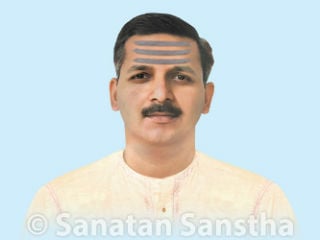
Article Image What do the horizontal stripes of ash on forehead of Lord Shiva represent?

The three horizontal stripes of ash on the forehead of Lord Shankar represent three memories. Ash projects the desires of a person.

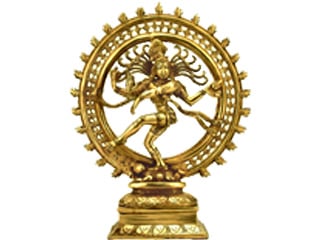
Article Image What is the origin of tandav dance?

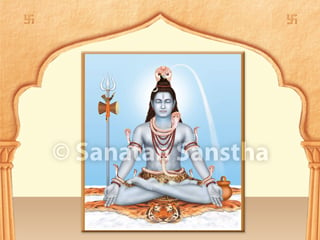
Shiva is believed to assume two states - the superconscious state (samadhi) and the tandav or lasya dance. The former refers to the unmanifest (nirgun) and the latter to the manifest (sagun).

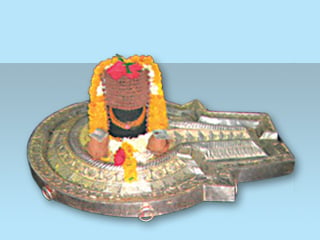
Article Image Why are svayambhu pindis situated below the ground level?

The svayambhu pindis possess tremendous amount of energy. Hence it is situated below the ground level.

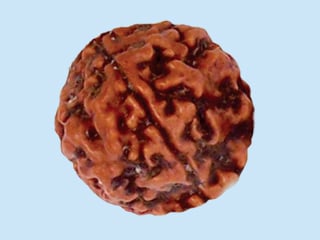
Article Image What is the significance of adorning rudraksha when performing ritualistic worship?

Adorning a rudraksha mala when performing ritualistic worship is ideal. Especially followers of the Nath and Vam sects and Kapaliks use rudrakshas.

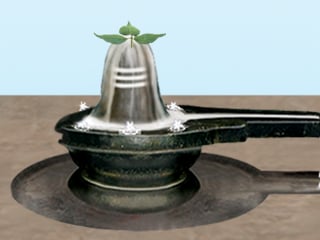
Article Image Why are trifoliate bel leaves offered to Lord Shiva with their stalks facing oneself?

A pindi contains two types of pure particles (pavitrakas) from both - the ahat sound (that produced by the falling of water onto its surface) and the anahat (subtle) sound.

Article Image Why are Shiva and Divine Energy (Shakti) considered as inseparable?

Divine Energy is not distinct from Shiva but is present in Him. Her external active form is sometimes gross or subtle and at other times manifest or unmanifest. The cycle of the universe is maintained by Her subtle or magnified form.

What is the concept of Final Liberation as per the Pashupat sect?

In the Shaiva doctrine pashu, pash and pati are considered the three basic classes (trivarga). These also form the basis of the Pashupat doctrine.

Page 1 of 1