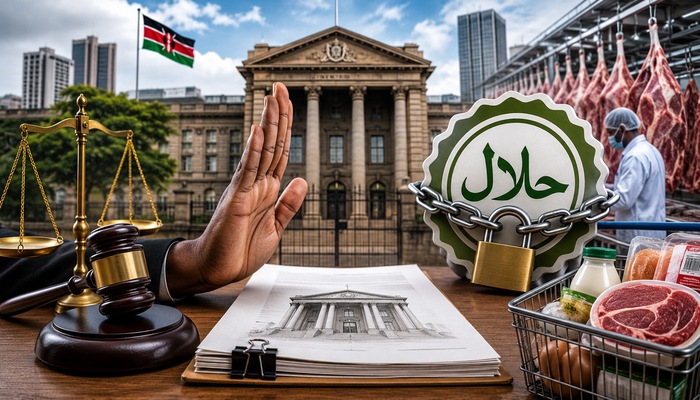
Nairobi, Kenya – A legal dispute is underway over halal certification in the African nation of Kenya. On 16 April 2026, Dennis Nthumbi, Dennis Owuor Ochanda, and Henry Barasa Tom filed a petition in the Nairobi High Court. They allege that private certification systems such as halal certification, in the absence of clear legislation, are effectively becoming a mandatory condition for market access in the food and meat industry, participation in government procurement, and general trade. The petitioners have asked the court to restrain government agencies from treating any private certification as a mandatory requirement for licensing, trade, or public procurement.
In June 2026, the ‘Kenya Halal Certification Bureau’ sought to join the lawsuit as a party. The organisation argues that Muslim consumers have a constitutional right to know whether food products have been prepared in accordance with their religious beliefs.
The petitioners emphasise that they do not oppose Muslims’ right to consume halal food. Their concern is how a private religious system like halal certification has gradually become an essential requirement throughout the entire chain of producing, selling, and supplying food and beverages. From abattoirs to commercial complexes and government procurement, halal certification now largely determines business acceptability. Traders who do not obtain the certificate are increasingly excluded from key supply chains, contracts, and markets. As a result, a certification that is voluntary on paper is becoming mandatory in practice.
The petition further claims that fees paid to private organisations are ultimately passed on to consumers through higher prices, even though most buyers are unaware of the certification process or its associated costs.
According to Kenya’s meat control regulations, the authority to inspect animals and meat rests with government veterinarians, health inspectors, and authorised officers. Government inspection is mandatory before slaughter and before meat enters the market. Therefore, religious certification cannot replace the statutory inspection required to ensure public health.