-
Exposes serious policy lapses
-
Investigate and take legal action against those responsible – demands Surajya Abhiyan
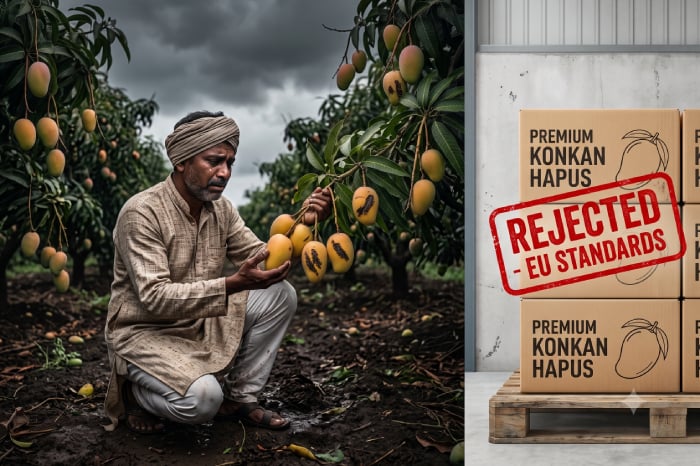
Devgad, Maharashtra – Every year, compensation is declared for the financial losses suffered by by Hapus (Alphonso) mango growers in the Konkan region due to various adverse factors. However, a policy of merely granting financial aid will not solve this crisis; a permanent, systemic solution must be established. It is the fundamental duty of agricultural universities, research institutes, and government bodies to develop science-based, legally compliant, and export-worthy solutions to safeguard farmers from losses. Unfortunately, critical operational lapses remain in this regard.
#Maharashtra | 🚨 Konkan Hapus in Crisis; RTI Documents Raise Serious Questions on Recommendations of Prohibited and Non-‘Label Claim’ Insecticides by the Agricultural University and the Government-appointed #Mango Task Force.
Investigate and Take Legal Action Against Those… pic.twitter.com/5UITLcQpFY
— Surajya Abhiyan (@SurajyaAbhiyan) July 11, 2026
While the Konkan Hapus mango industry faces an ongoing crisis, the execution and oversight of the concerned government machinery remain highly questionable. This is a matter of grave public interest that warrants an independent inquiry and decisive legal action against those found responsible. Furthermore, the Maharashtra government must immediately publish a comprehensive white paper on the Konkan Hapus mango crisis.
These demands were raised by Dr. Ravikant Narkar, District Co-ordinator of the Hindu Janajagruti Samiti’s ‘Surajya Abhiyan’, during a press conference held here. His statements are backed by official documents obtained under the Right to Information (RTI) Act.
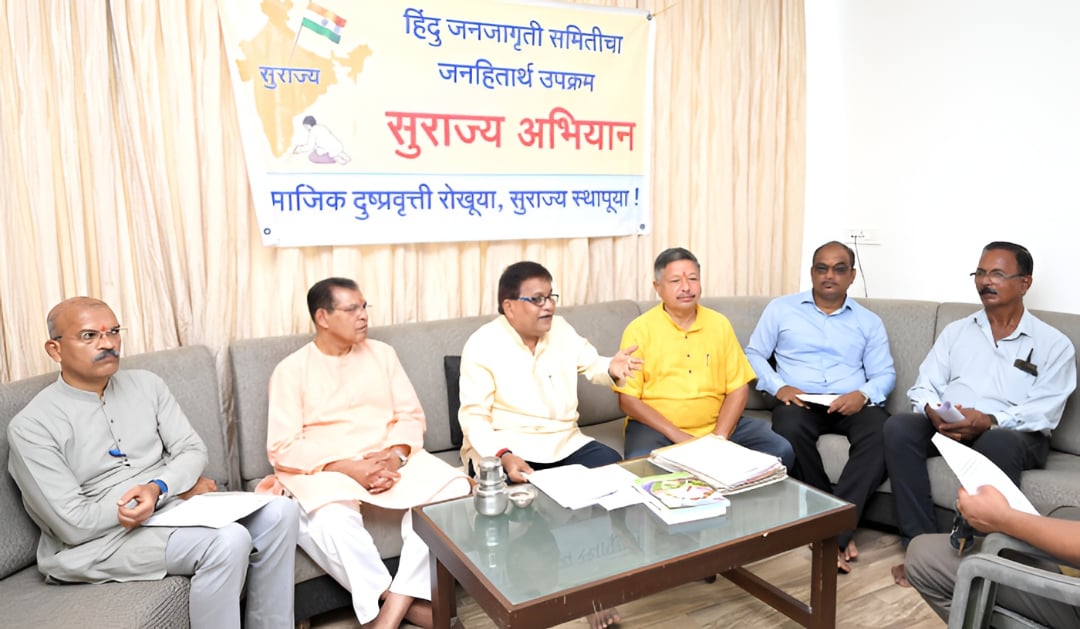
Dr. Narkar addressed the press conference organized under the ‘Surajya Abhiyan’ initiative at ‘Hotel Veda’ in Pawanchaki. Present on the occasion to support the cause were Sadguru Satyawan Kadam, Dharmapracharak of Sanatan Sanstha; Shri. Rajendra Patil of the Hindu Janajagruti Samiti; Shri. Bhaskar Khadilkar of the ‘Surajya Abhiyan’; Shri. Ravindra Karekar, a mango orchardist from Torsole; and Shri. Shrikrishna Dudhwadkar from Wadatare.
Dr. Ravikant Narkar presented verified findings by referencing documents obtained under the RTI Act, the official ‘Diary-2026’ of Dr. Balasaheb Sawant Konkan Krishi Vidyapeeth, the report of the government-appointed ‘Mango Task Force’, official correspondence from the Agriculture Department, the Central Insecticides Board and Registration Committee, the European Union’s ‘RASFF’ (Rapid Alert System for Food and Feed) system, as well as various national and international scientific research papers.
Critical policy lapses highlighted by Dr. Narkar
- Contradictory pesticide recommendations: Even after the Central Government implemented the ‘Insecticides (Prohibition) Order, 2023’ on 3 October 2023, recommendations for certain prohibited pesticides were still included in the ‘Diary-2026’ of Dr. Balasaheb Sawant Konkan Krishi Vidyapeeth, as well as in the report of the government’s own ‘Mango Task Force’. These recommended pesticides are either officially banned or lack an approved ‘label claim’ (the legally binding application information printed on the product) for the specific target pest. This serious discrepancy demands a separate inquiry and legal accountability.
- Liability shifted to farmers: The Mango Task Force report, obtained under the RTI Act, recommends the use of six specific pesticides: Fluxametamide, Flonicamid, Fipronil, Isocycloseram, Cyantraniliprole, and Broflanilide. However, the exact same report explicitly states that these chemicals do not possess an official ‘label claim’ for controlling thrips on mango crops. It further notes that farmers must use these treatments at their own risk. It is deeply concerning that a government-appointed committee officially recommends products while shifting all accountability onto the farmers.
- Export rejections & Reputational impact: According to data obtained under the RTI Act from APEDA (Agricultural and Processed Food Products Export Development Authority), several consignments of Indian mangoes were rejected by the European Union due to the detection of Chlorpyrifos residues. A number of these cases explicitly list the ‘Source of Produce’ as ‘Maharashtra’. The global reputation of the Konkan Hapus must not be compromised by flawed or inadequate scientific recommendations generated within the state.
- Health hazards: Research by UCLA Health, Science Daily, and other scientific bodies indicates a potential link between long-term exposure to organophosphate pesticides, such as Chlorpyrifos, and various neurological disorders, including Parkinson’s disease. Given these findings, the health of farmers, farm labourers, and consumers must be prioritised when agricultural policies are formulated.
- Neglected research infrastructure: Scientific and technical posts at the Rameshwar Mango Research Centre in Devgad taluka have been left vacant for many years. Furthermore, there are serious deficiencies in research on critical export-related challenges, such as fruit fly control.
- Absence of baseline data: Agricultural offices stated in their RTI responses that they do not possess any consolidated official data regarding mango crop damage caused by pests and diseases since 2019. In the absence of this vital data, the basis on which these research and technical recommendations were made remains highly questionable.
During the press conference, mango orchardists Shri. Ravindra Karekar and Shri. Shrikrishna Dudhwadkar added, “It is vital for scientists at the Mango Research Centre to coordinate closely with farmers. Since this is not happening, mango growers themselves must now remain highly alert.”
Key demands of Surajya Abhiyan
- A comprehensive White Paper on the Konkan Hapus crisis must be published immediately by the Maharashtra Government to bring transparency to the issue.
- An independent inquiry must be launched into the research conducted, the public funds utilised, and the technical recommendations issued over the past ten years.
- Legal action must be initiated against those found responsible for violations of the Insecticides Act, associated Rules, and the official Prohibition Order.
- All recommendations made by the Mango Task Force, along with their underlying scientific evidence, must be made public.
- All vacant scientific and technical positions across the various research centres must be filled immediately.
- The state government must announce a new pest management policy that relies solely on scientifically validated, legal, and export-compliant pesticides.