-
HJS Spokesperson Ramesh Shinde speaks on ‘Halal Economy and India’
-
Calls Halal certification a direct challenge to Indian law and consumer choice
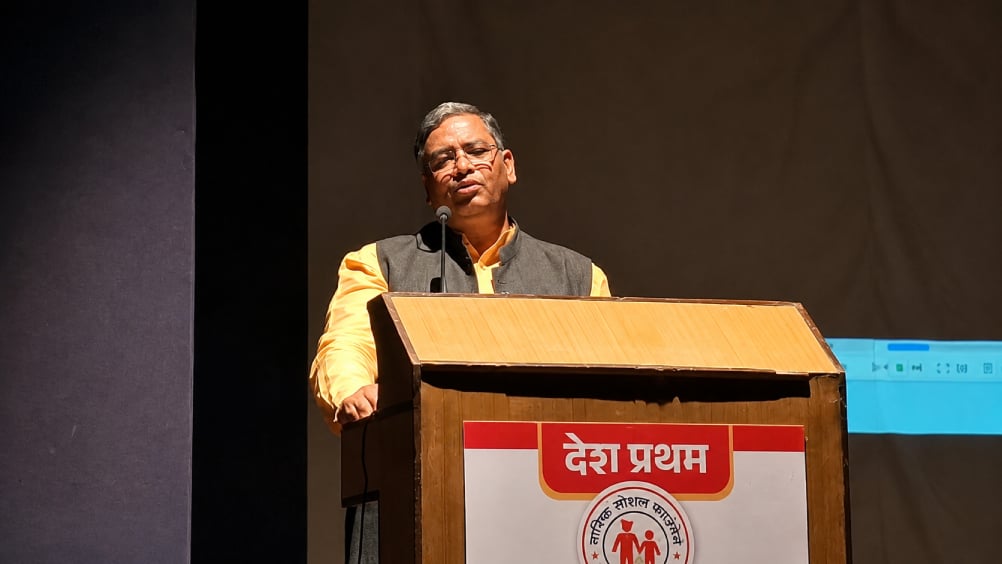
Pune, Maharashtra – The scope of ‘Halal Jihad’ is no longer restricted merely to food products; it has expanded across various consumer goods and economic sectors. Financial transactions linked with Halal certification, and the parallel system built on its foundation, are becoming a direct challenge to the Indian judicial system and consumer rights. Owing to the provisions regarding misbranding (selling products with misleading information or logos) under the FSSAI (Food Safety and Standards Authority of India) Act, legal questions can be raised against the Halal logo. It is against this backdrop that the Uttar Pradesh government has imposed a ban on Halal certification.
🚨The Govt’s own FSSAI certificate – issued under Bharat’s food safety law – is brushed aside, yet a maulana’s halal stamp, with no Bharat‑based study or authority, is treated as superior.
❌ Since when did private clerics outrank the nation’s legal framework?
🛑 Halal… pic.twitter.com/A1kPIhi5KG
— HinduJagrutiOrg (@HinduJagrutiOrg) August 6, 2026
These statements were made by Shri. Ramesh Shinde, National Spokesperson for the Hindu Janajagruti Samiti. He was addressing the sixth session of a lecture series on the subject “Halal Economy and India”, jointly organised by the Nagrik Social Foundation, Pavitram Foundation, and Punekar Vyapari Sangh at Tilak Smarak Mandir.
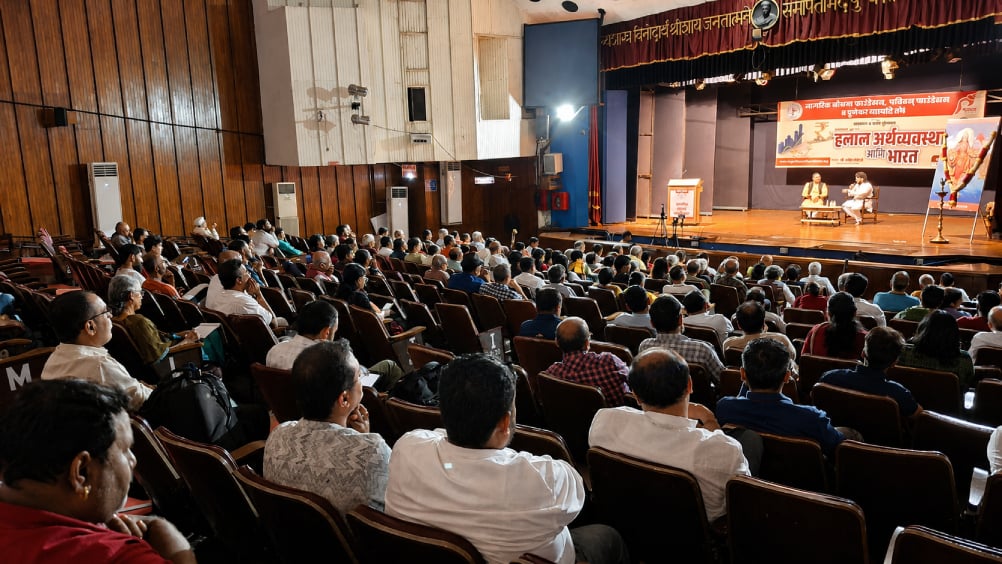
More than 600 citizens attended the event, including actor Rahul Solapurkar, Suryakant Pathak of Grahak Peth, Shailesh Tilak, Milind Ekbote of Samasta Hindu Aghadi, Sadguru Swati Khadye of Sanatan Sanstha, Achal Jain of Sakal Jain Sangathan, Rajendra Bathia (President of the Poona Merchant Chamber), and Srikrishna Chitale of the Chitale Group.
The programme commenced with prayers offered to the image of Bharat Mata and the lighting of the ceremonial lamp. This was followed by the chanting of ‘Om’ three times, a traditional blowing of the conch shell by Nitin Mahajan’s Shankhnaad troupe, and a rendition of the complete Vande Mataram by Pushkaraj Sapre. The introductory address was delivered by Amey Sapre of the Nagrik Social Foundation, and the vote of thanks was expressed by Shashank Mengade of the Pavitram Foundation.
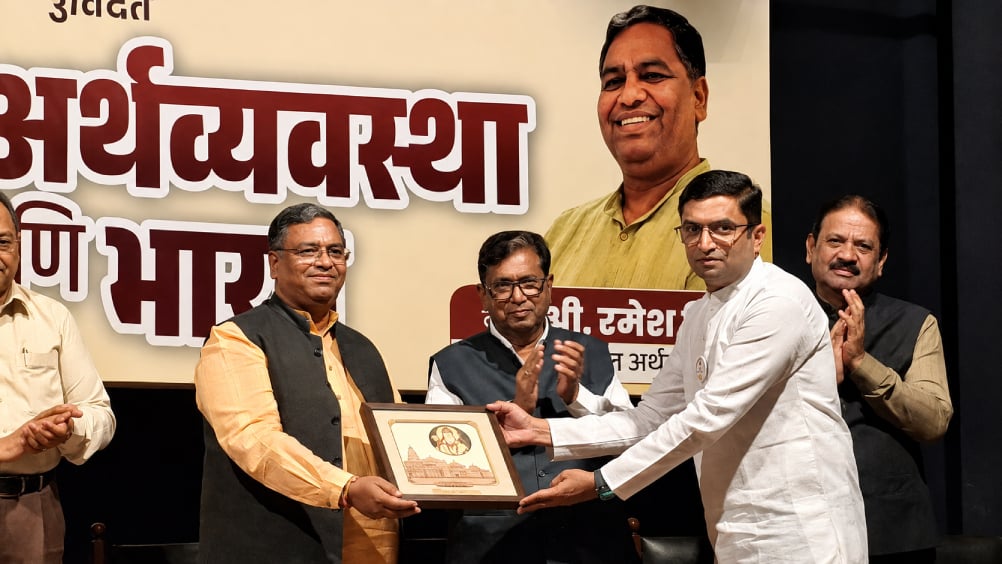
Subsequently, expressing his views, Fatechand Ranka of the Punekar Vyapari Sangh stated that unnecessary restrictions are being imposed on traders and consumers through Halal certification. He emphasised the need for widespread public awareness on this issue and assured all possible cooperation in such awareness campaigns.
Question & Answer session
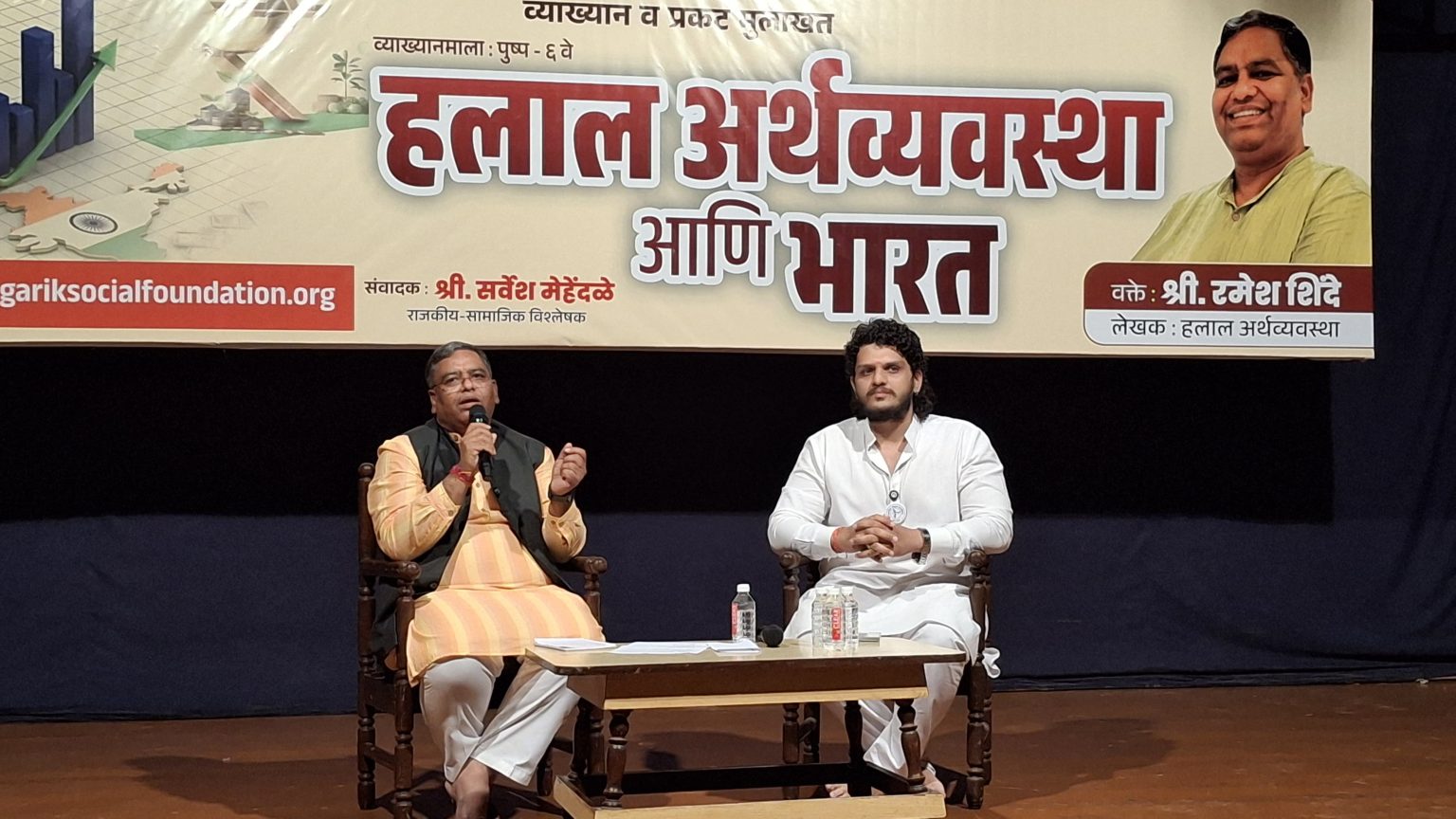
During the session, Ramesh Shinde answered the questions posed by political and social analyst Sarvesh Mehendale:
Is global trade possible only after obtaining Halal certification from a Muslim body?
Answer: That is not the case at all. Indian products are being exported to numerous countries without Halal certification. Products from enterprise groups like ‘Chitale’ are available in many nations. Therefore, the belief that trade cannot occur without Halal certification is incorrect. On the basis of reciprocal equality, India should also consider Vegetarian or Jain certification.
The Uttar Pradesh government has taken action against Halal certification. Could similar action occur in other states?
Answer: This matter is currently under consideration by the Supreme Court. Efforts on this subject are also ongoing across various states. The future direction will become clear following the court’s verdict.
What can common citizens and traders do?
Answer: Consumers should check products for Halal certification whilst making purchases and refrain from buying such products if they do not wish to do so. Consumers have the right to file complaints in consumer courts. Furthermore, individuals should ask hotels and vendors whether the food served is Halal.
Key points highlighted by Ramesh Shinde
Halal is not merely a religious concept; it has become a vehicle for establishing a parallel economy. Its financial benefits reach a limited group, whereas its impact is borne by the broader consumer base.
Government regulations regarding the sale of meat under Halal standards are frequently ignored in many places. Selling meat in the open, failing to store it at prescribed temperatures, and violating other regulations are widespread.
In India, every citizen possesses the right to choose food according to their faith and personal preference. Under these circumstances, rather than making any specific certification or dietary method mandatory, consumer choice and rights must be respected.