-
Surajya Abhiyan’s struggle to stop Ujani-Bhima River pollution
-
Flags gross disregard for directives of SC and NHRC
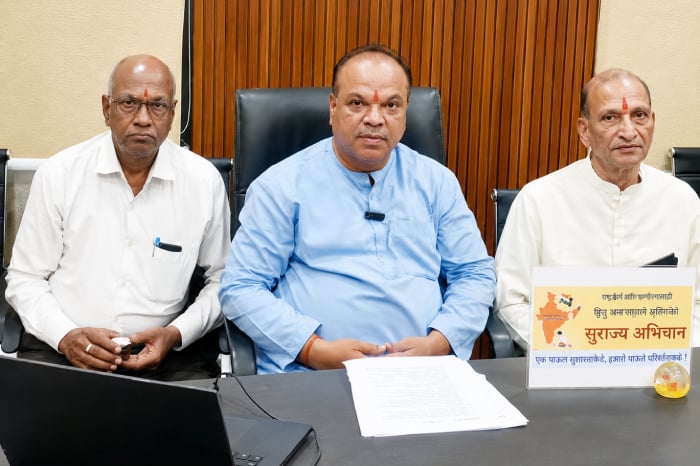
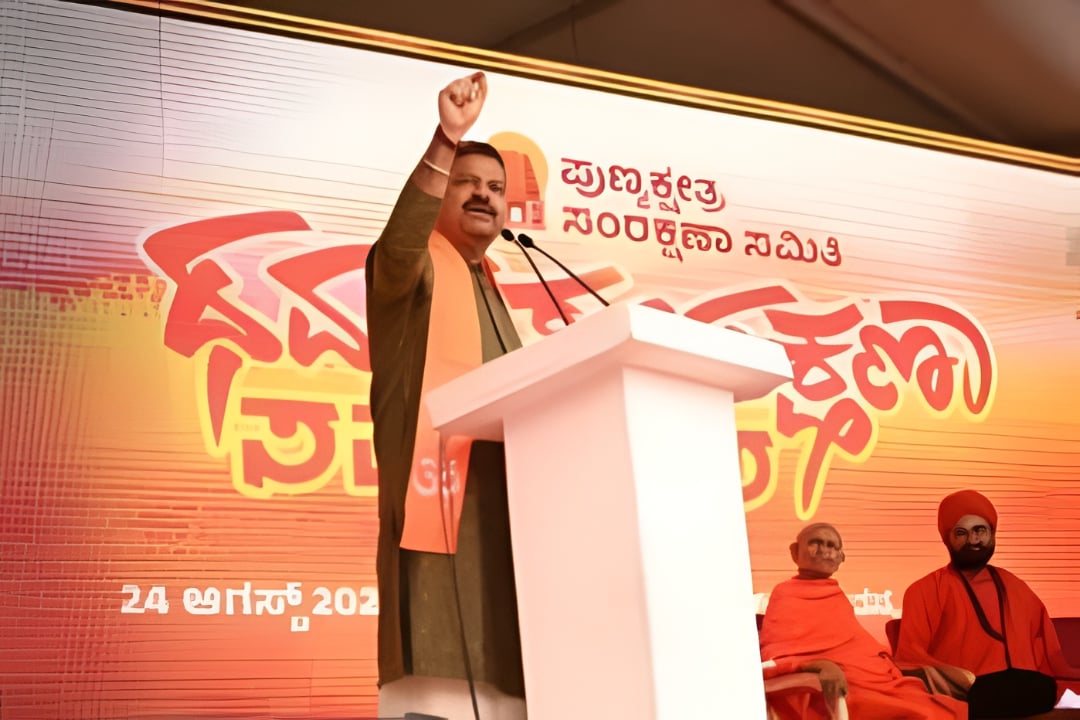
Solapur, Maharashtra – The rising pollution of Ujani reservoir and Bhima river has now become an extremely serious issue linked with environment, drinking water, agriculture, and the health of lakhs of citizens. The Central Pollution Control Board (CPCB), various research institutes, and experts have presented serious reports on this subject, yet expected concrete action is not being taken by the Maharashtra Pollution Control Board and concerned government departments. This serious concern was highlighted by Shri. Dattatraya Pise of ‘Surajya Abhiyan’ during a press conference organised on the subject of ‘Ujani-Bhima River Pollution’. On this occasion, Advocate Chandrashekhar Varad and Shri. Rajan Bunge of Hindu Janajagruti Samiti were present.
During the press conference, a question was also raised, “Will the lives of innocent Varkaris be toyed with due to the frothy and polluted water visible in Pandharpur’s Chandrabhaga river?”
Untreated industrial waste turning rivers into ‘flowing poison’!
Shri. Dattatray Pise stated that the Ujani reservoir is the primary source of drinking water for lakhs of people in and around Solapur, while the Bhima river is considered the lifeline of this region. However, due to untreated domestic sewage, industrial chemical effluents, and other polluting elements being discharged, this water source is gradually becoming a ‘flowing poison’.
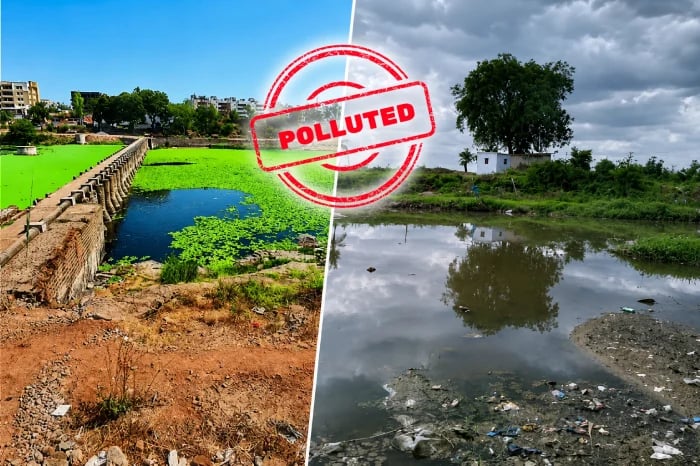
Its impact is not limited to water alone, but is also severely affecting the health of citizens, agriculture, soil fertility, livestock, and biodiversity.
According to the Central Pollution Control Board’s 2025 report, 54 polluted river stretches have been recorded in Maharashtra, which is the highest in the country. Bhima, Mula, Mutha, Indrayani, Pawana, and Chandrabhaga rivers have been placed under the ‘severely polluted category’.
Furthermore, the orders of the Supreme Court regarding not discharging any type of wastewater into reservoirs without treatment are being openly violated.
Directives of National Human Rights Commission ignored
‘Surajya Abhiyan’ studied around 2,000 pages of documents related to this matter and filed a petition with the National Human Rights Commission.
The Commission had directed the Health Department of Maharashtra and the Maharashtra Pollution Control Board to submit a detailed Action Taken Report (ATR) on the steps taken in this matter. For this, the Commission also sent reminders three consecutive times; however, till date, the concerned departments have not submitted any report. This was described as a serious inaction on the part of the administration.
Key demands of Surajya Abhiyan
- All pollution control measures suggested in the reports of the Central Pollution Control Board and other authorised bodies must be implemented immediately.
- The Maharashtra Pollution Control Board must make the raw data of BOD, COD, Heavy Metals, and other key parameters public within 30 days.
- All domestic and industrial wastewater from Pune to Solapur must be discharged into the river only after complete treatment.
- OCEMS (Online Continuous Effluent Monitoring System) must be installed at all sewage treatment plants, and its data should be made public for citizens.
- An independent audit of the sampling process of the Maharashtra Pollution Control Board should be conducted by the Central Pollution Control Board and an independent expert committee, and action should be taken against polluters as per the ‘Polluter Pays Principle’.
- Special blood tests of citizens in the affected villages of the Ujani region should be conducted to test the levels of ‘heavy metals’ in their bodies.
- A Toxicity Audit of the river’s sludge should be carried out through independent national institutions like NEERI or IIT.
- Accountability must be fixed for negligence in pollution control, and necessary legal action should be initiated against the concerned officials and departments.
Surajya Abhiyan has warned that if concrete action is not taken on these demands soon, a widespread public agitation will be launched, and the legal struggle against the responsible government departments will be further intensified.