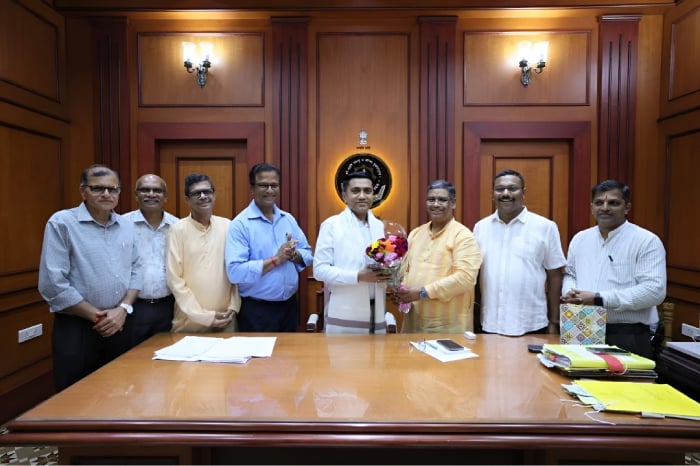
-
Devasthan Bhumi Sanrakshan Parishad Held in Amravati and Akola
-
Temple Trustees unite against government control of temples and Waqf encroachment
1. Amravati
Shall convey demands of Hindus to the government and strive to ensure justice – BJP MP Dr.Anil Bonde
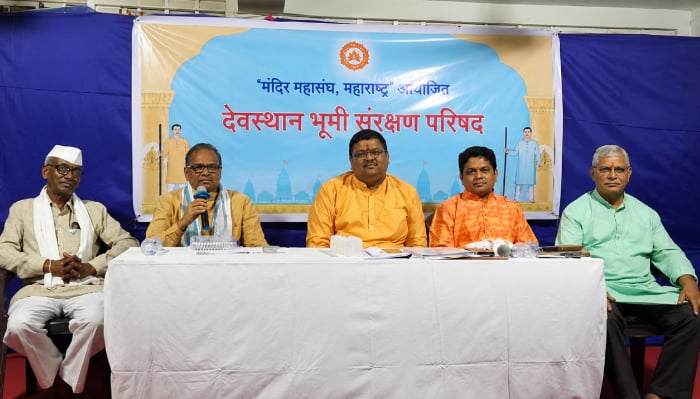
Amravati, Maharashtra – Along with protecting temple lands, the preservation of temples themselves is also essential. Temple trustees must take this matter with the utmost seriousness. In addition to worship and rituals, socially beneficial initiatives such as self-defence training classes for youth, gymnasiums, and cowsheds should be started through temples. There is a need for temple trustees to organise and make efforts according to the changing times. Currently, regardless of which party is in government, such troublesome laws are enacted due to the improper mindset of certain administrative officials. As public representatives, we are looking into this matter seriously, and I will convey the demands of Hindus to the government and strive to ensure justice, assured BJP MP Dr. Anil Bonde during the ‘Devasthan Bhumi Sanrakshan Parishad’ organised here.
🚩 Hindus Resolve at the ‘Devasthan Bhumi Sanrakshan Parishad’! 🚩
At the conference held at Ramdev Baba Temple in Amravati, participants pledged to intensify the fight against the Government control of temples and encroachments by the #Waqf Board.
The suspension of the… pic.twitter.com/rYKbi56w61
— Sunil Ghanwat 🛕🛕 (@SG_HJS) June 16, 2026
The convention was attended by the Organising Secretary of Hindu Janajagruti Samiti for Maharashtra and Chhattisgarh and Organising Secretary of the Rashtriya Mandir Mahasangh, Shri. Sunil Ghanwat, along with trustees from more than 150 temples across Vidarbha. It was stated at the convention that the government’s decision to stay the draft of the ‘Devasthan Inam Abolition Act’ is a victory for the collective strength of Hindus, and the next struggle will be to free temple lands from the possession of the Waqf Board.
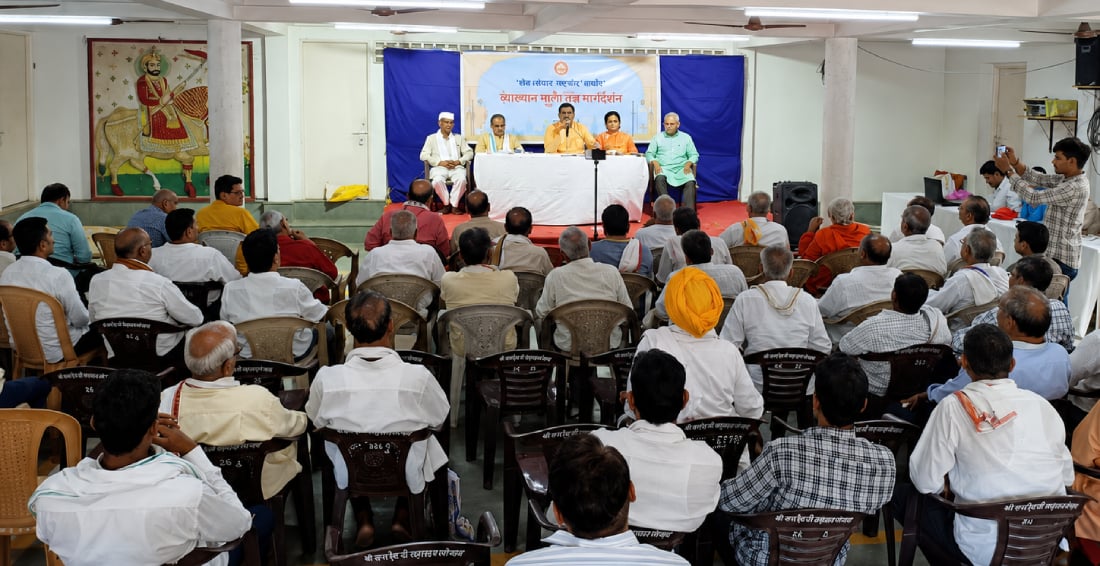
If temple trustees unite, 4 lakh temples in the country will be freed from government control – Sunil Ghanwat
Shri. Sunil Ghanwat stated that because the Mandir Mahasangh stood firmly with the temple trustees, a collective organizational strength has been forged. Due to this very strength, the government had to stay the ‘Inam Abolition Draft’ within a few days. Whenever there is an assault on temple culture, all temple trustees fight unitedly. A problem faced by a single temple is a problem for the entire Hindu society. On the strength of this collective power, the central government will one day have to declare the liberation of 4 lakh temples in the country from government control.
‘Anti-Land Grabbing’ law must be enacted – Anup Jaiswal
State Office-bearer of the Maharashtra Mandir Mahasangh, Anup Jaiswal, stated that the Devasthan Inam Abolition Act could be halted only because of the awareness campaign conducted by the Mandir Mahasangh across the state. The government must implement a stringent ‘Anti-Land Grabbing’ law against land mafias and encroachers who usurp temple lands.
Hindu temples must become centres for the preservation of culture! – Shrikant Pisolker
The Vidarbha Coordinator of Hindu Janajagruti Samiti, Shrikant Pisolker, stated that all Hindu temples must work on the three-fold principle of organisation, coordination, and security. Efforts should be made to ensure that temples become primary centres for the preservation and nurturing of Hindu culture.
The District Hindu Organiser of Amravati, Pradeep Garge, was also present on this occasion.
2. Akola
Resolve to intensify the struggle against government control of temples and Waqf Board encroachments
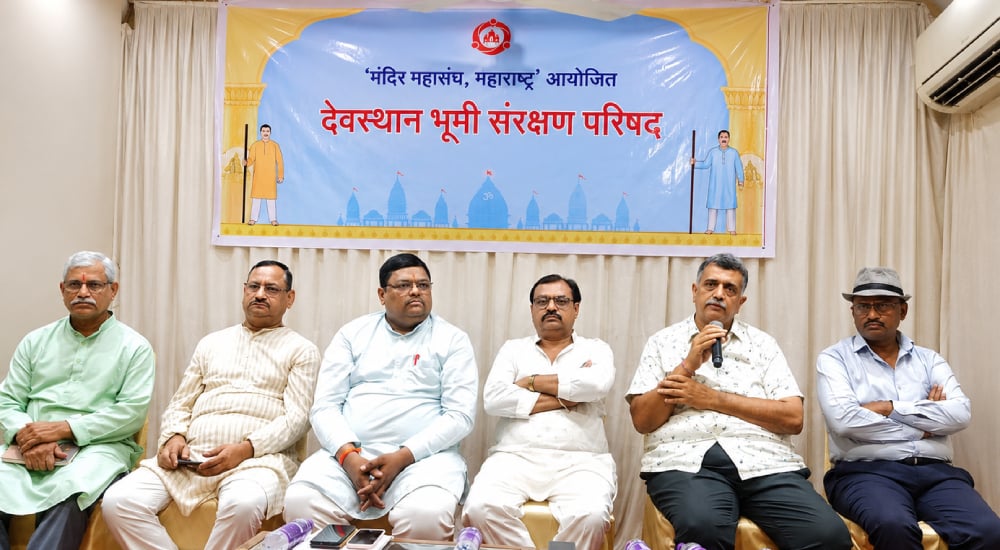
Akola, Maharashtra – The government’s decision to stay the draft of the ‘Devasthan Inam Abolition Act’ is a major victory for the organised strength of Hindus. Now, the next struggle will be to free temple lands from the possession of the Waqf Board and to implement an ‘Anti-Land Grabbing’ law against those encroaching upon temple lands. This resolve was expressed during the ‘Devasthan Bhumi Sanrakshan Parishad’ held here.
🚩 देवस्थान भूमी संरक्षण परिषदेत मंदिर सरकारीकरण आणि वक्फ बोर्डाच्या अतिक्रमणाविरोधात लढा तीव्र करण्याचा निर्धार!
मंदिरांच्या भूमी बळकावणाऱ्यांविरोधात कठोर ‘अँटी-लँड ग्रॅबिंग’ कायदा लागू करण्याची आवश्यकता : श्री. सुनील घनवट, राष्ट्रीय मंदिर महासंघाचे संघटक.
मंदिरांची भूमी… pic.twitter.com/5MT8GfsjAw
— Sunil Ghanwat 🛕🛕 (@SG_HJS) June 16, 2026
Around 150 trustees from various temples in Akola and the Vidarbha region turned out in large numbers for this convention, alongside Shri. Sunil Ghanwat, the Maharashtra and Chhattisgarh State Organiser of Hindu Janajagruti Samiti and Organiser of the Rashtriya Mandir Mahasangh.
On this occasion, Shri. Sunil Ghanwat said, “If temple trustees become organised, 4 lakh temples across the country can be freed from government control.”
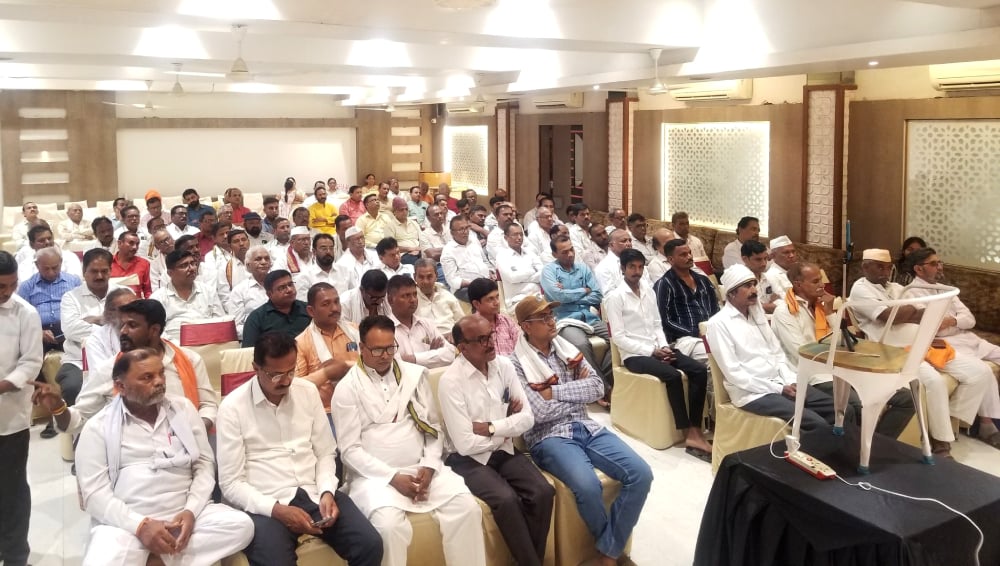
The Vidarbha Coordinator of Hindu Janajagruti Samiti, Shri. Shrikant Pisolker, presented the introduction to the convention. He provided a detailed overview of the work done so far and the historic successes achieved by the Maharashtra Mandir Mahasangh.
Other dignitaries present on the stage on this occasion included the President of the Shri Chandikadevi Sansthan, Shri. Prashant Deshmukh; the President of Swayambhu Mahadev Antri, Shri. Arvind Dethe; trustee of the Hanuman Temple, Shri. Pramod Agnihotri; and trustee of the Murtizapur Mandir Mahasangh, Shri. Dinkar Thackeray.
3. Yavatmal
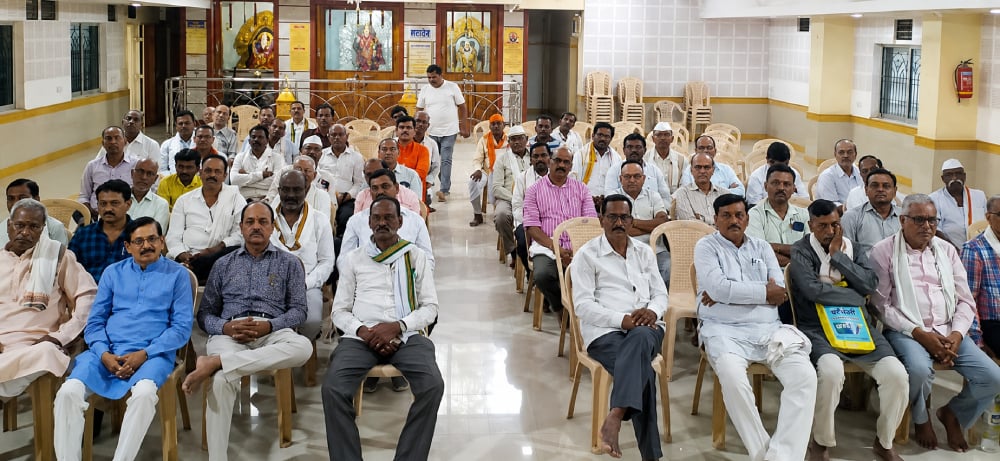
Yavatmal, Maharashtra – The ‘Devasthan Bhumi Sanrakshan Parishad’ was organised by the Maharashtra Mandir Mahasangh on 15th June. More than 65 temple trustees and priests from Yavatmal city and various tehsils participated in this convention.
The chief guide of the convention and National Coordinator of the Maharashtra Mandir Mahasangh, Shri. Sunil Ghanwat, presented the scriptural perspective regarding Devasthan Inam land. On this occasion, he clarified the future course of action concerning the Devasthan Land Protection Act and emphasised the need for a broad organisation to protect temples.
The Vidarbha Coordinator of Hindu Janajagruti Samiti, Shri. Shrikant Pisolker, presented the introduction to the convention. He gave a detailed introduction to the work done so far and the historic successes achieved by the Maharashtra Mandir Mahasangh.
The attending temple trustees shared their experiences of struggles and efforts made to save their respective temple lands. Along with this, various problems and challenges faced during the current management of temples were also discussed at length.