Selective secularism of Congress exposed once again
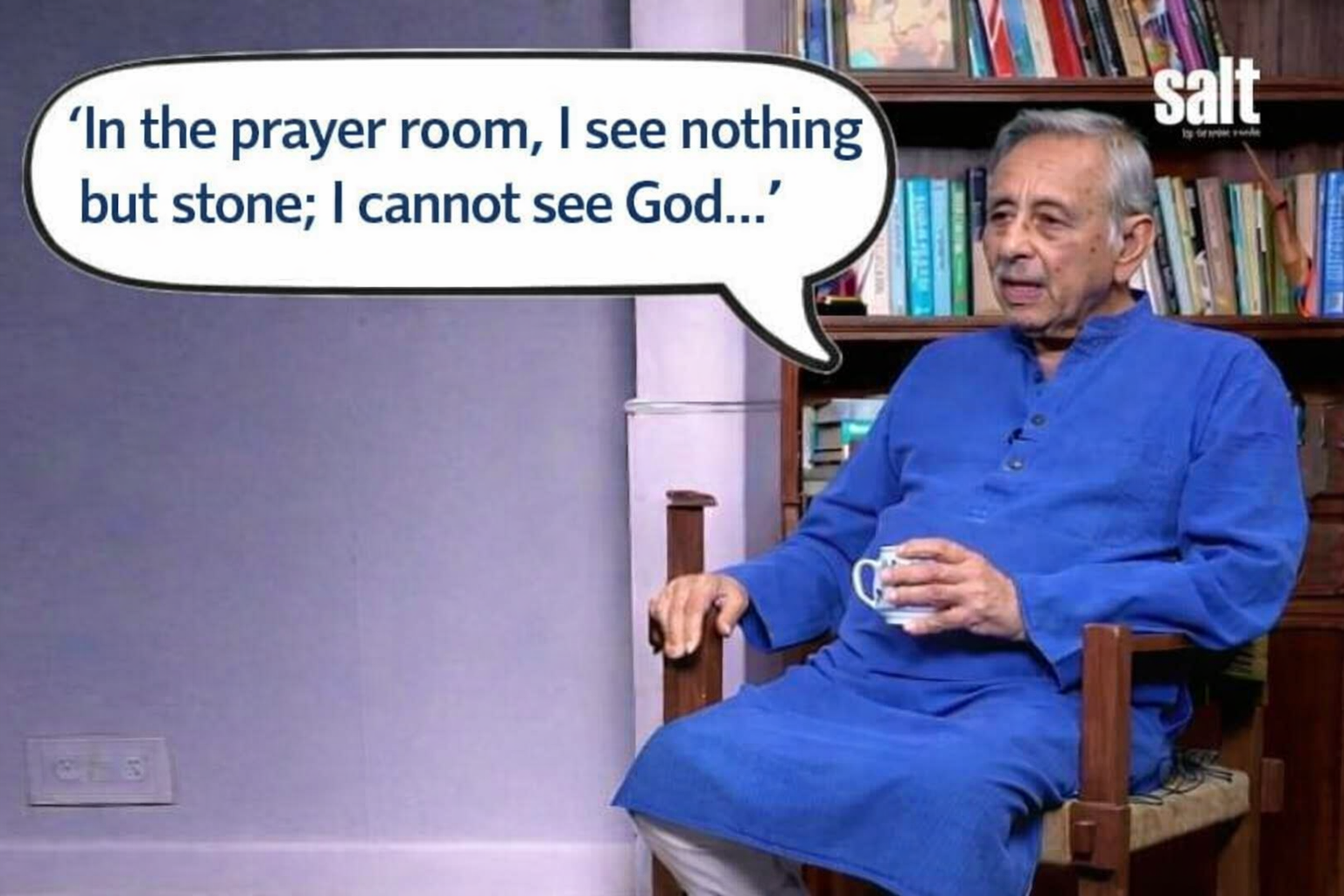
A video of Congress leader Mani Shankar Aiyar has gone viral on social media around Ram Navami. In the video, he is seen openly expressing his dislike towards Hindu faith and worship. The video has once again brought attention to what is being described as the Congress party’s anti-Hindu stance.
“I never liked Hindu religion. I sit with my wife in Pooja but I see only stone, no god in it”
Congress leader Mani Shankar Aiyar
Is this Rahul Gandhi’s mohabbat ki dukan ?pic.twitter.com/knqbd2mYk9
— Frontalforce 🇮🇳 (@FrontalForce) March 26, 2026
In the video, Aiyar clearly states:
“I have never liked Hindu faith and its rituals. So take me to a mosque, I will gladly go there. My wife believes in these traditions, and I sit with her during puja. There are rituals performed in our home, and I sit along with her. But I only see a stone there. I do not see God in it.”
This is a public statement by a senior Congress leader and former Union Minister (who served in the Manmohan Singh government), in which he openly says that he does not experience any spiritual feeling at Hindu places of worship, while he feels happy visiting a mosque.
It may be easy to dismiss Mani Shankar Aiyar as an isolated or unusual figure within the Congress; however, his past record suggests otherwise. He is the same individual who:
Referred to Narendra Modi as a “chaiwala” in a derogatory manner before the 2014 elections, for which he was suspended, though later reinstated quietly; he had also earlier called Atal Bihari Vajpayee “incompetent”.
Visited Pakistan in 2015 and dined with the ISI chief, after which critics began referring to him as “Pakistani Mani Shankar Aiyar”. Stated that Pakistan’s help was needed to remove Modi from power so that talks with Pakistan could resume.
During the Gujarat election campaign in December 2017, referred to Prime Minister Modi as a “low-level person”.
The Congress party has never formally distanced itself from Aiyar’s views on Hindu Dharma. His opinions on temples and idol worship have been in the public domain for years, and the party’s silence is seen as indicative of its stance.
‘Selective secularism’ of Congress highlighted again
Aiyar’s statement is considered serious because it reflects a clear imbalance. He does not say that he is an atheist who sees no God anywhere. Instead, he specifically states that he feels happy in a mosque, while in temples he sees only stone.
This is not secularism. It is being viewed as a clear and targeted rejection of Hindu religious sentiments by an individual who has spent decades in positions of power within the Congress party.
The Congress party, which presents itself as a protector of the Constitution and claims to represent all Indians equally, is now facing criticism as one of its senior leaders has publicly dismissed Hindu worship while expressing a positive inclination towards Islamic places of worship. This is being described as a clear example of ‘selective secularism’.