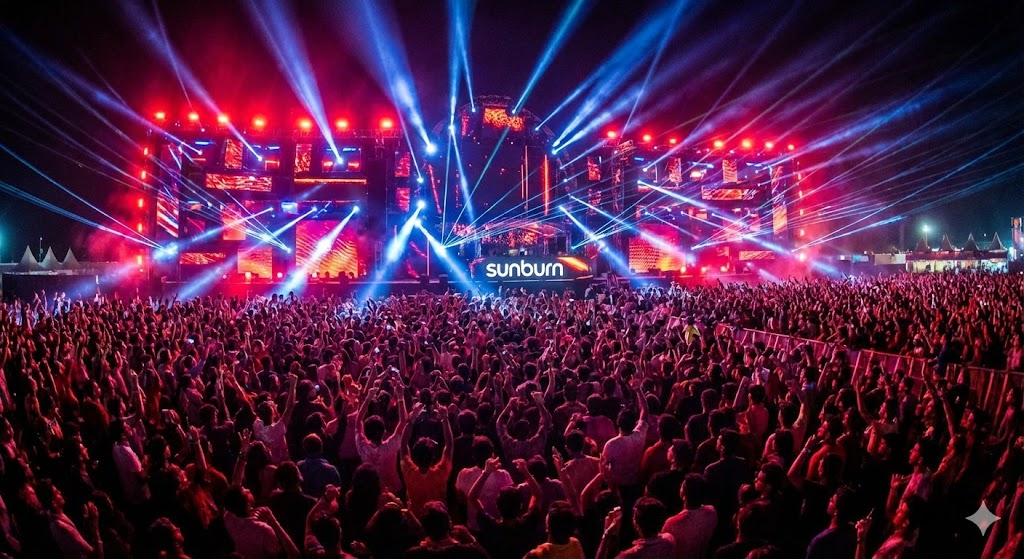
For nearly two decades, the Sunburn festival has been marketed as a shining example of modern tourism, vibrant nightlife, and musical entertainment – a celebration of youth, freedom, and energy. But if we peel back the glossy layers of marketing, a darker reality emerges. In truth, this festival has become a noisy nuisance, a hub of drug abuse, and a cultural imposition that clashes with the ethos of Bharat. It has also been marred by controversies for the wrong reasons ever since it started in 2007.
While proponents argue for its economic benefits, the social and cultural costs far outweigh them. Here’s why Bharat must say ‘no’ to Sunburn.
1. The erosion of our cultural roots
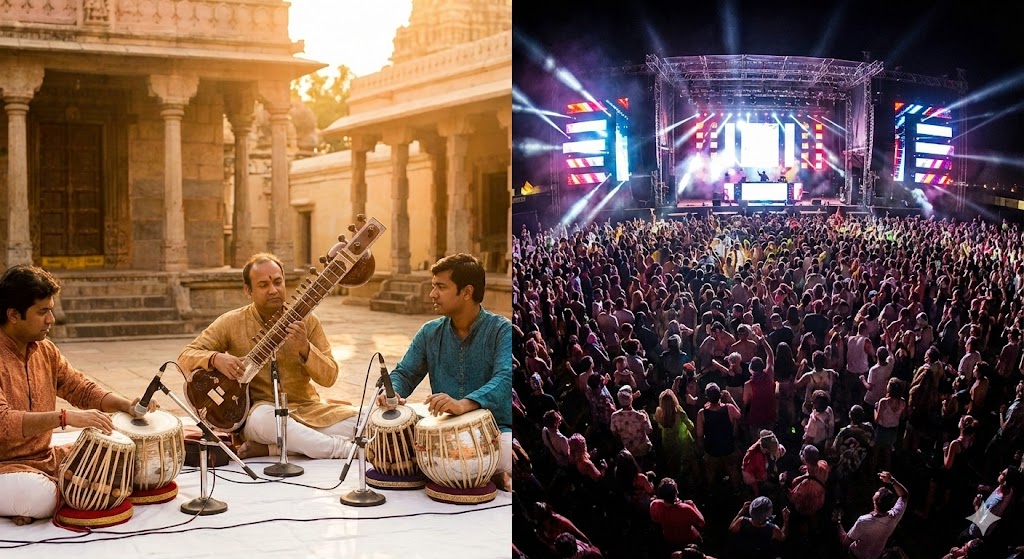
Bharat is a land of festivals. Music has been an inseparable part of Bharatiya culture. We celebrate life, the seasons, and the divine with music and dance. Festivals like Sunburn are not in alignment with our Bharatiya way of celebrations. Sunburn imports a specific brand of Western hedonism that is fundamentally alien to our way of life. In our festivals, the focus is on devotion, values, community spirit, and joy; not shrill noise. Celebrating through deafening sound amplification is a Western concept, and we must not impose such alien forms of celebration on the locals of this land simply to argue that this is ‘modernisation’. We cannot simply import a Western rave culture, and force it on communities that value modesty, family, and spiritual sanctity. The festival has consistently demonstrated that it is unwilling to adapt to the character of its location. This isn’t modernisation; it is cultural imposition.
2. Public obscenity: An affront to Bharatiya decency
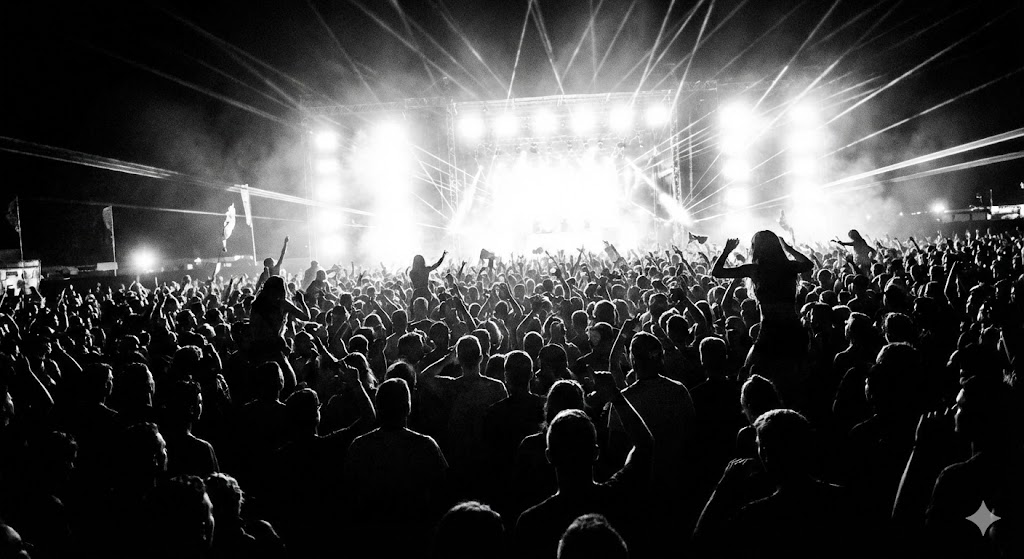
For years this festival has been associated with blatant public display of vulgarity that harms the sanctity of our social environment. In Bharat, public spaces are governed by a code of decency and maryada. Sunburn actively erodes this line. It turns open grounds into spectacles of semi-nudity and hyper-sexualised behaviour that mimic the Western nightlife. To normalise such lewdness in the open, under the guise of ‘freedom’ and ‘modernisation’, is to degrade the moral fabric of our Bharatiya society. It is a cultural aggression that creates an environment where modesty is mocked and vice is celebrated.
3. The trap of drug abuse destroying our future generations
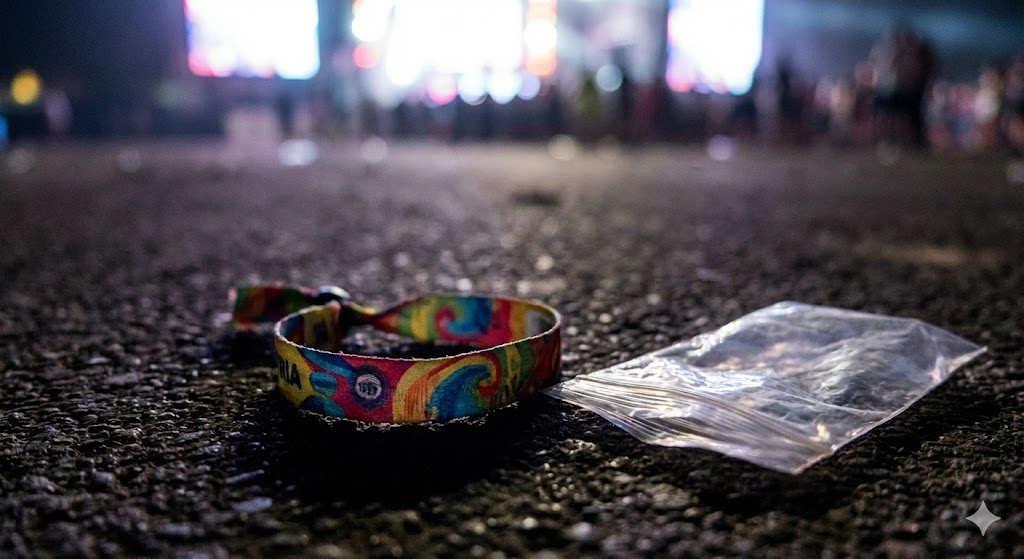
The most terrifying aspect of Sunburn is its notoriety as a breeding ground for drug abuse. Festivals like Sunburn are often a gateway for teens towards drugs. Driven by peer pressure and the sensory overload at the festival, young boys and girls are tempted to experiment with substances they might otherwise never touch. What starts as a ‘one-time try’ at the festival can spiral into a lifelong addiction that creates a devastating impact not only on their future but on their entire family.
Organisers may claim a zero-tolerance policy towards drugs, but the history of Sunburn tells a different story. We cannot ignore the toll this has taken on our youth over the years. Over the years, Sunburn has seen sudden death of youngsters at the festival venue, due to suspected drug overdose. There were also instances where local police caught people red-handed at the venue in possession of recreational drugs. These are not just statistics, these youngsters were the future of our nation. Is a weekend of fun worth losing our future generation?
We have to decide how we wish to see our future generations. Do we want them to contribute to nation-building by following the culture of spiritual and devotional celebration of festivals, or do we want them to ape the Western way of noisy, frantic celebrations?
4. Noise pollution: An assault on peace
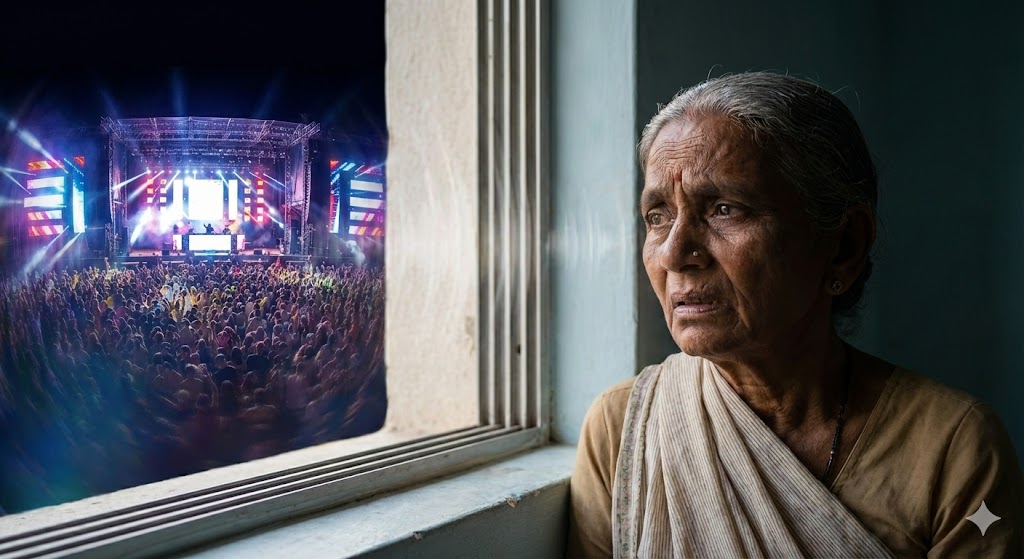
There is a difference between a celebration and an assault on the senses. In Bharat, we have regulations for our own festivals to ensure community harmony, yet Sunburn frequently flouts these norms. In Goa, locals have reported vibrations so strong that it rattled the windows of their homes; the elderly could not sleep for days, school going children were unable to study. When the bass is so heavy that it rattles the windows of a quiet residential area, it ceases to be music; it becomes an act of aggression. The relentless, thumping bass of the EDM is not just music, it is a physical intrusion. It creates an adverse health impact on children, the elderly, and particularly heart patients who are left with no escape. It is wrong to compromise the peace of the locals in exchange for economic gains that this festival claims to provide.
5. Violation of personal space: The biggest nuisance
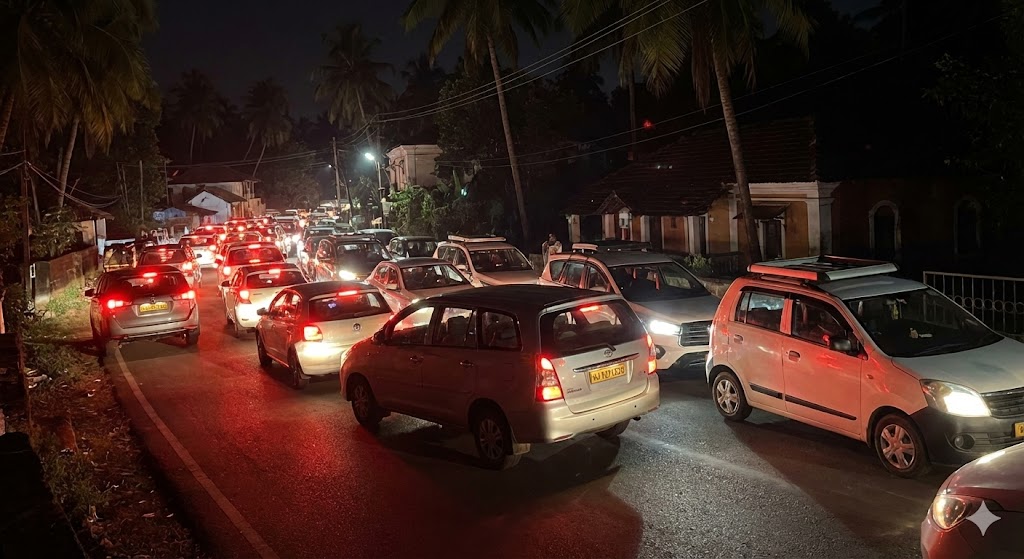
When music intrudes into the personal space of residents in any village or town, it is no longer culture; it is a nuisance. The villagers of North Goa and the residents of Kesnand in Pune found their roads choked with traffic, their neighbourhoods littered with trash, and their sense of safety shattered. Imagine having thousands of intoxicated strangers roaming your streets at the dead of night. The fear of anti-social elements and the safety of local residents becomes a genuine anxiety for residents. Many residents reported being confined to their homes due to the choked lanes and the fear of anti-social elements. The purpose of celebrating any festival is to bring joy to a place, not fear and discomfort.
6. The economic fallacy
Supporters often shout about ‘tourism revenue’. But who actually profits? The lion’s share of the money goes to the organisers, international DJs, and hotel chains.
But what do the locals get? Trash, traffic, and fear! Villagers are left to clean up trash after the crowds leave. Residents are trapped in gridlocks for hours, unable to get to work, hospitals, or even their own homes. Some are confined indoors for the duration of the festival due to lanes choked with traffic. One cannot ignore the looming anxiety caused by intoxicated strangers and anti-social elements roaming freely in residential areas in the dead of night.
7. Financial malpractice and tax evasion

While the festival claims to bring revenue, the organisers have a documented history of financial malpractice and tax evasion.
Pune 2016: The State Government had to issue notices to the organisers to recover more than ₹1 Crore in unpaid stamp duty and penalties related to the land lease in Kesnand. They were also fined for illegally levelling hillocks and cutting trees to build their stages.
Goa: For years, the Goa government and local police have had to chase the organisers for crores of rupees in unpaid fees for security and traffic management.
This pattern suggests that the festival operates on a model of maximising private profit while evading public responsibility. Why should our tax money be used to chase wealthy organisers for dues they legally owe?
The venue has changed, the danger has not
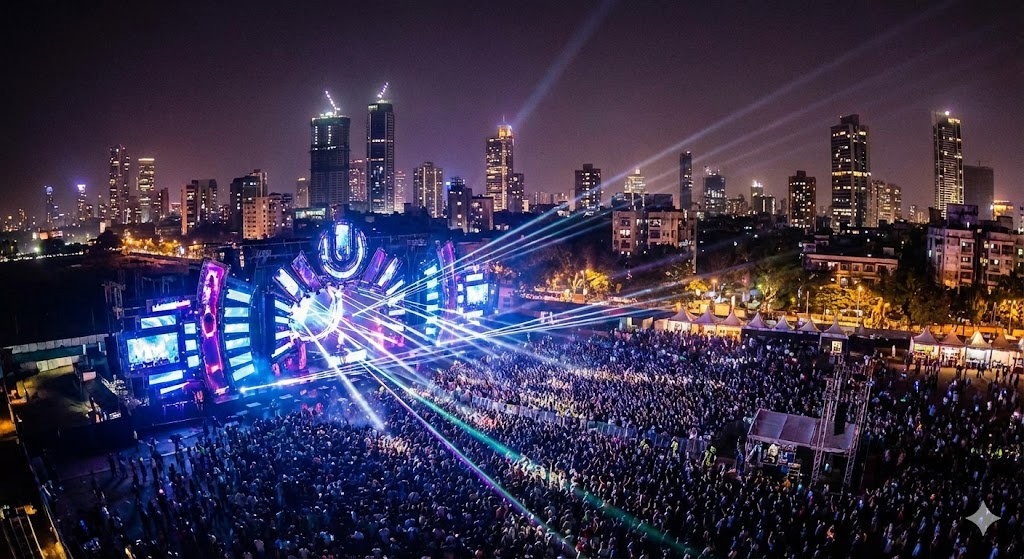
Even though the Sunburn festival has moved to Mumbai this year, the danger remains. The promoters have now relocated the event to Mumbai because the villages of Goa and Pune quite rightly protested against them. But be careful! Just the venue has changed, the danger has not. In fact, the move to a metropolis is even scarier. While Mumbai has the infrastructure to absorb the massive crowds and traffic, it brings the drug-laced culture directly to the doorstep of millions of urban youth. A change in location does not change the notorious character of the beast. Mumbai parents must now bear the exact anxieties that terrified the families of Goa – Drugs and safety concerns, especially for women. We must protect our youth from a culture that glorifies intoxication, regardless of whether it happens on a beach in Goa or a bay in Mumbai.
Bharat must reject the rave
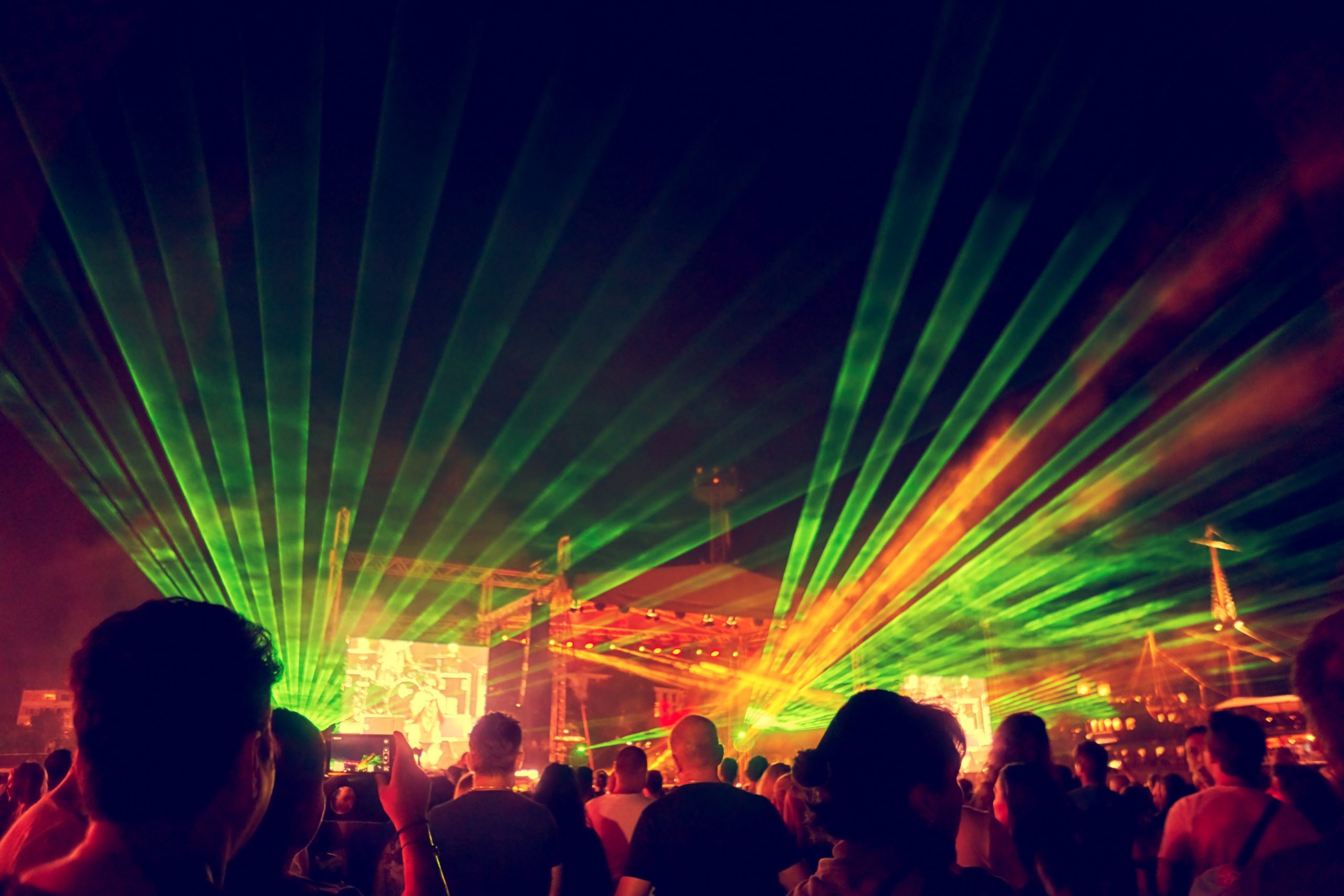
Every nation has its own culture, and true globalism means respecting those differences. We should not impose a Western model of ‘party tourism’ on a nation like Bharat, where celebration involves devotion, peace, and blissful joy. Bharat does not need imported rave culture masquerading as music. It needs celebrations that elevate the spirit, raise our devotion, and give us bliss, not the ones that dull the senses, destroy the lives of our youth, and devastate families. A festival that destroys peace cannot be a celebration of life. It is time to say no to noise, narcotics and nuisance.