The Goa Inquisition
The Forgotten Genocide of Hindus
Voices Suppressed, Stories Untold
Let Goa’s True History Be Heard
Goa witnessed one of the most brutal genocides in the history of mankind — the Inquisition of Goa. While the world knows about the Spanish Inquisition, hardly anything is known about this Goan holocaust.
After 451 years of tyrannical Portuguese rule, Goa was liberated on 19 December 1961, a day now honoured as Goa Liberation Day. The Goa Inquisition is regarded as the most violent and barbaric ever executed by the Portuguese Catholic Church. Marked by unparalleled cruelty, inhumanity and fanaticism, it tormented Goan Hindus for 252 years (1560 to 1812 A.D).
Those who refused to convert to Christianity, and those ‘New Christians’ found secretly practising Hindu Dharma, were punished in the most horrific manner possible. It is heartbreaking that this dark chapter finds no place in Indian history books and is rarely discussed openly. As we celebrate Goa Liberation Day, let us remember and honour the countless Goans who, under the shadow of torture and death, refused to abandon their ancestral culture and faith.
Sign Petition
Preserving and propagating the true history of Goa – Inquisition of Goa
(The forgotten Genocide of Goans)
Request you to please send the email with the demands to Hon’ble Chief Minister & concerned authorities by clicking on the below button. Request you to send a copy of the email to [email protected]
(Note: ‘Send Email’ button will work only on Mobile)
History of Goa Inquisition
What was the Goa Inquisition ?
Most Indians believe that Goa was settled by the Portuguese. This is what the history textbooks have taught them. But the facts are quite different.
Goa (Gomantak) was a bustling place, continuously settled by Indians since at least 1200 B.C. It was a famous pilgrimage centre, often known as the Kashi of the West. This continued till the Portuguese missionaries arrived.
They launched an aggressive program of converting natives to Christianity. Hundreds of Hindu temples were destroyed, and churches were planted on the destroyed temple sites. Brahmins were chased out. Many converted as a result of this pressure.
The new converts were ordered to give up their ‘heathen’ practices. However, when friendly methods failed to keep the newly converted within the flock, the Inquisition was called in.
The Goan Inquisition has often been called the worst in the history of Christianity. Its most virulent phase lasted for about 250 years from 1560 to 1812.
Anti-Hindu laws imposed by the Inquisition in Goa
The Inquisition imposed several anti-Hindu laws, including the following:
Cruelty of the Goa Inquisition
The Goa Inquisition is regarded as the most violent ever executed by the Portuguese Catholic Church. It was basically a holocaust inflicted on the Indian people.
The Inquisition consisted of a tribunal headed by a judge sent from Portugal, along with two assistants. The judge was answerable only to Lisbon and handed down judgments as he saw fit. The proceedings were conducted in a palace called the “Big House” — the former residence of the Portuguese Governors of Goa until 1554. This building was refitted to accommodate 200 cells for prisoners and equipped with instruments of torture to inflict all kinds of pain on “heathen and pagan” Hindus in order to force the “true and merciful religion” of Christianity upon those who resisted.
All interrogations were conducted behind closed doors, but the screams of agony of men, women, and children could be heard from the streets, even in the middle of the night. Prisoners were brought in based on reports from witnesses, often given under threat of torture or to save their own lives. The so-called crimes included blasphemy against Christianity, impiety, idolatry, necromancy, witchcraft, or anything against the Church.
For these so-called crimes, victims were often burnt alive at the stake after prolonged torture. If they confessed, they were shown “Christian mercy” by being strangled first and then burnt after death.
Indian ladies who opposed or resisted the sexual advances of the assistants of the commission were put behind bars, forcibly violated to satisfy carnal desires, and then burnt alive as heretics opposing the tenets of the Catholic Church.
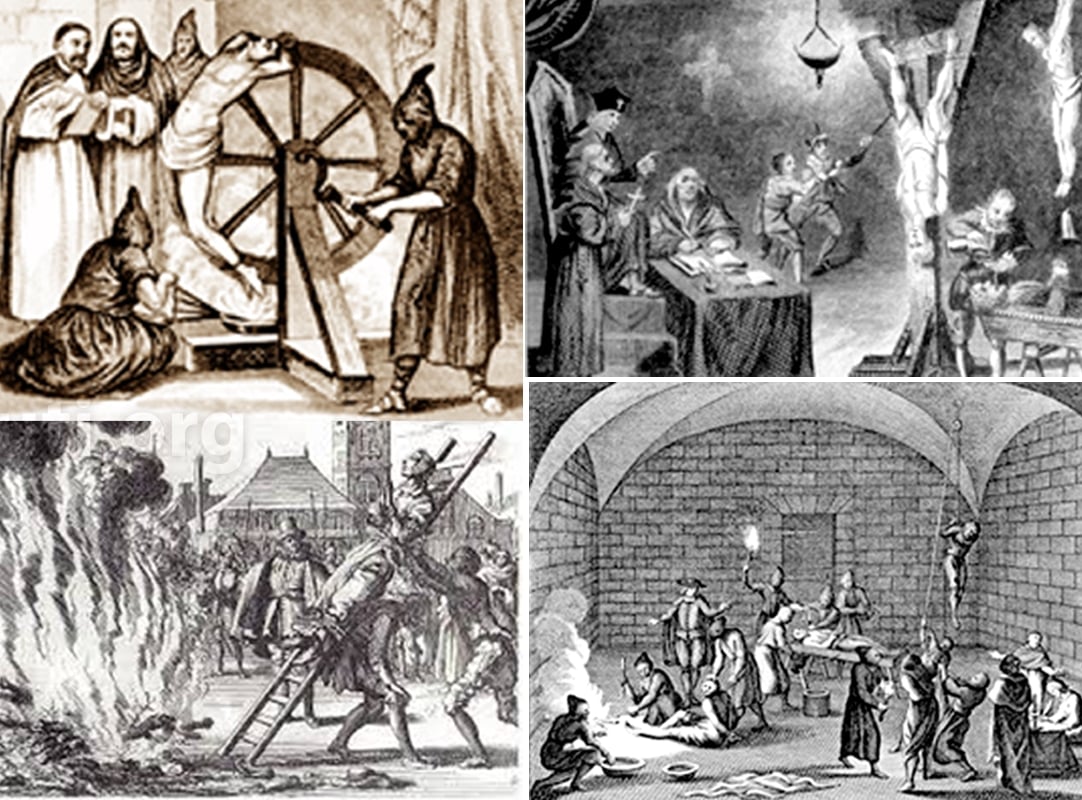
Some of the tortures Hindus were subjected to during the Goa Inquisition:
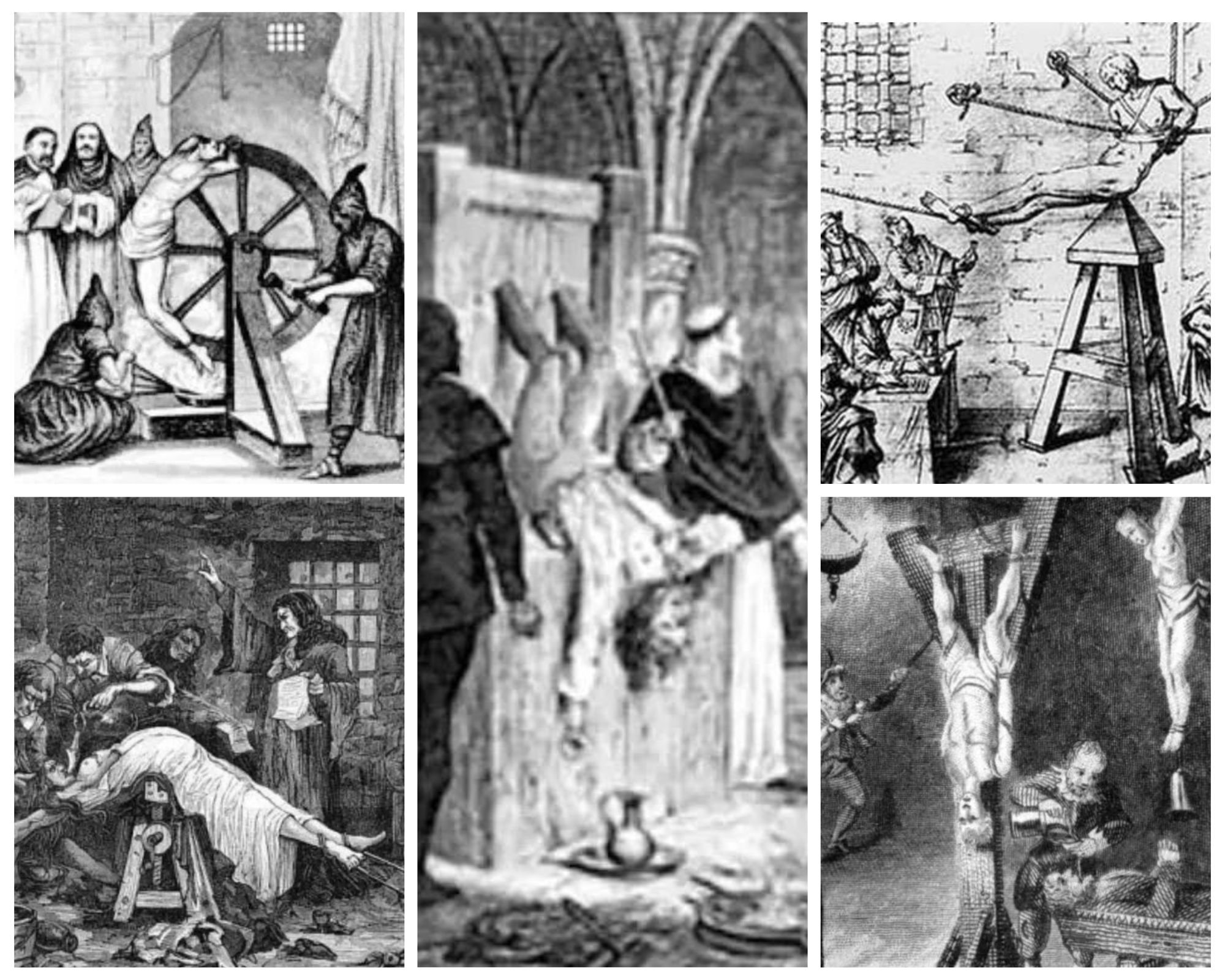
- Strappado (Pulley torture): The victim’s arms were tied tightly behind the back, and he/she was hoisted up high by the wrists using a rope and pulley. The victim was left hanging in excruciating pain for hours. Suddenly, the torturers would drop the victim almost to the floor and stop with a violent jerk. This caused the shoulders and arms to dislocate instantly.
- Water torture: The victim was forced to lie on his back across a sharp iron bar placed under the spine. The torturers then forced the victim to swallow huge amounts of water continuously without stopping. The pressure of the iron bar on the backbone, combined with the swelling stomach, often broke the vertebrae. This caused severe vomiting and asphyxia.
- Torture by fire: The victim was hung over a fire and roasted alive, with the feet coated in animal fat that would catch fire and burn the flesh.
- Other instruments included a metallic glove in which the hand was roasted over a fire, tools for breaking legs and shins, the rack for disembowelling a person, sharp knives for cutting off ears, and instruments that would tear a woman’s breast from her body.
All these tortures continued until the victim confessed. They were then taken back to their cells to suffer until the time of execution. More than 2,000 people were burned alive, and many more were tortured.
Who was St (?) Francis Xavier
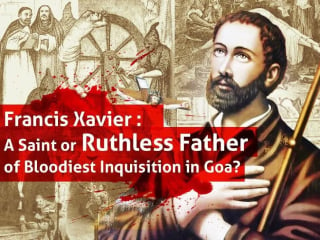
In 1538, the General of the Society of Jesus, Ignatius de Loyola in Rome, upon the request of the King of Portugal, sent missionaries to the East. Francis Xavier, later known as Saint Xavier, arrived in Goa on 6 May 1542.
He landed in Goa with a firm resolve to uproot “paganism” from the soil of India and plant Christianity in its place. All plans of persecution and oppression of Hindus came along with him. Under his guidance and missionary zeal, aggressive policies of forcible and fraudulent conversions, demolition of Hindu temples, and destruction of idols were systematically undertaken.
Thus, it was St. Francis Xavier who laid the foundation for the barbarous organised system of the Holy Inquisition against the Hindus in Goa.
Francis Xavier openly ordered the destruction of temples and expressed great joy at the sight. He wrote in a letter:
After all have been baptized, I order that everywhere the temples of the false gods be pulled down and idols broken. I know not how to describe in words the joy I feel before the spectacle of pulling down and destroying the idols by the very people who formerly worshipped them.
In another letter to the Society of Jesus, he declared:
I want to free the poor Hindus from the stranglehold of the Brahmins. The Brahmins are the most perverse people in the world. The poor people do exactly what the Brahmins tell them. If there were no Brahmins in the area, all Hindus would accept conversion to our faith.
From all this, it is clear that the Goa Inquisition by the Portuguese Catholic Church was nothing less than a sustained war against Hindus and the Vedic culture itself.
Yet, they could not destroy Vedic Dharma. Even today, modern school history books and secular historians maintain a deliberate silence on the violent and treacherous methods used by the Catholic Church in their attempt to crush the Vedic tradition of India.
The forgotten genocide
This chapter of Indian history should not be forgotten. This was nothing short of a cultural genocide and religious holocaust that continued for over two and a half centuries. Yet this horrific chapter finds almost no place in Indian history books and is rarely discussed openly.
It is our duty to preserve and propagate the true history of Goa.
Pope must apologize for the Goa Inquisition
Pope John Paul II, on 31 October 1992, apologised for the agony inflicted on Galileo. Pope Francis tendered an apology on 1 April 2022 (and again during his visit to Canada in July 2022) for the “cultural genocide” of indigenous children committed by the Catholic Church in Canadian residential schools.
It is now time for the Pope to come forward and apologise for the Goa Inquisition. In fact, the Church should also provide reparations for all the damage and horrors inflicted upon the people of Goa.
Nobody knows the exact number of citizens who were killed or tortured by the Portuguese in the name of Christ, but it is likely to run into hundreds of thousands.
This is the true history of Goa. The silence around it is not due to a lack of evidence. There exist, in full text, orders issued by successive Portuguese Viceroys and Governors. There exist detailed written records and travelogues, penned by the persecutors themselves, that describe the horrors committed in the name of Christ.
Reference: Atrocities on Hindus by Missionaries in Goa by V. Sundaram and Goa Inquisition – The Epitome of Christian Missionary Violence.
Eminent people have strongly condemned the Goa Inquisition and exposed its barbarity. Indian history should not be forgotten.
Eminent people on Goa Inquisition
Our Demands
It is the duty of every Goan and every Hindu to ensure that the horrific history of the Goa Inquisition is never erased or forgotten. We strongly demand that the Government of Goa immediately accept and implement the following:
1. The brutal history and facts of the Goa Inquisition must be included in school and college textbooks so that future generations understand the terrible sufferings and sacrifices of their ancestors.
2. The State Government should set up a ‘Goa Inquisition Holocaust Museum’. This museum must prominently display the horrific instruments of torture used during the Inquisition, along with all the letters and correspondence of St. Francis Xavier in which he openly details the methods he used for forced conversions of Goans to Christianity.
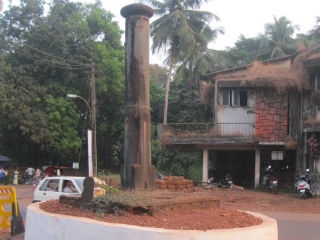
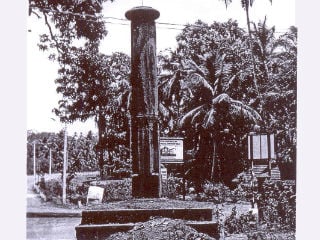
3. Numerous historical relics connected to the Inquisition, such as the ‘Haat Katro Khamb’, still exist across Goa. These symbols of our painful history and sacrifice must be properly preserved, protected, and treated with utmost respect. Proper signage and historical information should be provided at all such sites.
4. The State Tourism Department must include the above in its official tour itineraries. Tourists visiting Goa should be shown the true history of the land.
Goa Inquisition awareness campaign by HJS
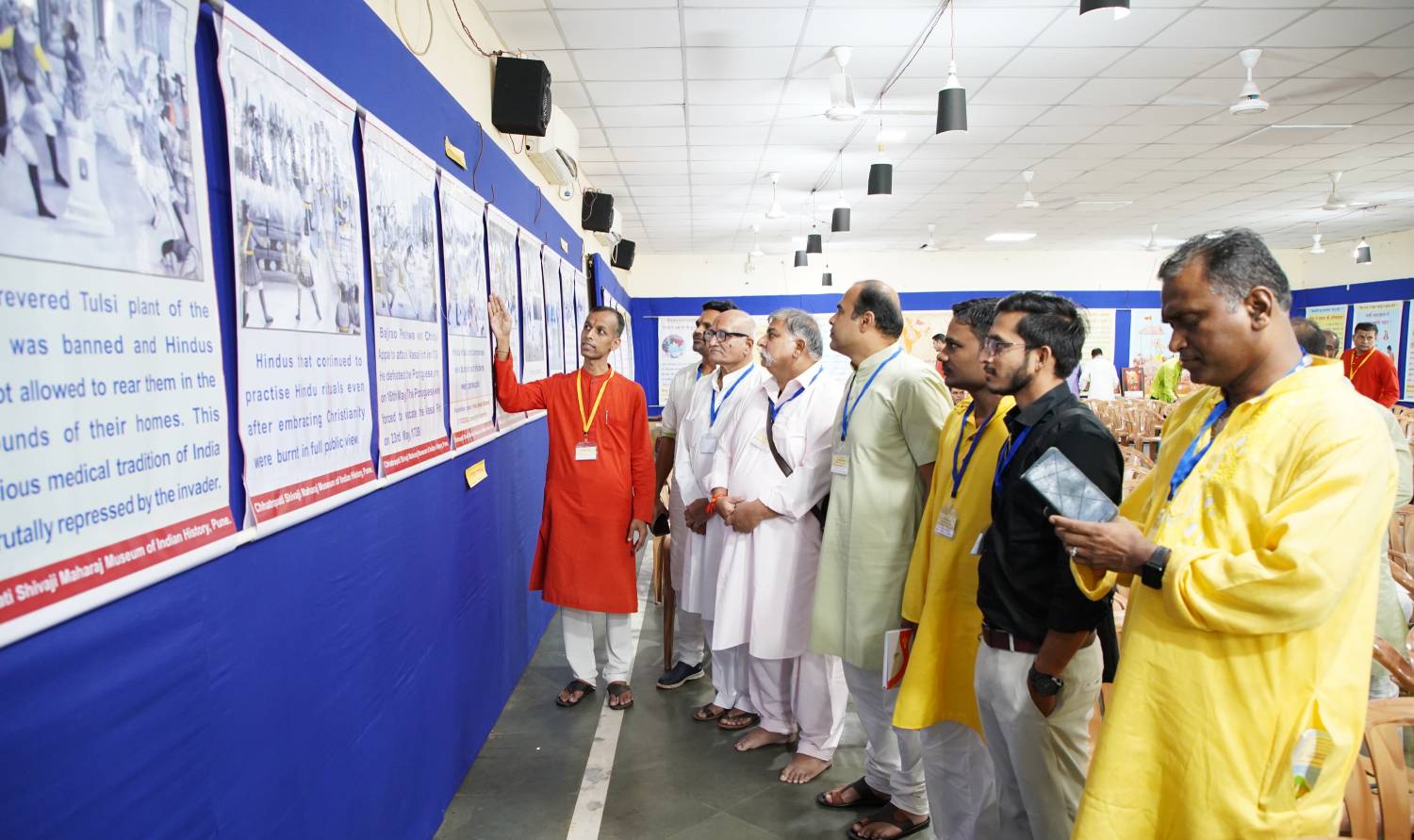 Devout Hindus watching the exhibition on Goa Inquisition (June 2022)
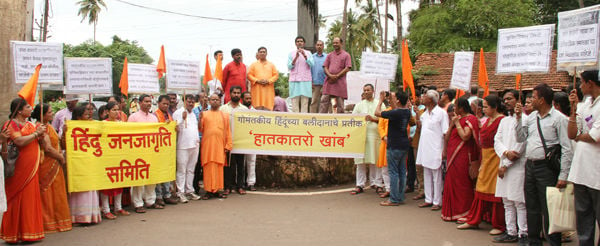 HJS organized a tribute program at the venue of the Hathkatro Khamb at Old Goa on the Goa Revolution Day. Demanded preservation of the historic ‘Hatkatro Khamb’ (June 2027)
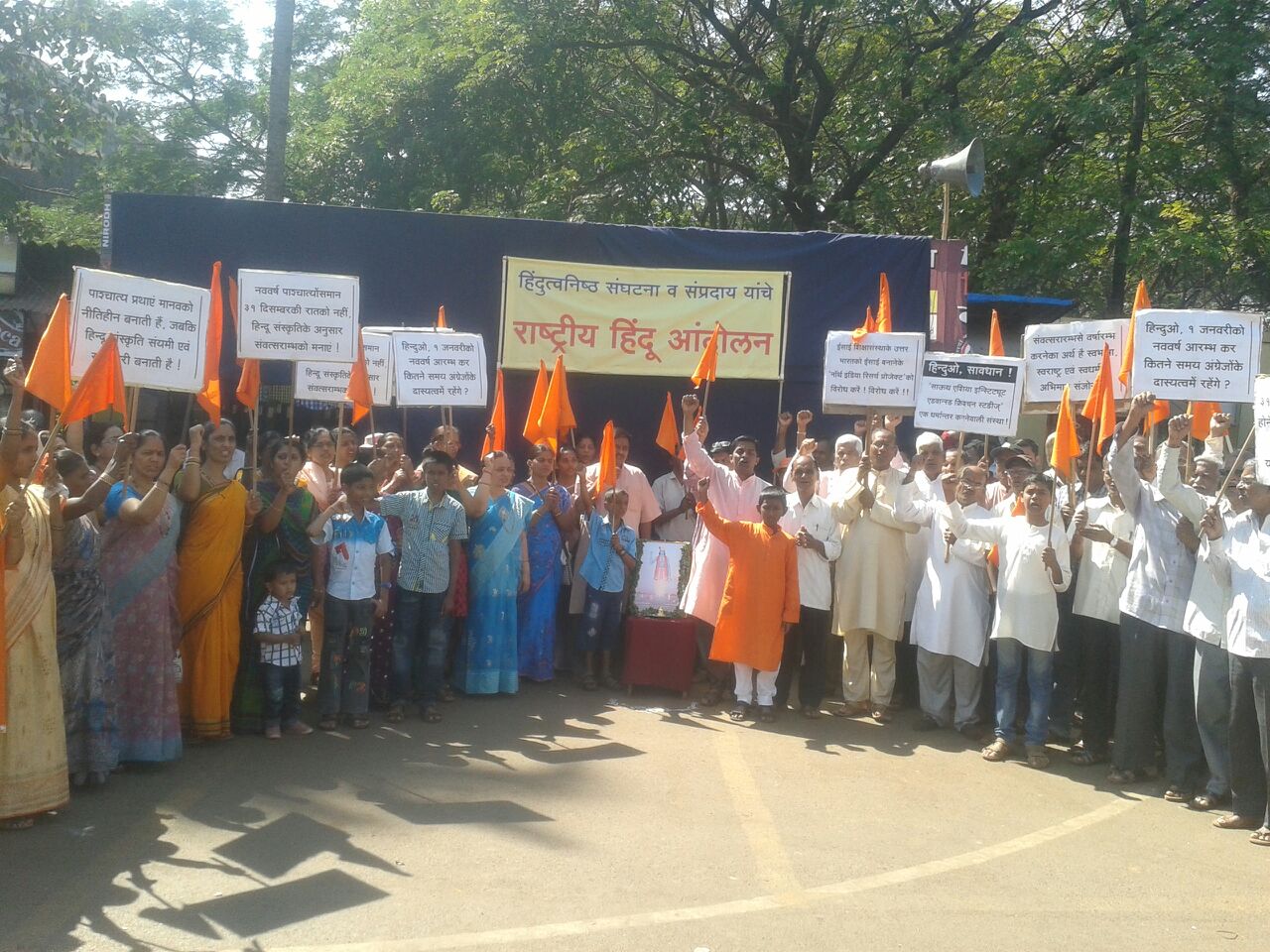 Agitation held at Ponda, Goa to declare the ‘Hatkatro Khaamb’ at Old Goa as a National Monument! (Jan 2015)
 HJS delegation gave memorandum to Central Minister of Cultural and tourism Shri. Mahesh Sharma demanding to take immediate cognizance of the neglected ‘Hatkatro Khamb’ (July 2017)
 HJS created awareness about preservation of ‘Hatkatro Khamb’ by giving handbills explaining the issue to historian Prof. Prajal Sakhardande (1) (August 2017)
 Devout Hindus gave memorandum to Minister Francis D’souza regarding preservation of ‘Hatkataro Stambh’ (on right) (August 2017)
 Devout Hindus gave memorandum to Minister Jayesh Salgaonkar (second from right) regarding preservation of ‘Hatkataro Stambh’ (on right) (August 2017)
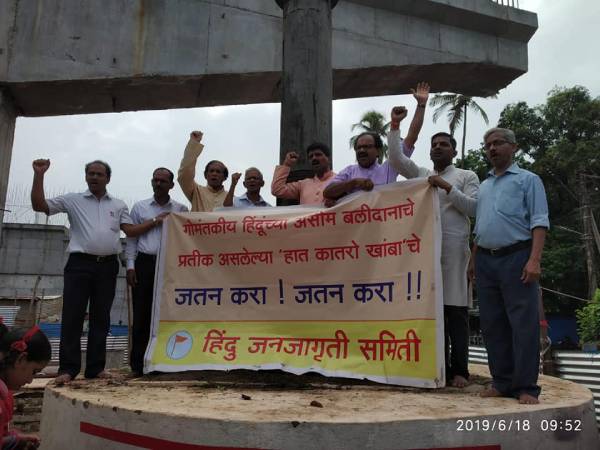 HJS and patriotic citizens paid homage to martyrs at ‘Hatakataro Khamb’. Demand was made to declare ‘Hatakataro Khamb’ as archaeological site and should be preserved (June 2019)
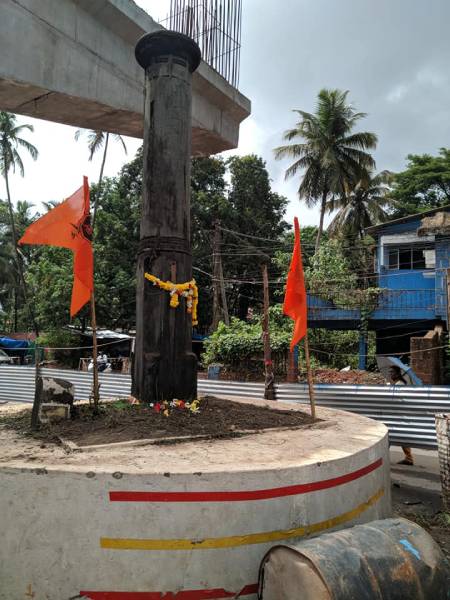 HJS and patriotic citizens paid homage to martyrs at ‘Hatakataro Khamb’ on ‘Goa Kranti Din’ (June 2019)